
MLB Announces 2023 All-Star Starters
Major League Baseball announced the starting lineups for the 2023 All-Star Game this evening. This year’s All-Star Game will take place at Seattle’s T-Mobile Park on July 11. The starting pitchers and reserves will be announced at a later date.
American League
- Catcher: Jonah Heim, Rangers (1st selection)
- First Base: Yandy Díaz, Rays (1st selection)
- Second Base: Marcus Semien, Rangers (2nd selection)
- Third Base: Josh Jung, Rangers (1st selection)
- Shortstop: Corey Seager, Rangers (4th selection, 2nd consecutive)
- Outfield: Randy Arozarena, Rays (1st selection)
- Outfield: Mike Trout, Angels (11th selection, 11th consecutive)
- Outfield: Aaron Judge, Yankees (5th selection, 3rd consecutive)*
- Designated Hitter: Shohei Ohtani, Angels (3rd selection, 3rd consecutive)
National League
- Catcher: Sean Murphy, Braves (1st selection)
- First Base: Freddie Freeman, Dodgers (7th selection, 5th consecutive)
- Second Base: Luis Arraez, Marlins (2nd selection, 2nd consecutive)
- Third Base: Nolan Arenado, Cardinals (8th selection, 8th consecutive)
- Shortstop: Orlando Arcia, Braves (1st selection)
- Outfield: Ronald Acuña Jr., Braves (4th selection, 4th consecutive)
- Outfield: Corbin Carroll, Diamondbacks (1st selection)
- Outfield: Mookie Betts, Dodgers (7th selection, 7th consecutive)
- Designated Hitter: J.D. Martinez, Dodgers (6th selection, 5th consecutive)
* Currently on injured list with sprained toe
List Of Players On Track For 10-And-5 Rights
In baseball parlance, players are often said to have “10-and-5 rights” or the player might be described as a “10-and-5 guy.” Any player who has 10 or more years of service time and has been with his current club for five or more consecutive years gets veto power over any trade involving them. This essentially functions the same as a no-trade clause, which players can negotiate into their contracts. But with 10-and-5 rights, the right is gained automatically once the conditions are met. There is often overlap, as players that have no-trade clauses will eventually earn 10-and-5 rights as well, which makes it a moot point in those cases.
A player’s status as a 10-and-5 player can impact trade negotiations, as players like Adam Jones and Brandon Phillips have used it blocked trades in the past. Also, a team may sometimes trade a player on the cusp of reaching 10-and-5 status, since it becomes harder to line up a deal once the player has that veto power. The Rays traded Evan Longoria to the Giants in the 2017-2018 offseason, when his service time was at nine years and 170 days, meaning he would have earned 10-and-5 rights just two days into the 2018 campaign.
Listed below are the players who currently have 10-and-5 rights, as well as those who are approaching that mark. For instances where service time is mentioned, keep in mind that an MLB season has 187 days but a player’s service time “year” flips over at 172.
Currently Have 10-and-5 Rights
- Jose Altuve, Astros
Altuve has over 11 years of service time and has spent it all with the Astros. It’s a fairly moot point as his current deal, which runs through 2024, contains a full no-trade clause. The club is also more likely to give him another extension than trade him.
- Charlie Blackmon, Rockies
Blackmon has over 10 years of service time and all of it with the Rockies. He triggered a player option for 2023, after which he will be a free agent.
- Miguel Cabrera, Tigers
Cabrera will reach 20 years of service this year and has been with the Tigers since 2008. He is in the final guaranteed year of his contract, with a couple of vesting options that aren’t a factor since he needs to finish in the top 10 in MVP voting the year prior in order to trigger them. He’s been fairly open about how he’s quite likely to retire at the end of the current season.
- Brandon Crawford, Giants
Crawford has over 11 years of service, all of it with the Giants. He’s slated for free agency at the end of this season.
- Clayton Kershaw, Dodgers
Kershaw has over 14 years of experience at this point, all of it with the Dodgers. A trade wouldn’t seem plausible anyway, as he and the club seem to have a nice relationship with each other. He’s re-signed on one-year deals in each of the past two offseasons, seemingly keeping the door open to retirement whenever he decides it’s time.
- Salvador Perez, Royals
Perez has spent his entire career with the Royals, which has pushed him past the 11-year mark in terms of service time. His current deal runs through 2025 with a club option for 2026.
- Chris Sale, Red Sox
Sale has gone beyond the 12-year service time mark and is now in his sixth season with the Red Sox. The extension he signed with the club in March of 2019 gave him a full no-trade clause in the middle of the 2020 campaign. He’s been floated as a speculative trade candidate if the Sox fall out of contention this year, though Sale would have to approve such a deal. His current contract runs through 2024 with a club option for 2025.
- Giancarlo Stanton, Yankees
Stanton has over 12 years in the big leagues now and is in his sixth campaign as a Yankee. His deal runs through 2027 with a club option for 2028.
- Stephen Strasburg, Nationals
Strasburg has beyond 12 years of service right now, all of it with the Nationals. The club’s deal with the right-hander after their 2019 World Series victory went south immediately, as he’s tossed just over 30 innings since then and doesn’t seem near any kind of return. That contract has a full no-trade clause and runs through 2026.
- Mike Trout, Angels
Trout has more than 11 years of service and all of it with the Angels. He already had full no-trade protection from his current contract, which runs through 2030. Some have speculated that the club could look to move Trout and do a full rebuild if Shohei Ohtani departs in free agency after this year. If the Angels ever did consider such a plan, Trout would have to be okay with the destination.
- Joey Votto, Reds
Votto is over 15 years of service at this point, all of it with the Reds. He’s had full no-trade protection since signing his ten-year extension in April of 2012. That deal is now in its final guaranteed year, with the club having a $20MM option for 2024 that comes with a $7MM buyout.
- Adam Wainwright, Cardinals
Wainwright has over 17 years of major league service time, all of that with the Cardinals. He re-signed with the club for 2023 and has full no-trade protection from that deal. He is planning to retire after this season.
Will Gain 10-and-5 Rights This Year
- Patrick Corbin, Nationals
Corbin already has over 10 years of service time and is currently in his fifth season with the Nationals. His six-year deal, which runs through 2024, contains partial no-trade protection but he will have 10-and-5 rights at the end of the 2023 campaign. The Nats would probably love to move him but he’s been getting worse in each year of the deal, with his ERA climbing from 3.25 in the first season to 4.66, 5.82 and 6.31, with his 2023 mark currently at 7.71. The backloaded deal will pay him $24MM this year and $35MM next year, meaning he would need a spectacular turnaround in order to have any trade appeal at all.
- Paul Goldschmidt, Cardinals
Goldschmidt has over 11 years of service time but only came over to the Cardinals for the 2019 season, making this his fifth year with the club. It’s a moot point since Goldy got a full no-trade in his most recent extension, which runs through 2024.
- Bryce Harper, Phillies
Harper has over 10 years of service already and is in his fifth season with the Phillies. His 13-year deal comes with full no-trade protection anyway, and it’s not like the Phils have any interest in trading him. The deal goes through 2031.
- Aaron Hicks, Yankees
Hicks has been with the Yankees since 2016 and came into this season with his service time at 9.041. That means he’s slated to have 10-and-5 rights in August, just after the trade deadline. The extension he signed with the club in 2019 did not have any no-trade protection, though Hicks would get a $1MM assignment bonus if he were traded. He’s perhaps the most notable player on this list, given that he actually seemed like a viable trade candidate in the most recent offseason, though no deal has come together as of yet. His contract pays him $10.5MM this year and then $9.5MM in the next two years with a $12.5MM club option for 2026 with a $1MM buyout. If the Yanks want to get this deal off the books, they should probably do it in the next few months. Then again, Hicks has been pretty open about his frustrations with his reduced role of late, speaking to Brendan Kuty of The Athletic about it recently. Perhaps he wouldn’t mind a change of scenery that results in more playing time.
- DJ LeMahieu, Yankees
LeMahieu has already surpassed the 10-year service time mark and is in his fifth campaign as a Yankee. His current deal, which runs through 2026, affords him full no-trade protection already.
- Manny Machado, Padres
Machado has over 10 years of service and is in his fifth campaign as a Padre. He already has full no-trade via his contract, which runs through 2033.
- Ryan Pressly, Astros
Pressly has been with the Astros since July of 2018, meaning he’ll reach five years with the club this summer. He also came into the year with his service time at 9.039, meaning he’ll get to 10 years in August. Pressly has emerged as one of the best relievers in baseball during his time in Houston and has twice agreed to an extension with the club, so a trade doesn’t seem especially likely. His current deal goes through 2024 with a vesting option for 2025.
- Christian Yelich, Brewers
Yelich is in his sixth season as a Brewer and will get to 10 years of service this season, but it’s a moot point since he has a full no-trade clause in his extension, which runs through 2028 with a mutual option for 2029.
Could Gain 10-and-5 Under Current Contract
- Ronald Acuña Jr., Braves
Acuna came into this season with just under five years of service time, meaning he won’t get to the 10-year mark until early in the 2028 season. His extension runs through 2026 with two club options. He’s one of the best players in the league and is underpaid on his deal, so Atlanta won’t be looking to deal him unless they fall way out of contention between now and then.
- Ozzie Albies, Braves
Albies has over five years of service and will get to 10 years in 2027. His extension goes through 2025 with a pair of club options. Similar to Acuna, he’s an excellent player who is on a club-friendly deal, meaning he won’t be a trade candidate unless something horrible happens to the team’s long-term fortunes.
- Nolan Arenado, Cardinals
Arenado will cross ten years of service here in 2023 but it’s only his third season as a Cardinal, meaning he’ll have 10-and-5 status after the 2025 season. That’s mostly just a footnote though, since Arenado’s extension with the Rockies came will full no-trade protection, which he waived to become a Cardinal. He seems quite content in St. Louis and chose not to opt-out of his deal at the end of 2022, even though he could have likely got more money on the open market.
- Javier Báez, Tigers
Báez came into this season with his service at 7.089, meaning he’ll get to 10 years about halfway into the 2025 season. This is just his second year as a Tiger, meaning he’ll get to 10-and-5 status after 2026, when he will have one year left on his six-year deal. That contract affords Báez limited no-trade protection, which allows him to block trades to 10 teams each year, per Evan Petzold of the Detroit Free Press. Báez can also opt out after this year, though that doesn’t seem to be a strong possibility based on his performance as a Tiger thus far.
- José Berríos, Blue Jays
Berríos comes into this season with his service time at 6.044, which puts him in line to get to 10 years late in the 2026 season. He’ll also get to five years with the Blue Jays at the end of July in that year, since he was acquired from the Twins at the deadline in 2021. His extension, which runs through 2028, affords him an opt-out after that 2026 season and gives him an eight-team no-trade list, per Gregor Chisholm of The Toronto Star.
- Mookie Betts, Dodgers
Betts has a service count of 8.070, meaning he’ll get to 10 years in the middle parts of next year. He’s been with the Dodgers since 2020, meaning he’ll get to 10-and-5 at the end of the 2024 season. Given his excellent production on a consistent competitor like the Dodgers, he doesn’t stand out as a trade candidate anyway, unless something changes drastically. His extension runs through 2032.
- Xander Bogaerts, Padres
Bogaerts only just joined the Padres, but his 11-year deal means he’ll be a 10-and-5 guy after 2027. That doesn’t really matter since he has a full no-trade clause on his deal anyway, making it likely he’s a Padre through 2033.
- Kris Bryant, Rockies
Bryant is in just his second campaign as a Rockie but will be a 10-and-5 guy after 2026. He already has a full no-trade clause in his contract, which runs through 2028.
- Byron Buxton, Twins
Buxton already has a full no-trade clause on the extension he and the Twins signed in November of 2021. He has between six and seven years of service time and will pass 10 years in 2026, with his deal running through 2028.
- Luis Castillo, Mariners
Castillo came into this season with his service time at 5.101, putting him in line to get to 10 years a couple of months into 2027. He’ll also get to the five-year mark with the Mariners midway through that season, having been acquired in July of 2022. His contract runs through 2027 with a vesting/club option for 2028. He has full no-trade protection on that deal but only for the first three years, which starts this year. That means his ability to block a trade will be gone at the end of the 2025 season but return in late July 2027.
- Gerrit Cole, Yankees
Cole will get to 10 years of service here in 2023 but won’t have five years as a Yankee until the end of 2024. It’s a moot point anyway since his contract, which runs through 2028, gives him full no-trade protection. He can opt out after 2024 but the team can void that by triggering a club option for 2029.
- Willson Contreras, Cardinals
Contreras has over six years of service time and will pass the 10-year mark in 2026. Since he just signed with the Cardinals, he won’t have five years with the club until the end of 2027. That will be the last guaranteed season of the five-year deal, though there’s a club option for 2028.
- Carlos Correa, Twins
Correa will get to 10 years of service in 2025 but won’t have five years as a Twin until after 2026. His 10-and-5 status is a footnote anyway, since he has a full no-trade clause already.
- Jake Cronenworth, Padres
Cronenworth has been with the Padres since the start of 2020, meaning he came into this year with exactly three years of service time. He won’t get to 10 years until the end of the 2029 campaign but he just signed an extension with the club that runs through 2030. He has an eight-team no-trade clause on that deal.
- Yu Darvish, Padres
Darvish has over 11 years of service time now but won’t have five years as a Padre until after 2025. He recently signed an extension that runs through 2028, which affords him full no-trade protection.
- Jacob deGrom, Rangers
deGrom only just joined the Rangers on a five-year deal, though there’s a conditional option for 2028. It’s a moot point anyway since he already has a full no-trade clause in the deal.
- Rafael Devers, Red Sox
Devers came into this season with his service clock at 5.070, meaning he’ll get to the 10-year mark midway through 2027. His extension, which runs through 2033, does not give him any no-trade rights. It seems unlikely that the Sox would try to move Devers, since he seemed to be the one superstar they were intent on keeping while trading Betts and letting Bogaerts get away. But if something changes years down the road and they start considering a Devers deal, it would get harder after his 10-and-5 rights kick in.
- Edwin Díaz, Mets
Despite being on the injured list and likely to miss all of 2023, this will be the fifth season as a Met for Diaz. He’ll get to 10 years of service in 2026 but has full no-trade protection on his deal, which runs through 2027 with an option for 2028. He can opt out after 2025.
- Wilmer Flores, Giants
Flores will get to 10 years of service here in 2023 but won’t have five years as a Giant until after 2024. That’s the last guaranteed year of his extension, but there’s a dual option for 2025. Flores will have a $3.5MM player option and, if he declines, the club will have a $8.5MM option.
- Kyle Freeland, Rockies
Freeland came into this year with a service count of 5.144, meaning he’ll get to 10 years early in 2027. His extension is only guaranteed through 2026, though there’s a $17MM player option for 2027, which is contingent on Freeland tossing 170 innings in 2026. The Rockies rarely trade their core players even when it’s fairly logical to do so, but it’s possible this could become noteworthy as the contract winds down.
- Freddie Freeman, Dodgers
Freeman already has over 12 years of service time but is in just his second season as a Dodger. He’ll have 10-and-5 rights after 2026, when his deal will have one year and $27MM remaining on it.
- Wander Franco, Rays
Franco came into 2023 with his service time at just 1.104, meaning he won’t get to 10 years until midway through 2031. His deal goes through 2032 with a club option for 2023. Most teams wouldn’t give much thought to trading a face-of-the-franchise player like Franco, but the Rays are always frugal and already went down this road once. As mentioned up top, they dealt Longoria just as his 10-and-5 rights were about to kick in. Franco doesn’t have any no-trade protection but would get an extra $3MM if he’s ever dealt.
- Andrés Giménez, Guardians
Gimenez has just 2.106 as a service time count, but he just signed an extension that runs through 2029 with a club option for 2030. He’ll cross the 10-year service mark during that 2030 campaign.
- Michael Harris II, Braves
Harris didn’t even play a full season last year but was awarded a full year of service time anyway by winning Rookie of the Year. He signed an eight-year extension with the club that runs through 2030 with a couple of club options after that. He’ll be a 10-and-5 guy at the end of the 2031 campaign if the first of those options is triggered.
- Ke’Bryan Hayes, Pirates
Hayes comes into 2023 with his service clock at 2.075, putting him on a path to reach 10 years during the 2030 campaign. His deal with the Pirates is only guaranteed through 2029 but there’s a club option for 2030.
- Kyle Hendricks, Cubs
Hendricks had a service time count of 8.081 at the start of this season, meaning he’ll get to 10 years midway through 2024. This is the last guaranteed year of his extension, with a $16MM club option for 2024 with a $1.5MM buyout. Hendricks has struggled in the past two seasons and hasn’t yet pitched this year after suffering a capsular tear in his throwing shoulder last year. It seems unlikely that option gets picked up unless he gets healthy and has a tremendous showing in the second half of this year.
- Aaron Judge, Yankees
Judge has a full no-trade clause in his mega-deal with the Yankees, and it’s hard to fathom the club wanting to deal him anyway. He will get to 10 years of service time in 2026.
- Francisco Lindor, Mets
Lindor started this year with a service count of 7.113, meaning he will get to 10 years of service in 2025. That will also be his fifth year as a Met. He currently has a 15-team no-trade clause as part of his extension, which runs through 2031.
- Ketel Marte, Diamondbacks
Marte has been with the Diamondbacks since 2017 and will surpass the 10-year service mark in 2026, with his service clock at 6.162 coming into this year. His extension runs through 2027 with a club option for 2028.
- Lance McCullers Jr., Astros
McCullers has spent his entire career as an Astro and will cross the 10-year threshold in 2025, coming into this year with a service tally of 7.140. The extension he signed with the club in 2021 runs through 2026 and has limited no-trade protection.
- Ryan McMahon, Rockies
McMahon has been with the Rockies for his entire career with a service tally of 5.006 coming into this year. That puts him on pace to get to 10 years of service in 2027, the final year of the extension he recently signed with the club. He could potentially earn opt-out opportunities after 2025 and 2026 based on MVP voting.
- Sean Murphy, Braves
Murphy came into this year with his service time at 3.029, meaning he won’t get to 10 years until 2029. His recent extension with Atlanta goes through 2028 with a club option for 2029.
- Joe Musgrove, Padres
Musgrove will get to 10 years of service time in 2026, which will be his sixth as a Padre. His extension, which runs through 2027, gives him a full no-trade clause through 2026. He only has limited no-trade protection in 2027 but he’ll be a 10-and-5 guy by then.
- Brandon Nimmo, Mets
Nimmo has been a Met for his entire career and will get to the 10-year service mark in 2026, but he has a full no-trade clause on his contract anyway.
- Matt Olson, Braves
Olson has a service tally of just 5.103 and isn’t slated to cross the 10-year mark until 2027. His extension with Atlanta runs through 2029 with a club option for 2030.
- Marcell Ozuna, Braves
Ozuna came into this season with his service clock at 9.124, meaning he’ll be at 10 years in May. However, this is just his fourth year with Atlanta, meaning he won’t be a 10-and-5 guy until after 2024. That’s the final guaranteed year of his deal, though there is a $16MM club option for 2025. It’s highly unlikely he’s still with the club at that time, since this deal is generally considered to be underwater both due to his poor performance and off-field issues. It’s already been speculated that the club may release him before the deal is finished, making it hard to envision a trade or the option eventually being picked up.
- José Ramírez, Guardians
Ramírez has spent his entire career with Cleveland and will get to 10 years of service in 2024. It’s a moot point as his extension, which runs through 2028, has a full no-trade clause.
- J.T. Realmuto, Phillies
Realmuto is currently in his fifth year with the Phillies and had a service count of 8.038 coming into the year. That puts him on pace for 10-and-5 status towards the end of next year. His deal doesn’t have any no-trade protection, but he does get a $1MM bonus every time he’s dealt. He’s under contract through 2025, which will be his age-34 season.
- Anthony Rendon, Angels
Rendon will get to 10 years of service here in 2023 but it’s just his fourth season as an Angel. He’ll get to 10-and-5 status after 2024 but already has full no-trade protection on his contract, which runs through 2026.
- Austin Riley, Braves
Riley came into 2023 with a service count of 3.138, which puts him on track to pass 10 years early in 2029. His deal runs through 2032 with a club option for 2033.
- Carlos Rodón, Yankees
Rodón will get to 10 years of service in 2025 and then have five years as a Yankee after 2027, when he’ll have one year left on his six-year deal. The 10-and-5 status will be irrelevant, however, as he already has full no-trade protection.
- Julio Rodríguez, Mariners
J-Rod has just the one year of service time so far but recently signed a convoluted mega-extension that could potentially end up lasting 18 years. He has full no-trade protection as part of that, making his eventual 10-and-5 status moot.
- Keibert Ruiz, Nationals
Ruiz had just 1.064 as a service count coming into this year but recently agreed to a lengthy extension with the Nats that runs through 2030 with two club options after that. He’s currently on pace for 10-and-5 rights in 2031.
- Corey Seager, Rangers
Seager will get to 10 years of service in 2025 but won’t have five years as a Ranger until the end of 2026. He has limited no-trade protection on his deal, which runs through 2031.
- Marcus Semien, Rangers
Semien will get to 10 years of service in 2024 but won’t have five years in Texas until after 2026. He doesn’t have any no-trade protection on his deal, which runs through 2028.
- Antonio Senzatela, Rockies
Senzatela came into this year with a service tally of 5.106, putting him on pace to get to 10 years a few months into 2027. His extension with the Rockies is only guaranteed through 2026, but there’s a $14MM club option for 2027.
- George Springer, Blue Jays
Springer will get to 10 years of service early in 2024 but is in just his third season as a Blue Jay right now. His six-year deal runs through 2026 and he’ll get 10-and-5 status after 2025. He currently has an eight-team no-trade clause.
- Trevor Story, Red Sox
Story will get to 10 years of service after 2025 but won’t have five years with Boston until after 2026. His deal, which runs through 2027, does not have any no-trade protection. He can opt out after 2025, but the team can void that by preemptively exercising an option for 2028.
- Dansby Swanson, Cubs
Swanson only just joined the Cubs on a seven-year deal. By the end of 2027, he’ll have five years with the club and be well beyond 10 years of service, though it’s a moot point since he already has full no-trade protection.
- Fernando Tatis Jr., Padres
Tatis has between three and four years of service, putting him on track for 10-and-5 in 2029, but he already has full no-trade protection on his extension which runs through 2034.
- Chris Taylor, Dodgers
Taylor came into this year with a service count of 7.037, putting him on pace to get to 10 years late in the 2025 season. He’s already been with the Dodgers since partway through the 2016 campaign. His contract is guaranteed through 2025 with a club option for 2026. He doesn’t currently have any no-trade protection, but he does get a $2MM assignment bonus each time he’s dealt, and a trade would also increase the value of his option.
- Trea Turner, Phillies
Turner just joined the Phillies but will get to 10-and-5 status after 2027. Like many others on the list, that designation doesn’t really matter for him, since his 11-year deal already affords him full no-trade protection.
Each MLB Team’s Players On WBC Rosters
The World Baseball Classic is returning this year, the first time since 2017. The quadrennial event was supposed to take place in 2021 but was scuttled by the pandemic, now returning after a six-year absence. Rosters for the tournament were announced today and those can be found at this link. Here is a breakdown of which players from each MLB team are set to take participate. Quick caveat that this list is fluid and might be changed as more information becomes available.
Without further ado…
Angels
- Glenn Albanese Jr.
- Jaime Barria
- Gustavo Campero
- Alan Carter
- Jhonathan Diaz
- Carlos Estevez
- David Fletcher
- Jake Kalish
- D’Shawn Knowles
- Shohei Ohtani
- Jose Quijada
- Luis Rengifo
- Gerardo Reyes
- Patrick Sandoval
- Mike Trout
- Gio Urshela
- Cesar Valdez
- Zack Weiss
- Aaron Whitefield
Astros
- Bryan Abreu
- Jose Altuve
- Ronel Blanco
- Luis Garcia
- Colton Gordon
- Cristian Javier
- Martin Maldonado
- Rafael Montero
- Hector Neris
- Jeremy Pena
- Ryan Pressly
- Andre Scrubb
- Kyle Tucker
- Jose Urquidy
- Derek West
Athletics
Blue Jays
- Jose Berrios
- Jiorgeny Casimiri
- Yimi Garcia
- Vladimir Guerrero Jr.
- Spencer Horwitz
- Alejandro Kirk
- Otto Lopez
- Damiano Palmegiani
Braves
Brewers
- Willy Adames
- Sal Frelick
- Alex Hall
- Matt Hardy
- Joel Payamps
- Rowdy Tellez
- Abraham Toro
- Luis Urias
- Michele Vassalotti
- Devin Williams
Cardinals
- Nolan Arenado
- Genesis Cabrera
- Tommy Edman
- Giovanny Gallegos
- Paul Goldschmidt
- Ivan Herrera
- Matt Koperniak
- Noah Mendlinger
- Oscar Mercado
- Miles Mikolas
- Lars Nootbaar
- Tyler O’Neill
- JoJo Romero
- Adam Wainwright
- Guillermo Zuniga
Cubs
- Javier Assad
- Owen Caissie
- Danis Correa
- Ben DeLuzio
- Roenis Elias
- Miles Mastrobuoni
- Matt Mervis
- B.J. Murray Jr.
- Vinny Nittoli
- Fabian Pertuz
- Liam Spence
- Seiya Suzuki
- Marcus Stroman
- Pedro Strop
- Nelson Velazquez
- Jared Young
Diamondbacks
- Dominic Fletcher
- Jakob Goldfarb
- Gunnar Groen
- Merrill Kelly
- Ketel Marte
- Eric Mendez
- Dominic Miroglio
- Emmanuel Rivera
- Jacob Steinmetz
- Mitchell Stumpo
- Alek Thomas
Dodgers
- Austin Barnes
- Mookie Betts
- Freddie Freeman
- Clayton Kershaw
- Adam Kolarek
- Miguel Rojas
- Will Smith
- Trayce Thompson
- Julio Urias
Giants
Guardians
- Enyel De Los Santos
- Dayan Frias
- Andres Gimenez
- Bo Naylor
- Richie Palacios
- Cal Quantrill
- Cade Smith
- Meibrys Viloria
- Josh Wolf
Marlins
Mariners
- Matt Brash
- Diego Castillo
- Matt Festa
- Harry Ford
- Teoscar Hernandez
- Milkar Perez
- Julio Rodriguez
- Eugenio Suarez
- Blake Townsend
Mets
- Pete Alonso
- Jonathan Arauz
- Edwin Diaz
- Eduardo Escobar
- Dominic Hamel
- Elieser Hernandez
- Francisco Lindor
- Jeff McNeil
- Omar Narvaez
- Cam Opp
- Adam Ottavino
- Jose Quintana
- Brooks Raley
- Claudio Scotti
Nationals
Orioles
Padres
- Xander Bogaerts
- Nabil Crismatt
- Nelson Cruz
- Jarryd Dale
- Yu Darvish
- Jose Espada
- Ruben Galindo
- Luis Garcia
- Ha-Seong Kim
- Manny Machado
- Nick Martinez
- Evan Mendoza
- Juan Soto
- Brett Sullivan
- Julio Teheran
Phillies
- Jose Alvarado
- Erubiel Armenta
- Malik Binns
- Jaydenn Estanista
- Vito Friscia
- Brian Marconi
- J.T. Realmuto
- Kyle Schwarber
- Noah Skirrow
- Gregory Soto
- Garrett Stubbs
- Ranger Suarez
- Trea Turner
- Taijuan Walker
- Rixon Wingrove
Pirates
- David Bednar
- Tsung-Che Cheng
- Roansy Contreras
- Alessandro Ercolani
- Santiago Florez
- Jarlin Garcia
- Antwone Kelly
- Josh Palacios
- Jeffrey Passantino
- Tahnaj Thomas
- Duane Underwood Jr.
- Chavez Young
- Rob Zastryzny
Rangers
Rays
- Jason Adam
- Jonathan Aranda
- Randy Arozarena
- Christian Bethancourt
- Trevor Brigden
- Wander Franco
- Andrew Gross
- Joe LaSorsa
- Francisco Mejia
- Isaac Paredes
- Harold Ramirez
- Graham Spraker
Red Sox
- Jorge Alfaro
- Richard Bleier
- Rafael Devers
- Jarren Duran
- Ian Gibaut
- Rio Gomez
- Norwith Gudino
- Enrique Hernandez
- Nick Pivetta
- Henry Ramos
- Alex Verdugo
- Masataka Yoshida
Reds
- Donovan Benoit
- Silvino Bracho
- Luis Cessa
- Fernando Cruz
- Alexis Diaz
- Arij Fransen
- Kyle Glogoski
- Tayron Guerrero
- Evan Kravetz
- Nicolo Pinazzi
- Reiver Sanmartin
- Vin Timpanelli
Rockies
- Daniel Bard
- Jake Bird
- Yonathan Daza
- Elias Diaz
- Kyle Freeland
- Justin Lawrence
- German Marquez
- Michael Petersen
- Alan Trejo
Royals
- Max Castillo
- Robbie Glendinning
- Carlos Hernandez
- Nicky Lopez
- MJ Melendez
- Vinnie Pasquantino
- Salvador Perez
- Brady Singer
- Bobby Witt Jr.
- Angel Zerpa
Tigers
- Javier Baez
- Miguel Cabrera
- Chavez Fernander
- Andy Ibanez
- Jack O’Loughlin
- Jacob Robson
- Eduardo Rodriguez
- Jonathan Schoop
- John Valente
Twins
- Jose De Leon
- Edouard Julien
- Jorge Lopez
- Pablo Lopez
- Carlos Luna
- Jose Miranda
- Jovani Moran
- Emilio Pagan
- Christian Vazquez
White Sox
- Tim Anderson
- Kendall Graveman
- Eloy Jimenez
- Lance Lynn
- Yoan Moncada
- Nicholas Padilla
- Luis Robert
- Jose Ruiz
Yankees
Paul Goldschmidt Wins NL MVP
Cardinals first baseman Paul Goldschmidt has been named the National League’s Most Valuable Player, according to an announcement from the Baseball Writers Association of America. He was followed in the voting by Manny Machado of the Padres and his teammate Nolan Arenado.
Though he’s come close many times, this is the first MVP award for the veteran, who just turned 35 in September. Though he’s older than the typical prime years of most athletes, he had arguably the best campaign of his career in 2022. He hit 35 home runs and produced a .317/.404/.578 batting line. That production was an incredible 77% better than the league average hitter, as evidenced by his 177 wRC+. When combined with his solid defense at first base, he was considered to be worth 7.1 wins above replacement in the eyes of FanGraphs and 7.8 in the estimation of Baseball Reference.
Goldschmidt finished second among qualified NL batters in on-base percentage, trailing only Freddie Freeman. He led the league in slugging and tied for fifth in longballs. Along the way, he was named to his seventh All-Star game. Goldschmidt secured a fifth career Silver Slugger award and has appeared on MVP ballots each season going back to 2015. He’s under contract for two more years on the five-year extension he inked shortly after St. Louis acquired him from the Diamondbacks in a franchise-altering trade.
Machado secured a runner-up finish, the highest of his career to date. He’s now gotten into the top five in the voting on four separate occasions, including two of his four seasons in San Diego. He hit .298/.366/.531 with 32 homers and 37 doubles, appearing in 150 games. Machado finished 7th in the NL in on-base percentage and fourth in slugging. He earned his sixth career All-Star nod in the process.
Arenado picked up his 10th straight Gold Glove award this year with a typically excellent season at the hot corner. He also had arguably the best offensive year of his career, putting up a .293/.358/.533 line over 620 plate appearances. Only Goldschmidt and Mookie Betts topped him in slugging, while he finished ninth in on-base percentage. Arenado secured his seventh All-Star selection and fourth top-five MVP finish.
Goldschmidt picked up 22 of 30 first-place votes, while Machado secured seven votes. Arenado was the other player who got a first-place nod. Freeman finished in fourth overall and was penciled into six ballots in second place. Betts rounded out the top five, while Mets star Pete Alonso (who finished eighth) was the only other player to get a second-place vote. Austin Riley, J.T. Realmuto, Alonso, Francisco Lindor and Cy Young winner Sandy Alcantara placed sixth through tenth, respectively.
Full voting breakdown available here.
List Of All-Star Roster Replacements
7:25PM: Freddie Freeman is also joining the NL roster, as the league announced that the Dodgers first baseman is replacing Starling Marte.
4:04PM: The league announced that the Cardinals’ Miles Mikolas has now been added to the NL roster, taking the spot of Brewers righty Corbin Burnes.
July 17, 1:15PM: The Mariners have announced that Ty France will be joining the festivities as well. MLB later announced the addition as well, noting that he is replacing Mike Trout. With Trout not taking part, Byron Buxton will move into the starting center fielder role for the American League.
10:05AM: MLB has announced three more additions, with one of them being the previously reported addition of Williams. The other two are closers: Liam Hendriks of the White Sox and Jordan Romano of the Blue Jays. Those three will replace Gerrit Cole, Justin Verlander and Max Fried.
July 16, 11:01PM: Brewers reliever Devin Williams has also been named to the NL roster, ESPN’s Jeff Passan reports (Twitter link).
7:11:PM: Four replacements were announced to the All-Star rosters, taking the spots of four other players who won’t be part of the Midsummer Classic. Dodgers left-hander Tyler Anderson, Padres infielder Jake Cronenworth, and Braves third baseman Austin Riley will be joining the National League’s team, while Blue Jays second baseman Santiago Espinal has been named to the American League’s roster.
Espinal is replacing Jose Altuve, who was hit in the knee by a pitch on Thursday. Altuve sat out Friday’s action and is back in the Astros lineup tonight as the DH, but even though he is well enough to play, Altuve and the Astros will use the All-Star break to get the second baseman fully back to 100 percent. Altuve had been voted in as the AL’s starter at second baseman, but now the Guardians’ Andres Gimenez take over as the starter for Tuesday’s game.
Jazz Chisholm was voted as the NL’s starting second baseman, but the Marlins standout will also be missing the game due to his lower back injury. Chisholm has been on the 10-day injured list since June 28, but he has been working out at the Marlins’ spring camp, and taking part in baseball activities. There isn’t a set timeline for Chisholm’s return, but the team is hopeful Chisholm can be activated for the start of the second half. With Chisholm out, Jeff McNeil becomes the NL’s new starter at the keystone, while Cronenworth will take over the backup infield role.
Giants lefty Carlos Rodon is also battling injury, opening the door for Anderson to receive the first All-Star nod of his seven-year career. Rodon has both a blister and a split nail on the middle finger of his throwing hand, and told Henry Schulman and other reporters that he is skipping the ASG in order to give the injury time to properly heal. There isn’t yet any indication that Rodon might require a visit to the injured list, and since Rodon last pitched on Thursday, he’ll receive at least a full week off between starts.
Riley was perhaps the most prominent omission from the original All-Star roster, given how the Braves slugger has posted some huge numbers over the first half. However, as it often the case with “snubs,” the situation sorted itself out once other players started to drop out. Riley will be taking the place of Nolan Arenado, as the Cardinals third baseman will use the break to rest a lingering back problem.
Close: Braves Have Fostered “False Narrative” Surrounding Freeman Negotiations
Many both within and outside the baseball industry were surprised when Freddie Freeman signed with the Dodgers last offseason. The general expectation had been that he’d re-sign with the Braves, continuing his career-long stint in the organization. Yet that was foreclosed when Atlanta acquired Matt Olson from the A’s shortly after the lockout, and Freeman landed in L.A. a few days later.
The course of events over the final few days of negotiations has been a subject of controversy, one that resurfaced over the weekend when a visibly emotional Freeman made his return to Atlanta. The 2020 NL MVP received his World Series ring and caught up with many former teammates and coaches, and he understandably struggled to put into words how much his time in the Braves organization had meant to himself and his family.
On Tuesday, Buster Olney of ESPN reported that Freeman had dismissed his longtime agency, Excel Sports Management, out of frustration with how his free agent process played out. Freeman himself characterized the matter differently, conceding his representation was a “fluid situation” but leaving open the possibility of mending fences with Excel and expressing a desire to move forward with the Dodgers.
The controversy was reignited yesterday when Fox Sports Radio host Doug Gottlieb tweeted that Excel’s lead negotiator Casey Close never informed Freeman about a final offer from the Braves. Gottlieb alleges Close “knew (Freeman) would have taken the Atlanta deal” but made the unilateral decision to withhold it from his client, ostensibly because he felt he could top the offer elsewhere. Close forcefully denied that notion last night, releasing a statement (on Twitter) that reads “Doug Gottlieb tweeted a wholly inaccurate characterization of our negotiations with the Atlanta Braves on behalf of Freddie Freeman. We are immediately evaluating all legal options to address the reckless publication of inaccurate information.”
This afternoon, Close put out another statement taking aim at the Braves themselves. In a release first tweeted by Jeff Passan of ESPN, Close alleged “the Braves have fostered a narrative about the negotiations which, stated plainly, is false. Part of that false narrative is the suggestion that I did not communicate a contract offer to the Freemans. To be clear, we communicated every offer that was made, as well as every communication Excel had with the Braves organization throughout the entire process.”
Close didn’t take aim at anyone specific in his statement. Nevertheless, it’s worth noting that Freeman acknowledged in late March that he had a three-hour conversation with Atlanta president of baseball operations Alex Anthopoulos “to hear his side of things” after initially implying that Anthopoulos and his staff hadn’t been especially forthcoming during the free agent process (link via Gabe Burns of the Atlanta Journal-Constitution). Freeman made more general reference to communications with Braves personnel this week, telling reporters (including Jack Harris of the Los Angeles Times) he’d “learned a lot” about his free agency “because I talked to the other side.”
Throughout the winter, the holdup between the Braves and Freeman seemed to be on the issue of a sixth guaranteed year. Atlanta was reluctant to go beyond five years for the 32-year-old. Justin Toscano of the Journal-Constitution hears from a source who suggests Freeman’s camp had offered the Braves a choice between two offers: $165MM over five years or $175MM over six years. Atlanta declined to meet those numbers and, according to Toscano, the sides mutually agreed to move on. (Olney wrote this week that the Braves had nudged their final offer to around five years and $140MM). The Braves acquired Olson two days later; Freeman wound up signing a six-year, $162MM offer with the Dodgers, although deferrals reduced the contract’s net present value to around $149MM.
Whatever caused talks between the Braves and Freeman to hit a stumbling block, the fallout has involved an ugly spat between his former team and one of the game’s most influential agents. Excel Sports Management represents dozens of players, including stars like Walker Buehler, Clayton Kershaw, Paul Goldschmidt, Kyle Tucker and high-profile impending free agents Andrew Benintendi and Dansby Swanson. Swanson has already stated the Freeman saga wouldn’t have any effect on his choice of representation, as he has no plans to leave Excel before his first trip to the open market.
There’s obviously some level of tension between the agency and the Atlanta organization, but it’s worth noting neither Close nor anyone with the Braves has suggested there’ll be adverse effects on negotiations between the team and other Excel clients. It stands to reason the Braves will have some interest in re-signing Swanson, a Georgia native and six-year starting shortstop who’s amidst the best season of his career.
Freddie Freeman Reportedly Changing Agencies
In the wake of a still-stunning departure from the Braves in free agency, former NL MVP Freddie Freeman has dismissed his longtime agents at Excel Sports Management, reports ESPN’s Buster Olney. Freeman is currently listed as self-represented within MLB’s central database, and, according to the New York Post’s Jon Heyman (Twitter link), the MLBPA sent an email to agents requesting that they not contact Freeman — a common occurrence when a player is in the process of changing representation.
Freeman, however, isn’t characterizing things quite so definitively. The Dodger slugger issued a statement to Mark Bowman of MLB.com suggesting that he has not yet fully committed to parting ways with his reps (Twitter link):
Last weekend in Atlanta was a very emotional time for me and my family. I am working through some issues with my longtime agents at Excel. My representation remains a fluid situation and I will update if needed.
That’s hardly a firm denial of the report but at least leaves open the window for the relationship to be repaired and remain in place. Freeman largely deferred to his statement when addressing the topic with L.A. beat reporters (including Bill Plunkett of the Orange County Register and Jack Harris of the Los Angeles Times). The five-time All-Star said he “learned a lot” about the free agent process after speaking with “the other side” — presumably a reference to his post-signing chat with Atlanta president of baseball operations Alex Anthopoulos — but called it “time to move on and focus on winning championships with the Dodgers.”
Olney reports that the timing of negotiations coming out of the league’s lockout were particularly frustrating for Freeman, who had a standing offer of five years and $135MM from the Braves once the transaction freeze was listed. Multiple counteroffers from Freeman’s camp failed to produce a deal, and the Braves pivoted to acquire/extend Matt Olson — a sequence that is said to have shocked Freeman. Olney’s piece goes into more detail on the purported sequence of negotiations for those curious about the ostensible specifics.
The reports and Freeman’s statement come on the heels of an emotional weekend series that saw Freeman return to Atlanta for the first time since signing a deferral-laden six-year, $162MM contract with the Dodgers. Freeman was set to address the media at a press conference there but, upon entering the room, had to step out and attempt to collect himself. An outwardly emotional Freeman fought back tears while professing a lifelong love for the Braves organization despite signing elsewhere in free agency. He was emotional upon receiving his World Series ring from manager Brian Snitker as well, and was understandably choked up when the Atlanta faithful showered him with a standing ovation as he stepped to the plate in his first at-bat of the series.
Whether Freeman remains with Excel or indeed hires new representation has little bearing for most fans moving forward — though it’s obviously of keen interest to those working within the industry. Excel has represented Freeman throughout his career, negotiating an eight-year, $135MM contract extension that still stands as the largest contract ever signed by a player with between three and four years of Major League service time despite being signed back in 2014.
Excel represents dozens of big leaguers, including Freeman’s now-former teammate and free-agent-to-be, Dansby Swanson. Asked by Justin Toscano of the Atlanta Journal-Constitution whether the Freeman saga might make him think twice about his agency, Swanson replied that he would never leave Excel nor let any decision made by Freeman impact his own representation choices (Twitter link).
Braves Notes: Rotation, Jackson, Freeman
During last year’s World Series run, the Braves found themselves mixing and matching at the back of the rotation behind Max Fried, Charlie Morton and Ian Anderson. Atlanta hasn’t done much to solidify that group this winter, leaving themselves to again count on a handful of less-proven arms at the back end.
Manager Brian Snitker told reporters (including Justin Toscano of the Atlanta Journal-Constitution) over the weekend that righties Kyle Wright and Huascar Ynoa look like the favorites for the fourth and fifth spots. Ynoa always seemed to have a leg up after posting a 4.05 ERA/3.62 SIERA in 18 appearances last season. Wright, on the other hand, made just two regular season starts in the majors. The 26-year-0ld had a nice showing at Triple-A Gwinnett, where he worked 137 frames of 3.02 ERA ball. A former top five pick and highly-regarded prospect, Wright hasn’t yet had a ton of MLB success, but his minor league production and the quality of his arsenal still offer reason for Atlanta brass to believe in him as a long-term option.
The Braves are scheduled to play every day from their April 7 opener through April 20. With that heavy workload to start the year, Toscano writes the club could lean on a six-man starting staff early on. If that bears out, rookie Spencer Strider — who climbed four minor league levels last season to reach the majors in September — could assume the final spot, Toscano writes, with lefties Tucker Davidson and Kyle Muller also in that mix.
All those pitchers outside the Braves top three starters have minor league option years remaining, so any of that group could be sent back to Gwinnett throughout the season. They could also spill over into a multi-inning role out of the bullpen. Atlanta has one of the league’s strongest relief units on paper, but a key member has yet to pitch this spring.
Luke Jackson has been dealing with some forearm tightness, the team told reporters (including David O’Brien of the Athletic). The 30-year-old has been throwing on the side, so the Braves clearly aren’t concerned he’s facing a significant absence, but it’s not known whether he’ll have time to get into regular season game shape by next week. Jackson has been in the Atlanta bullpen for the past five years, but he had a particularly successful showing in 2021, pitching to a 1.98 ERA/3.75 SIERA in 63 2/3 frames.
While the Braves rotation looks much the same as it did last season, their position player shakeup was one of the stories of the offseason. Atlanta acquired Matt Olson and let Freddie Freeman walk in free agency. General manager Alex Anthopoulos and the front office were no doubt aware that decision would be a divisive one among the fanbase, and Freeman himself suggested in the immediate aftermath he was taken aback by the Olson trade. At his introductory press conference with the Dodgers, Freeman suggested Braves brass wasn’t as communicative as he’d expected they’d be throughout his stint on the open market. He also seemed to dismiss Anthopoulos’ assertion the Olson trade was the most difficult move of his executive career.
Chatting with the Journal-Constitution’s Gabriel Burns over the weekend, Freeman walked back those comments and took a brighter tone. The five-time All-Star said he chatted with the Braves baseball ops head last week and apologized for the comments he’d made at his introductory presser. “It helped to hear his side of things,” Freeman told Burns. “I won’t divulge what we talked about. But you can imagine what we talked about in three hours. It was good for us to now be good again. Now, when we see each other, we can just hug. I asked him to come to LA (for the series in April). I don’t think he was going to come to the LA series when they came out. I said, ‘Please, I want to see you and give you a hug because we did so many good things together.’”
Regardless of whether the fences are mended, the Braves and Dodgers figure to have plenty of memorable clashes over the coming seasons. The pair met in last year’s NL Championship Series, and they again look to be two of the top teams in the Senior Circuit. FanGraphs’ projections indeed forecast Los Angeles and Atlanta as the NL’s top two clubs heading into the year.
Dodgers Sign Freddie Freeman
March 19: The year-by-year breakdown of Freeman’s contract have come in, per Robert Murray of FanSided (via Twitter). The deal breaks down evenly over the six years, with Freeman set to make $27MM every season from 2022 through 2027. The deal includes $7MM of deferred money in 2022-24, and $12MM deferred in 2025-27.
March 18: The Dodgers have made the signing official, announcing that Freeman signed a six-year contract through the 2027 season. Mark Feinsand of MLB.com reports (on Twitter) that $57MM of the $162MM guarantee is being deferred, to be paid between 2028-40. Feinsand suggests that brings the real present value of the contract closer to $140MM.
March 16: The Dodgers are adding another star, reportedly agreeing to terms with Freddie Freeman on a six-year, $162MM contract. The Excel Sports Management client finds the sixth guaranteed year he’d been seeking, setting himself up to bolster an already loaded lineup.
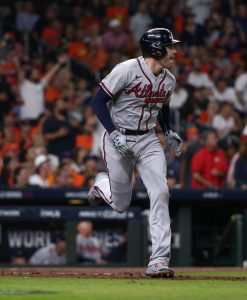
Los Angeles finished tied for third as a team in wRC+ last season (excluding pitchers), with their collective .251/.339/.446 mark checking in 13 percentage points above the league average offense. Only the Astros and Giants fared better, while L.A. was tied with the Blue Jays. They’ve lost Corey Seager to free agency this winter, but Freeman steps right into the void as a left-handed, middle-of-the-order bat for manager Dave Roberts.
One could argue Freeman’s even an offensive upgrade over Seager, who himself is one of the best hitters in the game. Freeman has been a consistently excellent bat, not having posted a wRC+ lower than 132 in any season since 2013. That run has earned him five All-Star nods, three Silver Slugger Awards and six top ten finishes in NL MVP balloting.
Freeman has remained at the top of his game over the past few seasons. He obliterated opposing pitchers to the tune of a .341/.462/.640 line during the 60-game season in 2020. Among qualified hitters, only Juan Soto fared better by measure of wRC+, and Freeman earned a resounding victory in that year’s Senior Circuit MVP balloting. It was never realistic to expect him to repeat that kind of otherworldly performance over a full schedule, but he returned to his metronomically consistent ways in 2021.
Over the course of the season, Freeman appeared in 159 games and tallied 695 plate appearances of .300/.393/.503 hitting. He popped 31 homers, drew walks at a robust 12.2% clip and only struck out in 15.4% of his trips to the plate. Freeman began the year with a relatively pedestrian start by his lofty standards, but he got scorching hot from June onwards. Over the season’s final four months, he raked at a .329/.404/.520 clip. That production helped carry the Braves to their fourth straight division title, and Freeman picked up where he left off when the lights were brightest. He posted an OPS of .996 or better in all three playoff rounds, helping Atlanta to their first World Series title since 1995.
Coming off that championship, many expected Atlanta would strike quickly to ink the career-long Brave to another deal. Freeman and the club had already lined up on an extension once, a February 2014 eight-year pact that guaranteed him $135MM and delayed his first trip to the open market by five years. The Braves maintained they had interest in keeping Freeman in the fold, but the first baseman’s desire for a sixth year quickly became a stumbling block.
Atlanta, which had made Freeman a qualifying offer at the start of the offseason, reportedly put forth a five-year proposal in the $135MM range. It’s believed they eventually nudged the guarantee around $140MM, but the organization seemed opposed to putting a sixth year on the table. Freeman turned 32 years old in September, and Braves brass apparently had real reservations about guaranteeing him a notable salary through his age-37 campaign.
Throughout the lockout, industry chatter picked up that Freeman and the Braves might be heading their separate ways. That became all but official when Atlanta struck a deal to acquire A’s star Matt Olson on Monday afternoon, then signed him to a $168MM extension the next day. Freeman penned a farewell to his former teammates, coaches and the Atlanta fanbase on Instagram this afternoon.
It’s not hard to see the Braves reasoning for letting Freeman walk. Olson is more than four years younger, so his extension only takes him through his age-35 season. There’s real risk in committing to any player into his late 30’s, and that’s particularly true given that Freeman needs to continue to hit at a very high level to be an elite player. He’s a solid defensive first baseman but unlikely to be a perennial Gold Glove winner into his mid-30’s.
Recent six-plus year contracts for free agents at the position haven’t been particularly fruitful. Each of the past four deals of six-plus years for first basemen — the Padres’ eight-year Eric Hosmer agreement, the Orioles’ bringing back Chris Davis on a seven-year pact, Prince Fielder’s nine-year contract with the Tigers, and the Angels’ ten-year investment in Albert Pujols — turned out to be missteps for the club.
Of course, that’s not to say Freeman’s deal with Los Angeles will end the same way. It’s shorter than those precedents, for one, and Freeman has a much more consistent track record than either Hosmer or Davis did at the time they signed their deals. There’s essentially nothing to nitpick in his offensive profile. Freeman doesn’t chase many pitches, and he makes plenty of contact on offerings both inside and outside the strike zone. He posts high-end exit velocities and hard contact rates annually. As is the case with most left-handed hitters, he’s better against right-handed pitching. Yet Freeman’s career .266/.348/.436 mark against southpaws demonstrates he’s more than capable of holding his own without the platoon advantage.
Even after the Braves dropped out, a few teams remained involved in the running for his services. The Red Sox, Blue Jays and Padres were superficially tied to Freeman in recent days, but it seems the surprising Rays may have proven one of the Dodgers strongest challengers in the end. Juan Toribio of MLB.com tweets that Tampa Bay made a “strong push” throughout the process, but L.A.’s willingness to acquiesce on the sixth year proved a deal-breaker.
It’s a return to Southern California for Freeman, an Orange County native. In addition to the financial and geographical appeal, he’ll step into a lineup that’s among the best in recent memory. It’s conceivable the Dodgers will roll out an Opening Day lineup consisting of Freeman, Mookie Betts, Trea Turner, Max Muncy, Justin Turner, Will Smith, Chris Taylor, Cody Bellinger and AJ Pollock. Betts, Freeman and Bellinger are each former league MVP’s. Eight of those nine players have garnered at least one All-Star selection; the one player who hasn’t yet gone to the Midsummer Classic, Smith, is among the top handful of catchers in MLB.
The Dodgers have assembled a similarly star-studded pitching staff, and the construction of this kind of roster required a sizable investment from ownership. Los Angeles blew past all three luxury tax tiers last season, incurring nearly $33MM in fees. They’re in line for another huge expenditure this year.
The exact financial structure of Freeman’s deal isn’t yet known, but contracts’ average annual values are used for luxury tax purposes anyhow. Adding $27MM to that mark pushes the 2022 CBT tab north of $277MM, in the estimation of Jason Martinez of Roster Resource. Because they exceeded the CBT last season, the Dodgers will be subject to escalating fees as a second-time payor. They’ll be taxed at a 30% rate for every dollar spent between $230MM and $250MM, a 42% clip on overages between $250MM and $270MM, a 75% rate on overages between $270MM and $290MM and a 90% tax on all expenditures north of $290MM.
In addition to the financial cost, the Dodgers will take on some non-monetary penalties for signing a player who had rejected a qualifying offer. Because they paid the luxury tax last year, they’ll lose their second-highest and fifth-highest picks in the upcoming draft and be stripped of $1MM in international signing bonus space. The Braves, as a team that neither received revenue sharing nor paid the luxury tax, will receive a compensatory pick after Competitive Balance Round B in the upcoming draft. Those selections typically fall in the 70-75 overall range.
That pick will be little consolation to Braves fans disheartened by Freeman’s departure, although that the organization replaced him with a hometown star of their own in Olson should soften the blow. Even when it became clear he’d be leaving Atlanta, however, there were presumably many Braves fans hoping he’d wind up somewhere other than L.A.
Freeman moves on from the reigning World Series winner to join the team he played an instrumental role in defeating in last year’s NL Championship Series. His departure from the defending champs to sign on with what appears to be MLB’s best team adds plenty of intrigue to what’ll be an entertaining battle for control in the National League.
Jon Morosi of MLB.com first reported the Dodgers and Freeman were making progress on a deal that would guarantee $150+MM. Ken Rosenthal of the Athletic reported the sides were discussing a six-year deal in the $160MM range. Kiley McDaniel and Jeff Passan of ESPN reported Freeman and the Dodgers were in agreement on a six-year, $162MM contract.
Image courtesy of USA Today Sports.
Latest On Freddie Freeman’s Market
It’s been apparent since the Braves acquired and extended first baseman Matt Olson that Freddie Freeman is likely headed elsewhere in free agency, but Freeman made that all but official this afternoon when he thanked Braves fans and bid them and the organization farewell on Instagram this afternoon.
“…Thank you from the bottom of my heart,” wrote Freeman. “It has been a blast to have you cheer for me and I hope I was able to bring smiles to a lot of your homes over the years. I gave everything I had day in and day out and I hope you guys saw that as well. Although our time has come to an end, I look forward to seeing and playing in front of you all again. When that time comes, I hope you remember all the wonderful memories we made together. I love you Braves Country! Champions Forever!”
It’s not clear whether Freeman’s message is a portent for an agreement with a new team or simply an acknowledgement that the first chapter of his storied career has drawn to a close. Several possible landing spots for the 2020 NL MVP have dried up in the past few days, as the Braves not only essentially replaced him with Olson, but the Yankees struck up a deal to bring Anthony Rizzo back to the Bronx.
Reports recently have suggested that Freeman remains of interest to the Dodgers, Red Sox, Rays and Padres, although each destination comes with its own reasons for some degree of skepticism. Freeman has reportedly sought a six-year deal that would carry him through his age-37 season, and the Dodgers tend to prefer higher annual salaries and shorter terms than that six-year target. To that end, USA Today’s Bob Nightengale wrote this week that L.A. is “believed” to have offered a four-year deal to Freeman that includes a sizable annual value.
Looking to Freeman’s other reported suitors, the Padres have spent more than a year trying to move Eric Hosmer, who still has four years and $59MM remaining on his contract. As explored more in depth here at MLBTR yesterday, it’s difficult to see that deal coming together without several other pieces falling into place first.
The Red Sox have been comfortable exceeding the luxury tax in the past, but they opted not to do so and have at pair of interesting young first base/designated hitter types already in Bobby Dalbec and prospect Tristan Casas. It’s doubtful that either would stand in the way of Boston signing a player of Freeman’s caliber, but the luxury tax concerns present a more feasible roadblock. Still, SNY’s Andy Martino tweeted this morning that the Yankees believe their archrivals’ interest in Freeman is sincere.
As for the Rays, their interest is said to be real but also comes with the most obvious hurdles of the bunch. Tampa Bay’s payroll is perennially among the lowest in the sport, and while the long-term books are exceptionally clean (as noted when first examining their reported offer), a free agent of Freeman’s caliber heading to Tampa is entirely without precedent. It was a surprise several years ago to see the Rays reel in Charlie Morton on a $30MM guarantee that spanned two seasons; Freeman could command an annual salary in that range over a longer term. MLB Network’s Jon Heyman tweeted this morning that Tampa Bay has remained “aggressive” in its surprising pursuit of Freeman, but an actual deal between the two parties would still register as one of the largest free-agent surprises ever.
The lack of obvious suitors for a massive five- or six-year commitment and the recent decisions by the Braves and Yankees to move on has created a sense among some executives in the game that Freeman’s camp overplayed its hand, Jim Bowden of The Athletic tweets. That’ll be determined by Freeman’s ultimate contract, of course, but his path to the massive contract that once appeared to be a given looks a bit less clear now than it did when the Yankees and Braves were still in the market for his services.