
Checking In On Last Year’s American League Playoff Teams
With 10 teams qualifying for the MLB playoffs annually, there’s guaranteed to be a fair amount of turnover at the top of the mountain each season. For instance, both the 2016 and ’17 postseasons welcomed five playoff teams that didn’t earn a trip during the previous campaign. At least some of last year’s playoff-bound clubs will face a high degree of vulnerability going into 2018, then, and it would obviously behoove all 10 to make as many improvements as possible heading into the spring. This offseason has unexpectedly operated at a Pedro Baez-esque pace, leaving room for 2017’s top teams to make some significant moves over the next couple months if they wish.
As you’ll see below in this AL-focused edition, headline-grabbing transactions are likely still on the way for some of the junior circuit’s best teams from a year ago.
Cleveland Indians (2017 record: 102-60; current FanGraphs projection for 2018: 93-69): While the Indians are the odds-on favorites to win the AL Central for the third straight year, they’ve absorbed multiple blows this winter. First baseman/designated hitter Carlos Santana, who had been a stalwart for the Tribe since 2010, joined the Phillies as a free agent. Likewise, workhorse reliever Bryan Shaw and fellow late-game standout Joe Smith exited on the open market, taking away a couple members of last year’s otherworldly pitching staff. And the Indians may also lose two more notable 2017 contributors in outfielders Jay Bruce and Austin Jackson, both of whom are unsigned.
Contrary to last offseason, when the Indians’ windfall from their 2016 World Series run helped them splurge on free agent Edwin Encarnacion, they’re unlikely to make any major moves this winter. As it stands, Cleveland hasn’t created headlines aside from exercising talented but injury-prone outfielder Michael Brantley‘s $12MM option, reeling in Santana’s replacement – Yonder Alonso, whose fly ball-first offensive approach led to quality results in 2017 – and picking up outfielder Melvin Upton Jr. on a minor league pact. Jackson himself took a minors deal last year and went on to thrive as a reserve, giving the Indians hope that Upton will reestablish himself in similar fashion next season.
Houston Astros (2017 finish: 101-61; current projection for 2018: 97-65): No one would have blamed the reigning World Series champions for doing little to nothing this winter, given the dearth of weaknesses on their roster. Thus far, a bullpen that was unreliable in the playoffs has been an area of focus. Even that group wasn’t in dire need of help, however, despite Luke Gregerson‘s departure in free agency. Nevertheless, the Astros bolstered their relief corps with the signings of the aforementioned Smith and ex-Cub Hector Rondon, giving them two more righties to join the likes of Ken Giles, Chris Devenski, Brad Peacock, Will Harris and Joe Musgrove.
It’s possible Astros general manager Jeff Luhnow’s offseason heavy lifting is now done, though it would seem unwise to rule out more pickups. After all, the Astros have been connected to top-tier starters Yu Darvish, Jake Arrieta and Chris Archer, star outfielder Christian Yelich, and catchers J.T. Realmuto and Jonathan Lucroy on the rumor mill in recent weeks. They even showed some interest in 2017 NL MVP Giancarlo Stanton before the Marlins shipped him to the Yankees last month, and they’ve looked at free agent outfielder Carlos Gonzalez.
The shine has come off CarGo lately, but he might help replace retired designated hitter Carlos Beltran – who, despite being a highly respected veteran presence, wasn’t productive on the field last season. For now, catcher Evan Gattis is the front-runner to serve as Houston’s DH in 2018. If he does, that could open up room for a Realmuto or Lucroy acquisition, especially with Gattis and starting backstop Brian McCann likely to become free agents after next season.
Boston Red Sox (2017 finish: 93-69; current projection for 2018: 91-71): Despite their success last season, the Red Sox endured an uncharacteristically poor year at the plate as they began life after David Ortiz. While Boston did finish 10th in the majors in runs, it placed just 22nd in wRC+, 27th in home runs and 28th in ISO. Consequently, their fan base has been calling for the acquisition of a bopper to help fill Ortiz’s monumental void. President of baseball operations Dave Dombrowski is sure to oblige at some point as he attempts to make life easier on rookie manager Alex Cora. The question is: Will the Red Sox successfully woo the premier hitter on the market, outfielder J.D. Martinez, and where would he play with the enviable OF trio of Mookie Betts, Jackie Bradley Jr. and Andrew Benintendi in the fold?
The Red Sox and Martinez, an elite hitter with serious defensive limitations in the grass, have been in a staring contest for weeks. With free agency moving so slowly, a deal doesn’t appear imminent. Should Boston come up short in the Martinez sweepstakes, it’s unclear what it would do for a Plan B. Free agent first baseman Eric Hosmer, White Sox first baseman Jose Abreu and Orioles shortstop/third baseman Manny Machado have been on the Red Sox’s radar this winter; however, the presences of just-re-signed first baseman Mitch Moreland and DH Hanley Ramirez could complicate matters (the latter may be a release candidate, though), and acquiring Machado from the division-rival Orioles is hardly a slam dunk.
New York Yankees (2017 finish: 91-71; current projection for 2018: 91-71): The Yankees have also been in on Machado, who’d add to an already ridiculous lineup that includes the newest Bronx Bomber, Stanton, fellow 50-home run man Aaron Judge and big-hitting catcher Gary Sanchez, among others. Although swinging a deal for Machado appears unlikely, he’d fill a greater need in New York than he would in Boston. The Red Sox, after all, look set on the left side of their infield with Rafael Devers and Xander Bogaerts, whereas the Yankees have lost third basemen Chase Headley and Todd Frazier since last season. They also waved goodbye to second baseman Starlin Castro, who – along with two low-level prospects – went to Miami in the Stanton swap. But that was a small price to pay to get Stanton and Judge in the same lineup and outfield.
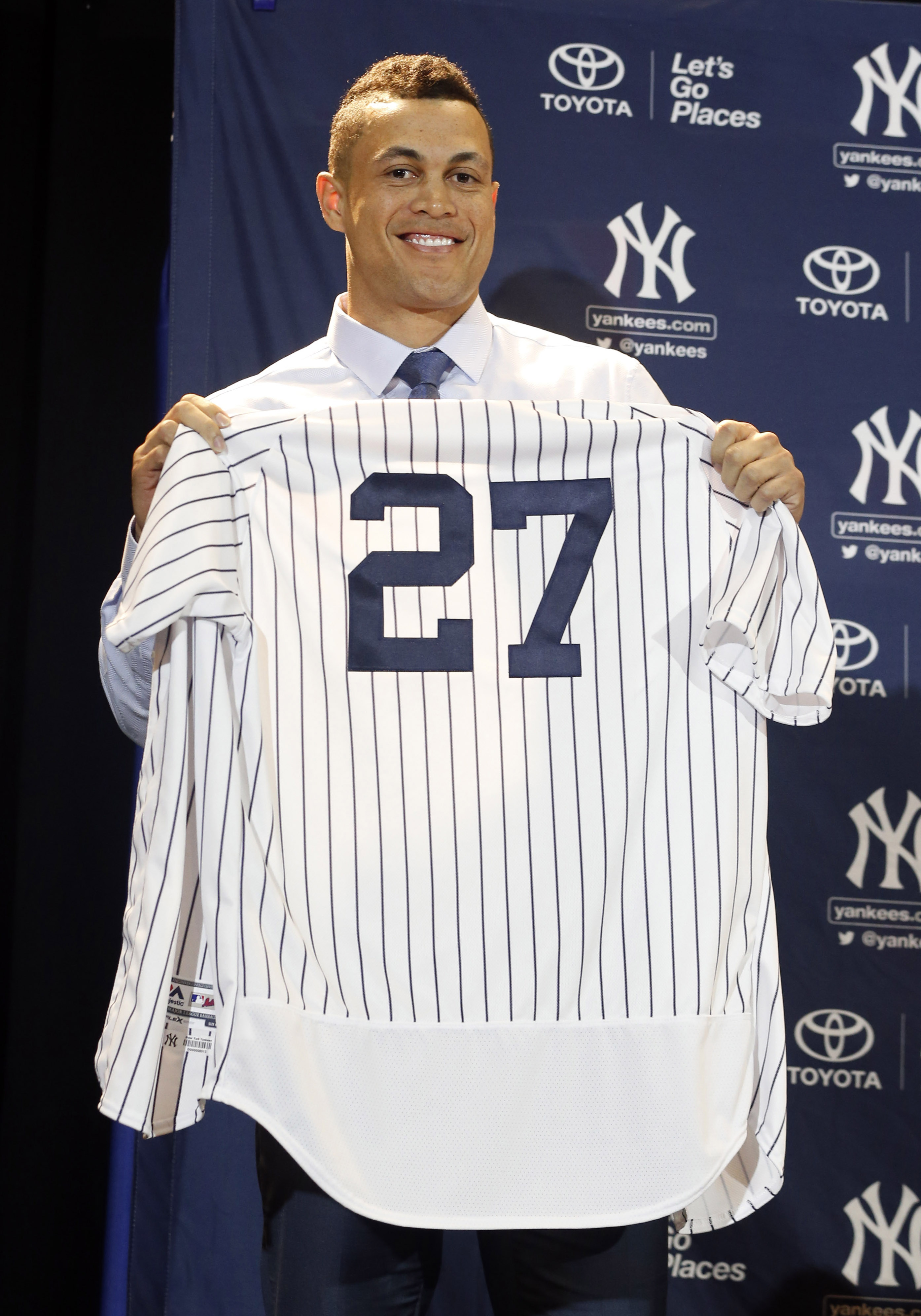
Being able to write Stanton, Judge and Sanchez into his normal lineup will put neophyte skipper Aaron Boone in an enviable spot, but the Yankees’ work isn’t necessarily done. While they’re bent on staying below the $197MM luxury tax threshold in 2018, GM Brian Cashman still seems likely to acquire at least one veteran infielder (perhaps Frazier, who remains a free agent) so as not to turn to unproven options at both second and third. Additionally, despite the re-signing of CC Sabathia and the presences of Luis Severino, Masahiro Tanaka (who surprisingly didn’t opt out of his contract at season’s end), Sonny Gray and Jordan Montgomery, Cashman has been on the hunt for an established, controllable starter.
The Yankees sent a haul of prospects to the A’s for multiple years’ control over Gray last summer, and it may happen again this winter for someone like Gerrit Cole (Pirates), Michael Fulmer (Tigers), Chris Archer (Rays) or Danny Duffy (Royals). Alternatively, a trade for contract-year Diamondbacks left-hander Patrick Corbin seems like a possibility. The Yankees have also shown interest in Darvish, though that looks like an improbable match when considering their tax concerns. Dumping a large portion of reserve outfielder Jacoby Ellsbury‘s $68MM-plus contract on someone would help make a Darvish signing more realistic, but good luck with that.
Minnesota Twins (2017 finish: 85-77; current projection for 2018: 81-81): Speaking of Darvish, the small-market Twins have aggressively courted him this offseason as they work to upgrade an underwhelming starting staff. It’s an unlikely marriage on paper, but GM Thad Levine is familiar with Darvish from their time in Texas together. More importantly, the Twins have money available to make such a splash, as MLBTR’s Steve Adams explained in November. Whether via free agency (Darvish, Jake Arrieta, Lance Lynn, Alex Cobb) or a trade (Archer?), it would behoove the Twins to add at least one proven starter to a group that lacks certainty after Ervin Santana and Jose Berrios. Otherwise, repeating as a postseason-bound team in 2018 could be a rather tall task for Minnesota, particularly with the playoff-hopeful Angels having made one well-received move after another this winter. The Twins, meanwhile, have been mostly quiet in terms of transactions, with relatively inexpensive relievers Fernando Rodney and Zach Duke being their only notable signings.
Of course, when talking about the Twins’ offseason, it would be impossible to ignore the controversy surrounding franchise building block and third baseman Miguel Sano. Last week, photographer Betsy Bissen accused Sano of assaulting her in 2015. Sano issued a denial, but the league is now investigating the claim.
Photo courtesy of USA Today Sports Images.
Taking Inventory: San Diego Padres
The Padres are in a fairly flexible spot this offseason, as the team entered the winter with fairly low payroll obligations for the 2018 season and a long-term balance sheet that features just one notable commitment. While nobody really expects the team to contend in the coming season, its pursuit of Eric Hosmer shows that the organization would like to begin building toward MLB competitiveness.
On the whole, there’s no real reason to think the Padres need to trade any particular player. But the organization has one fairly obvious, high-end trade candidate and it also seems reasonaby likely that at least one veteran infielder will end up hitting the road.
Click here to view the previous entries in this series.
[Related: San Diego Padres depth chart and Padres payroll outlook; MLBTR 2018 arbitration projections]
One-Year Rental
Chase Headley, 3B ($13MM in 2018): The Friars brought back their former star in a deal that was designed mostly to acquire righty Bryan Mitchell, who’ll compete for a rotation spot. Now, it seems likely that Headley will be dangled as a means of trimming some salary. Entering his age-34 season, Headley profiles as a solid average player who could hold down the fort for a year in the right circumstances. But his overall output with the bat has been average or worse over the past four seasons, so despite the limited contractual commitment, it seems likely the Padres will have to keep some of the salary if he ends up on the move.
Two Years of Control
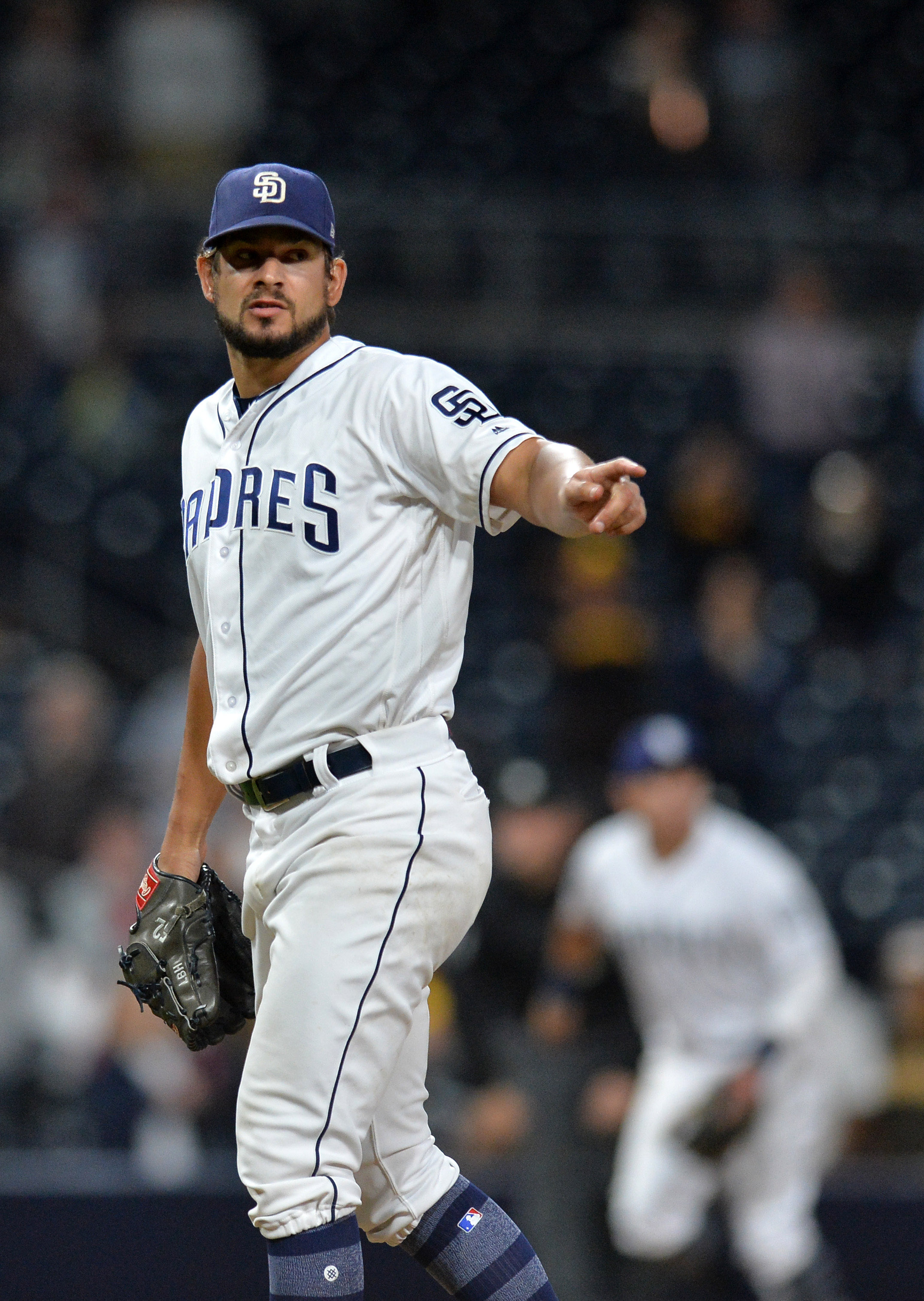
Brad Hand, RP (projected $3.8MM arbitration salary; arb-eligible thru 2019): This is the one player who stands out as a premium veteran trade asset. With Orioles lefty Zach Britton suffering an offseason injury, and a busy market for free agent relievers, Hand stands out as a highly valuable asset. He has retired more than 11 batters per nine via strikeout in each of the past two seasons and upped his output in 2017, when he ran a 2.16 ERA over 79 1/3 innings and stepped seamlessly into the closer’s role. It’s arguable the Pads ought to cash in on Hand in the near term, rather than risking any injury or performance decline, though we haven’t heard much chatter surrounding him so far this winter.
Carter Capps, RP (projected $1.3MM arbitration salary; arb-eligible thru 2019): It was an open question whether the Padres would tender Capps a contract at all following his tepid return from Tommy John surgery. The 27-year-old managed just seven strikeouts and allowed nine earned runs in his 12 1/3 innings in 2017, while showing a whopping 5+ mph drop in his average fastball velocity and carrying only a 7.8% whiff rate. But the Padres evidently feel that Capps can still build himself back into being a quality reliever, and it’s certainly worth bearing in mind just how dominant he had become before the elbow injury. It seems unlikely he’ll be moved, but it’s certainly possible a roster need could push him out or that another organization may put a slightly higher value on his upside.
Clayton Richard, SP/RP ($6MM through 2019): The southpaw just inked an extension at the tail end of the 2017 campaign, so it’s quite unlikely the Pads would turn around and deal him before the start of the coming season. Instead, the 34-year-old is likely to hold down a rotation spot and perhaps eventually slide into a swingman role as situations dictate.
Longer-Term Assets
Yangervis Solarte, INF ($5.5MM through 2018, including buyout of 2019-20 club options): If the Friars don’t trade Headley, it may be because they find a better deal that involves Solarte. A solid switch-hitting option who can handle third base, second base, and even a bit of time at short, Solarte would fit on a lot of rosters around the game. The flexibility in his contract boosts his value, though surely other organizations won’t be offering up top talent for a player who is coming off of a personal-worst .255/.314/.416 season at the plate.
Wil Myers, 1B ($78.5MM through 2022, including buyout of club option for 2023): There’s no indication that the Padres have interest in shopping Myers, who had a less-than-inspiring first season under his new contract. Rather, it seems the club is weighing a move for free agent Eric Hosmer, which would bump Myers into a corner outfield spot. But Myers does carry the team’s only large, long-term contract, so he certainly merits mention.
Cory Spangenberg, UTIL (projected $2.0MM arbitration salary; arb-eligible thru 2020): In his most extensive MLB action, a 486 plate appearance run in 2017, Spangenberg turned in a .264/.322/.401 batting line with 13 home runs and 11 steals. That’s a handy batting line for a player who rated as an outstanding overall baserunner and can play just about anywhere on the field. Then again, the output was still below the league average and there are limits to Spangenberg’s defensive function; he graded poorly at third last year and isn’t really an option at short or in center. All told, though, he’s a useful asset who’d draw interest if dangled.
Kirby Yates, RP (projected $1.1MM arbitration salary; arb-eligible thru 2020): Though he’ll turn 31 before the start of the 2018 season and has not really thrived in prior attempts at the majors, Yates is an interesting player after a strong 2017 season. Home runs marred his balance sheet in the end, but it’s hard to ignore his 14.0 K/9 strikeout rate and robust 17.3% swinging-strike rate. Odds are the Padres will keep Yates and hope he can produce the results to match those promising peripherals, but his name could also come up in trade talks.
Matt Szczur, OF (projected $800K arbitration salary; arb-eligible thru 2021): It’s hard to imagine teams lining up for a player who seemingly profiles at best as a solid, right-handed-hitting fourth outfielder. But Szczur did produce at a roughly league-average rate over 237 plate appearances in 2017, most of which came after he moved to the Friars from the Cubs in the middle of the season. Most impressively, Szczur maintained a 14.3% walk rate over the season. He’s also still affordable as a Super Two.
Austin Hedges, C (pre-arb): In all likelihood, the 25-year-old Hedges is going to continue to take the bulk of the time behind the dish for the Padres in 2018 and beyond. But there’s some uncertainty in his outlook after a marginal .214/.262/.398 output with the bat in 2017, even if he did swat 18 long balls. It’s important to bear in mind that Hedges is considered a high-quality defender; indeed, he was one of the game’s highest-rated pitch framers in his first full season as a big leaguer. There may not be a ton of offensive upside, but the Padres have good reason to continue to allow Hedges to develop as a hitter while he gives a boost to the organization’s pitching staff.
Of course, the Padres have a variety of other younger players around who could conceivably also be traded. To take a few examples, it isn’t impossible to imagine deals involving outfielder Hunter Renfroe, starter Luis Perdomo, or reliever Phil Maton. But those and others don’t seem particularly likely to be targeted by contending organizations weighing win-now moves, so we needn’t consider them in detail. We’re also going to go ahead and assume that the team intends to utilize the just-acquired Freddy Galvis at shortstop, so there’s no real cause to weigh his trade candidacy.
Photo courtesy of USA Today Sports Images.
Taking A Look At What Is Left On The Relief Market
While the overall free-agent market continues to lag, relievers have moved freely thus far. And that hasn’t been the result of settling for lesser contracts, either. As a group, in fact, those relievers that ranked among MLBTR’s top 50 free agents have signed for nearly exactly the projected amount of guaranteed money. And a handful of other relievers (some of whom were listed by MLBTR as honorable mentions) have also scored significant contracts.
Take a look (link for app users; results compiled utilizing MLBTR’s 2017-18 free agent tracker):
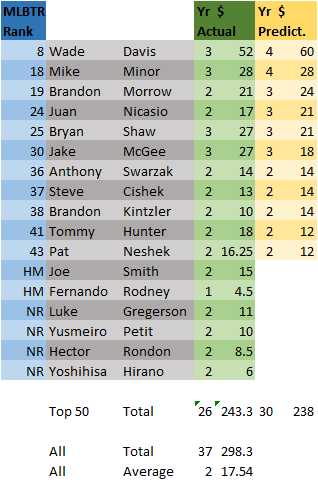
(Yes, Minor is likely slated for rotation work with the Rangers, but he spent 2017 as a reliever and was pursued by many organizations in that capacity. Click here to view all the relievers that have signed thus far.)
Quite a few matches have obviously been made already, but some yet remain. Notably, the trade market has been rather quiet with regard to relievers. The biggest names to move are players such as Jim Johnson and Thyago Vieira. That leaves a host of significant potential trade targets.
Still, many organizations will first consider the possibility of obtaining a needed arm for the cost of cash alone. Teams venturing back onto the open market for relievers will find a depleted stock, but still some possibility of finding impact, depth, or both. You can scroll through all of the relievers still available in free agency, but we’ll run through some of the most notable names below …
Premium Relievers
Two of the three top pen men are still available. Former Royals and Rockies closer Greg Holland, who MLBTR predicted would earn $50MM over four years, is certainly the biggest name left. After seeing his former teammate, Wade Davis, settle for three years (albeit at a record AAV), it seems reasonable to downgrade expectations a bit for Holland, though there’s no reason to think he won’t cash in.
Likewise, the much younger Addison Reed is still available. He has succeeded as a closer and setup man in recent years, with impeccable control and recent health. We guessed he’d secure a fourth guaranteed season and earn a total $36MM contract, though it’s arguable he could yet be worthy of more (or that he’d need to settle for less).
Either of those two pitchers would represent major additions for teams looking to shore up their late-inning units. But they aren’t the only useful relievers left …
Quality Performers
Just one top fifty free agent, lefty Tony Watson, remains unsigned. That’s rather remarkable, really, given the dearth of signings for players at other positions. In any event, Watson ought to draw strong interest. He has ample late-game experience, including as a closer, and turned in twenty strong frames with the Dodgers after a mid-season trade. MLBTR predicted a two-year, $12MM deal.
Otherwise, the top remaining lefty is Brian Duensing, who rewarded the Cubs’ faith in him with 62 1/3 innings of 2.74 ERA pitching. Notably, Duensing was about as effective when pitching with and without the platoon advantage in 2017, though that hasn’t been the case over the duration of his career. It doesn’t help his cause that he’s nearing his 35th birthday, though Duensing ought to do well on a one or two-year deal.
On the right-handed side, former closers Sergio Romo and Koji Uehara both showed signs of life in 2017. The former was lights-out after a mid-season trade, allowing just five earned runs in his 30 2/3 innings (over 25 appearances) with the Rays. And though Uehara posted the second-worst ERA of his career (3.98) and is already 42 years of age, he also averaged 10.5 K/9 against 2.5 BB/9. Both of these hurlers maintained swinging-strike rates in the range of fifteen percent. Of course, Uehara’s future is unclear, particularly given that he missed time late in the year with a neck issue.
Meanwhile, one of the game’s best relievers in terms of results was Matt Albers. Soon to turn 35, Albers recorded a 1.62 ERA over 61 stunning innings. He benefited from some good fortune, to be sure, but his peripherals (including 9.3 K/9, 2.5 BB/9, and a 51.0% groundball rate) also gave evidence of a quality performance. Likewise, 32-year-old David Hernandez produced all year long, ending the season with 55 frames of 3.11 ERA ball and 8.5 K/9 against 1.5 BB/9. Neither of these two pitchers is likely to clean up in free agency, but both seem likely to draw interest from contenders as middle relievers and stood out somewhat from some of the others covered below.
Some of the Best of the Rest
There’s quite an arbitrary dividing line between some of the names just listed and some of those yet to come (not to mention those not listed at all), but we had to draw them somewhere. Here are a few of the other notable hurlers who have also yet to sign (by handedness and alphabetical order):
Righties
- Matt Belisle – He was quite good after a miserable start and ended the year with a 4.03 ERA in 60 1/3 innings.
- Tyler Clippard – Clipp is still getting swings and misses like he did in his prime, but his flyball heavy approach has yielded an increasing number of long balls in the past two seasons and he struggled with the free pass in 2017.
- Seung-hwan Oh – His sophomore MLB season fell far shy of his debut effort, with only a 4.10 ERA through 59 1/3 innings, but the veteran Korean hurler still generated a 12.9% swinging-strike rate.
- Peter Moylan – The Aussie continues to thrive in his still-ongoing comeback tour; in 2017, he threw 59 1/3 innings of 3.49 ERA ball.
- Bud Norris – Though Norris could not hold his edge as the Angels closer, he had an extended run of success and finished with 10.7 K/9 for the season.
- Craig Stammen – In a bounceback campaign, Stammen gave the Padres 80 1/3 innings of 3.14 ERA ball. Though his peripherals (8.3 K/9, 3.1 BB/9, 51.6% groundball rate, 1.34 HR/9) were more good than great, there’s reason to hope he might have another couple seasons of workhorse output left in the arm.
- Huston Street – Teams interested in taking a shot on a highly accomplished veteran reliever will surely have interest in Street.
Lefties
- Fernando Abad – He quietly posted a 3.30 ERA in 43 2/3 innings, though he was not given much action in high-leverage spots.
- Jorge De La Rosa – In his first season as a full-time reliever, De La Rosa only carried a 4.21 ERA but utterly dominated lefties, who struggled to a .192/.253/.292 batting line.
- Francisco Liriano – It was not a productive overall season for Liriano, who struggled both before and after a trade and move to the pen, but he nevertheless held the 100 opposing southpaws who strode to the plate against him to a .247/.300/.355 slash.
- Oliver Perez – Though the overall results weren’t great, Perez was still tough for lefties to square up (.227/.301/.364).
- Travis Wood – There wasn’t much to love about Wood’s output in 2017, and he was just cut loose by the Padres, but it wasn’t long ago that he was a useful pen presence with swingman abilities.
Taking Inventory: Cincinnati Reds
The Reds have already parted out most of the components of their most recently competitive roster. It seems the inclination now is to begin climbing the hill rather than continue to strip away veterans. That being said, this is a club that won just 68 games in 2017 and has shown no real indication of ramping up spending.
In short, the Reds are in no position to decline to consider trades involving shorter-term veteran assets. At the same time, indications are that they have fairly hefty asking prices affixed to some of their most notable trade pieces.
[Related: Cincinnati Reds depth chart and Reds payroll outlook]
Two Years of Control
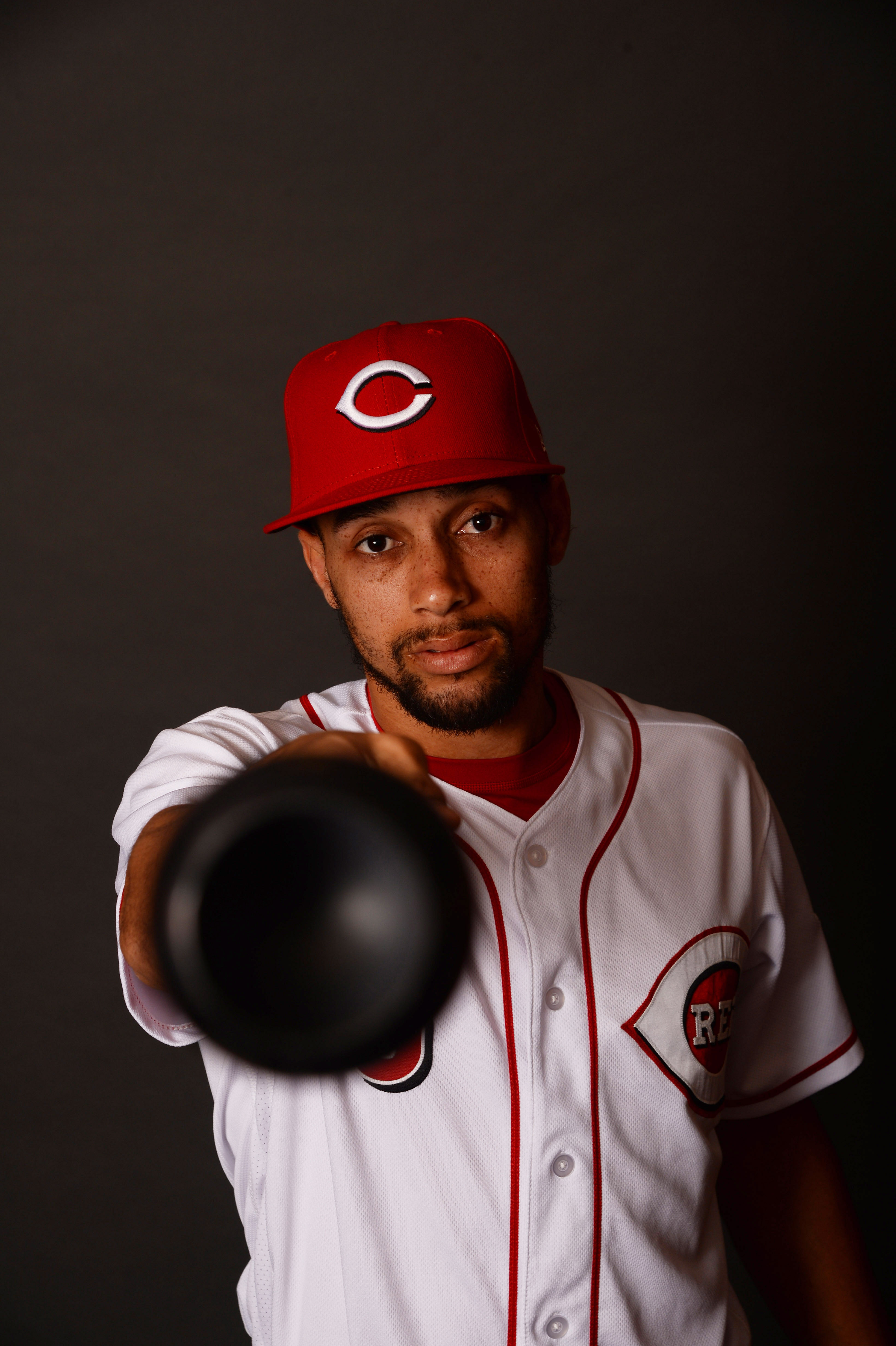
Billy Hamilton, CF (projected $5.0MM arbitration salary; arb-eligible thru 2019): The game’s preeminent burner, Hamilton has drawn a steady drumbeat of trade chatter all winter. Thus far, nothing has come together, but it still feels reasonably likely that another organization will make a significant enough offer to tempt the Reds. After all, though Hamilton has yet to show he can consistently reach base, his lofty baserunning and defensive value make him a highly useful player even if his career ceiling with the bat is still about twenty percent below league average. Dealing Hamilton would clear room in the outfield rotation for youngster Jesse Winker, who showed well in his 2017 debut.
Scooter Gennett, 2B (projected $6.1MM arbitration salary; arb-eligible thru 2019): The Cinci front office made good on its surprising claim of Gennett before the 2017 campaign. He rewarded the faith with 497 plate appearances of .295/.342/.531 hitting and 27 home runs — far and away his best full-season output. That said, Gennett has never hit lefties much and is generally graded as a below-average defender at second, limiting his value. There has been little reported interest to this point, though perhaps it still wouldn’t surprise if he ends up on the move.
Longer-Term Assets
Joey Votto, 1B ($157MM thru 2023; includes buyout on 2024 club option): Sure, he’s 34 years of age, but Votto has been the second-best hitter in baseball over the past three years. That makes the remainder of his massive extension seem quite a bit less onerous than might have been feared. Odds are, though, we won’t get a chance to see how the rest of the league values Votto. All indications are that Votto is not interested in waiving his full no-trade protection and the Reds seem happy to keep him around.
Raisel Iglesias, RP ($13.5MM thru 2020; may opt into arbitration; arb-eligible thru 2021); The Reds’ most obviously marketable player, Iglesias has blossomed into one of the game’s better young late-inning relievers. He’s capable of functioning as a traditional closer or multi-inning stopper. Though he’ll ultimately have a chance to boost his earnings by opting into arbitration, Iglesias remains a controllable bargain. While we analyzed his possible market earlier in the offseason, indications are that the Reds have advertised such a high and firm asking price that interested parties aren’t even coming onto the lot to kick the tires.
Eugenio Suarez, INF (projected $4.4MM arbitration salary; arb-eligible thru 2020): With three years of control remaining, the Reds don’t need to deal Suarez. But they could conceivably find it an opportune time to move the 26-year-old, who is fresh off of an excellent .260/.367/.461 campaign, with top prospect Nick Senzel nearing MLB readiness. That said, Suarez is capable of playing elsewhere in the infield, and it seems likelier that the Reds will explore a long-term contract than try to work out a deal for a player who could well be a key part of the organization’s next contender.
Tucker Barnhart, C ($16MM through 2021; includes buyout on 2022 club option): A quality defender who has increasingly shown he can hit at a useful rate, Barnhart only signed his contract in September. It’d rank as quite a surprise were he to be moved at this point.
Adam Duvall, OF (pre-arb eligible): Though he has swatted over thirty home runs in each of the past two seasons, Duvall has been a roughly league-average hitter due to his inability to get on base (career .296 OBP). That said, highly-rated glovework in the gives Duvall the profile of a solid average regular in the corner. There’d be interest if the Reds make him available, but it still seems likely he’ll be kept in the fold.
Scott Schebler, OF (pre-arb eligible): You can basically take exactly what was written about Duvall and apply it to Schebler. While the latter did not grade as a top-end right fielder in 2017, he did show he can palatably patrol center. With just 1.132 years of service to this point, though, Schebler is likely to remain in Cincinnati for the time being.
Anthony DeSclafani, SP (projected $1.1MM arbitration salary; arb-eligible thru 2020): Elbow troubles robbed all of 2017 from DeSclafani. He remains an exciting pitcher when healthy, and the Reds are all but certain to hold onto his upside this winter.
Brandon Finnegan, SP (pre-arb eligible): Similarly, Finnegan is coming off of a season in which entered with big expectations but managed only four outings. Cinci has little choice but to hope for better health. It’s worth noting, too, that other controllable starters — most notably, eye-opening 2017 debutante Luis Castillo — are likely to be kept in the stable.
Michael Lorenzen, RP (projected $1.4MM arbitration salary; arb-eligible thru 2021): Perhaps the Reds would at least listen to offers on Lorenzen, who did not produce results to match his big-time stuff in 2017. He’d surely draw interest after showing a personal-high 10.4% swinging-strike rate and strong 54.6% groundball rate in heavy usage (83 innings over seventy appearances). But for the Reds, the hope remains that he’ll join Iglesias to form a dominant late-inning duo. It’s even less likely that the club will end up dealing other relief assets, though perhaps there could be some interest in Wandy Peralta, who turned in a solid (if hardly dominant) rookie season.
Jose Peraza, INF (pre-arb eligible): Unless the Reds decide to give up on Peraza, he’ll remain on hand to fill out the infield. But the team is no doubt concerned with what it saw over his 518 plate appearances in 2017, as Peraza managed 23 stolen bases but otherwise produced a marginal .259/.297/.324 batting line.
Salary Dump Candidates
Homer Bailey, SP ($49MM through 2019; includes buyout of 2020 mutual option): If you’re looking for positives, you’d note that Bailey showed velocity in the range of his career peak (94 mph or so) over 91 frames in 2017 — his most extensive action since 2014. But he managed only a 6.43 ERA in that span, with just 6.6 K/9 against 4.2 BB/9. Given that the Reds have a need for innings, and no doubt still have some hope that Bailey will find his way, it seems likeliest this contract will remain on the books for the time being.
Devin Mesoraco, C ($13.125MM in 2018): Just as he was finally showing some signs of health and productivity with a .260/.345/.600 output last June, Mesoraco hit the DL with a shoulder strain. He scarcely hit at all upon returning and ended up suffering a season-ending foot fracture in mid-August. In the aggregate, the Reds have received virtually nothing for the $28MM they committed to Mesoraco via extension: he has provided just 271 plate appearances of 61 OPS+ hitting over the past three seasons. With nearly half of that outlay still left to be paid in the final year of the deal, it’s hard to see Mesoraco as anything but a potential salary dump candidate at this stage. In all likelihood, the Reds will carry him into the season and see what they can get — with the idea of a mid-season trade still carrying at least some potential for saving a bit of cash.
Photo courtesy of USA Today Sports Images.
Taking Inventory: Kansas City Royals
After an extended run at or near the top of the American League Central, the Royals have watched much of their vaunted core hit the open market. What remains in Kansas City, beyond the everlasting title of 2015 World Series champions, is a collection of fairly expensive veterans and a larger group of unproven young assets. The Royals appear destined for a rebuild, joining their AL Central brethren in Detroit and on the south side of Chicago in that regard.
While there aren’t all that many top-shelf trade chips, GM Dayton Moore and his staff do have some commodities that they can market to other clubs as an alternative to the stagnant free-agent market.
[Related: Kansas City Royals depth chart and Royals payroll outlook]
One-Year Rentals
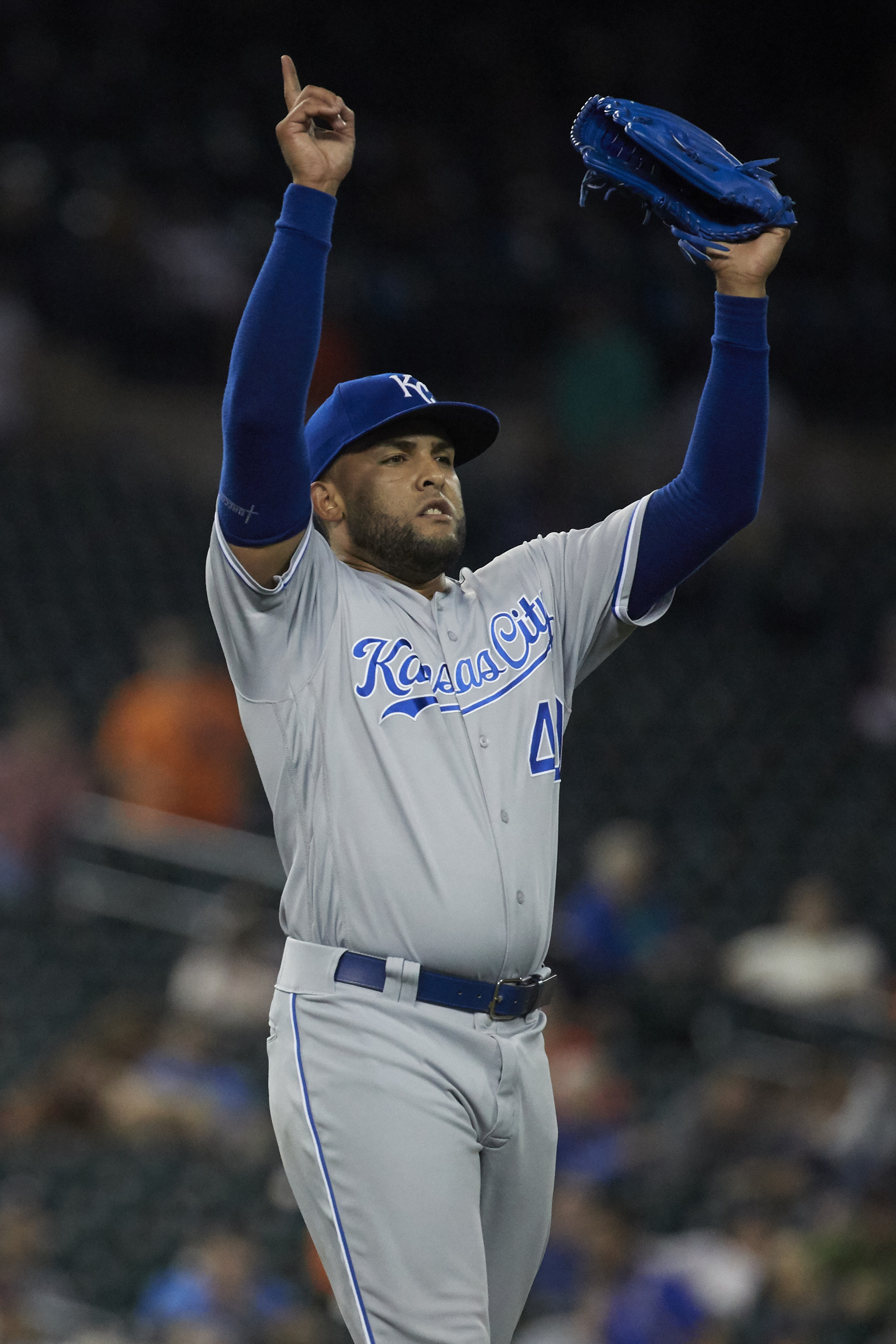
Kelvin Herrera, RHRP (projected arbitration salary of $8.3MM): Herrera is coming off the worst season of his career, having struggled to a 4.25 ERA as he watched his K/9 (8.5), BB/9 (3.0) and HR/9 (1.37) all trend in the wrong direction. That said, Herrera’s average fastball checked in at 97.5 mph, tying him for 10th among all qualified relievers in the game. His 11.5 percent swinging-strike rate and 34 percent chase rate on pitches out of the zone were both down from recent seasons but comfortably above the league average. He’s still just 28 years old, as well.
Joakim Soria, RHRP ($10MM through 2018, including buyout of a 2019 mutual option): Unlike Herrera, Soria saw virtually all of his rate stats improve in 2017. While his 3.70 ERA looks fairly pedestrian, his 2.23 FIP and 3.16 SIERA are more indicative of the success he enjoyed as his K/9 (10.3), BB/9 (3.2), HR/9 (0.16), ground-ball rate (54.8 percent) and swinging-strike rate (13.2 percent) all looked better than they did in a lackluster 2016 season. Soria will turn 34 in May, and he’s not cheap at $10MM, but he can help the back of a contender’s bullpen.
Jason Hammel, SP ($11MM through 2018, including buyout of a 2019 mutual option): Hammel is 35 years old and registered an ERA north of 5.00 last year, but his 4.37 FIP, 7.2 K/9 and 2.4 BB/9 are all at least somewhat encouraging. He’s made at least 29 starts in each of the past four seasons, so a team looking for durable innings in the fifth slot of its rotation could do worse than lining up a deal for Hammel. It shouldn’t require much more than simply picking up the tab on his $11MM remaining salary.
Brandon Moss, 1B/OF/DH ($8.25MM through 2018, including buyout of a 2019 mutual option): Moss, 34, saw his production crater in 2017. The slugger hit just .207/.279/.428 and struck out in nearly a third of his plate appearances, though he did connect on 22 homers and walk at a solid 9.2 percent clip. Still, his struggles in ’17 make him a difficult piece to move right now — especially in a market that is once again rife with first basemen who come with longstanding platoon issues. If he rebounds in the first half, Kansas City shouldn’t have much trouble dealing him to a contender in need of a bench bat come July.
Two Years of Control
Brandon Maurer, RHRP (projected arbitration salary of $3.8MM): Maurer, 27, posted a sky-high 6.52 ERA last year, continuing a trend of delivering questionable bottom-line numbers despite more promising underlying metrics. Maurer averaged 96.6 mph on his heater and racked up a strikeout per inning with solid control. His 1.21 HR/9 mark was a bit high but not extraordinarily so — especially when considering the leaguewide uptick in long balls. But, Maurer stranded just 61.1 percent of the baserunners he allowed, and his career 64.9 percent mark in that category is demonstrably worse than the league average.
Longer-Term Assets
Danny Duffy, SP ($60MM through 2021): One of Kansas City’s most marketable assets, Duffy would be an upgrade for any rotation in the league. The 29-year-old has never crossed the 180-inning threshold in the Majors due to previous injuries and a stint in the K.C. bullpen, but he’s been very good since moving to the rotation on a full-time basis.
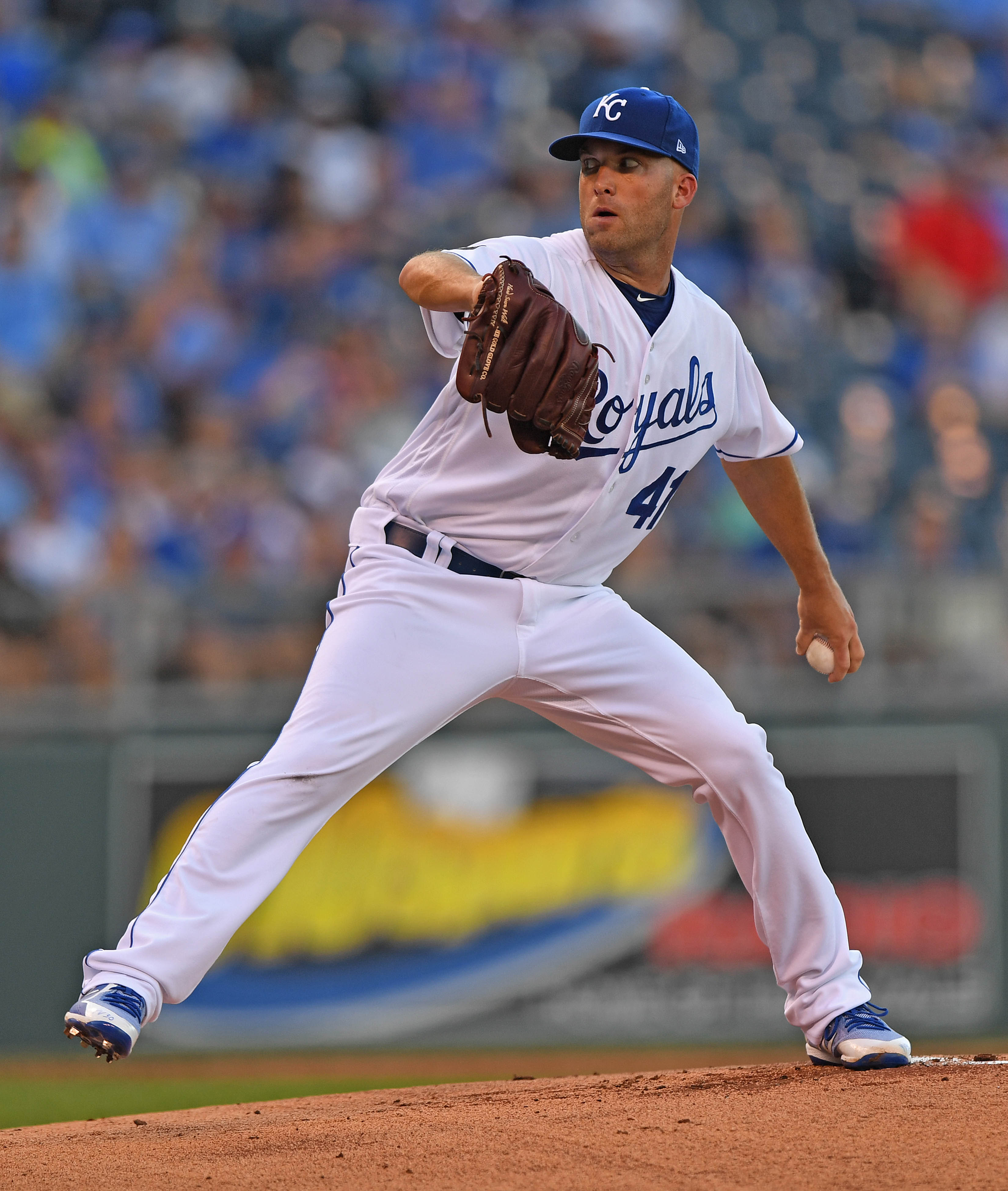
Over a span of 50 starts dating back to May 15, 2016, Duffy has worked to a 3.68 ERA with 8.7 K/9, 2.3 BB/9, 1.14 HR/9 and a 37.8 percent ground-ball rate. He’s signed affordably for another four years, and his contract only runs through his age-32 campaign, so interested parties needn’t worry about signing up for too many decline years. He’s not a Jose Quintana or Chris Archer style bargain, but Duffy should command a fairly substantial return in a trade.
Salvador Perez, C ($43.5MM through 2021): The notion of trading Perez likely causes most Kansas City fans to recoil, as the beloved backstop has emerged as one of the faces of the franchise. Few teams are actively looking for a new starting catcher, though Perez would be the type of player that clubs would make other moves to accommodate. That said, the Royals probably relish the notion of keeping Perez on hand to work with a wave of inexperienced young arms, and a trade doesn’t seem especially likely even if they do take off on a large-scale rebuild.
Whit Merrifield, 2B (pre-arbitration, controlled through 2022): Merrifield has enough club control remaining that there’s no urgency to move him, as he could very well be a part of the next contending Royals roster. The late bloomer broke out with a .288/.324/.460 slash in 2017 and led the AL with 34 stolen bases. He’ll turn 29 this month, though, so the Royals could be wary that he’ll be entering a decline once they’re closer to contending again. The Athletic’s Ken Rosenthal has reported that the Royals are willing to listen to offers on Merrifield.
Scott Alexander, LHRP (pre-arbitration, controlled through 2022): Rosenthal also noted that Alexander could potentially be had even though he, too, has five years of club control remaining. Alexander, 28, turned in an excellent 2.48 ERA in 69 innings last season, averaging 7.7 K/9, 3.7 BB/9 and 0.39 HR/9 along the way. Lefties hit .240/.313/.317 against him, while righties mustered just a .250/.333/.347 line.
Ryan Buchter, LHRP (pre-arbitration, controlled through 2021): Buchter’s strikeout rate plummeted following a trade from the Royals to the Padres, as he began to throw fewer four-seamers and curveballs while substantially increasing his use of a cut fastball. The 30-year-old Buchter averaged better than 11 strikeouts per nine innings in a season and a half with the Padres, albeit with shaky control and extreme fly-ball tendencies. He’s been terrific against both lefties (.160/.255/.306) and righties (.179/.284/.339) to this point in his MLB career.
Jorge Soler, OF/DH ($12MM through 2020, may opt into arbitration once eligible): Acquired from the Cubs last offseason, Soler didn’t seize the limited opportunity he has in Kansas City last year. In 110 plate appearances, he batted just .144/.245/.258 with a pair of homers. However, Soler raked at a .267/.388/.564 clip in the minors, leaving some room for optimism that the former top prospect can still realize some of his potential at the big league level. There’s little reason for the Royals to sell low on him, given his affordable nature and relative youth (26 in February).
Salary Dump Candidates
Ian Kennedy ($49MM through 2020), Alex Gordon ($44MM through 2019, including buyout of 2020 mutual option)
Moving either Kennedy or Gordon would be a tall order and would almost certainly require the Royals to take on a similarly undesirable contract in exchange. Kennedy remains a durable source of innings — he’s made at least 30 starts in each of the past eight seasons — but his penchant for giving up home runs expanded to new heights in 2017 (1.99 HR/9, 5.38 ERA). Finding a taker for Gordon’s contract would be difficult enough in and of itself, but the Royals would also be wrestling with the notion of dumping the contract of a player that has long served as the face of the franchise. And, as a player with 10-and-5 rights (10 years of MLB service, the past five with the same team), he has full no-trade protection.
Photos courtesy of USA Today Sports Images.
Poll: What’s Next For The Pirates?
As those who paid attention to the MLB offseason a year ago remember, Pirates center fielder Andrew McCutchen was among the most popular figures in the rumor mill. At the time, the Pittsburgh icon was coming off a career-worst season both offensively and defensively, which surely hindered the team in its efforts to garner suitable offers for him. Ultimately, the Pirates retained McCutchen and enjoyed a bounce-back year from him at the plate (.279/.363/.486 with 28 home runs in 650 PAs). While McCutchen struggled again in the grass, where he posted minus-14 Defensive Runs Saved and a minus-4.5 Ultimate Zone Rating, the onetime National League MVP nonetheless ranked a solid 17th among outfielders in fWAR (3.7).
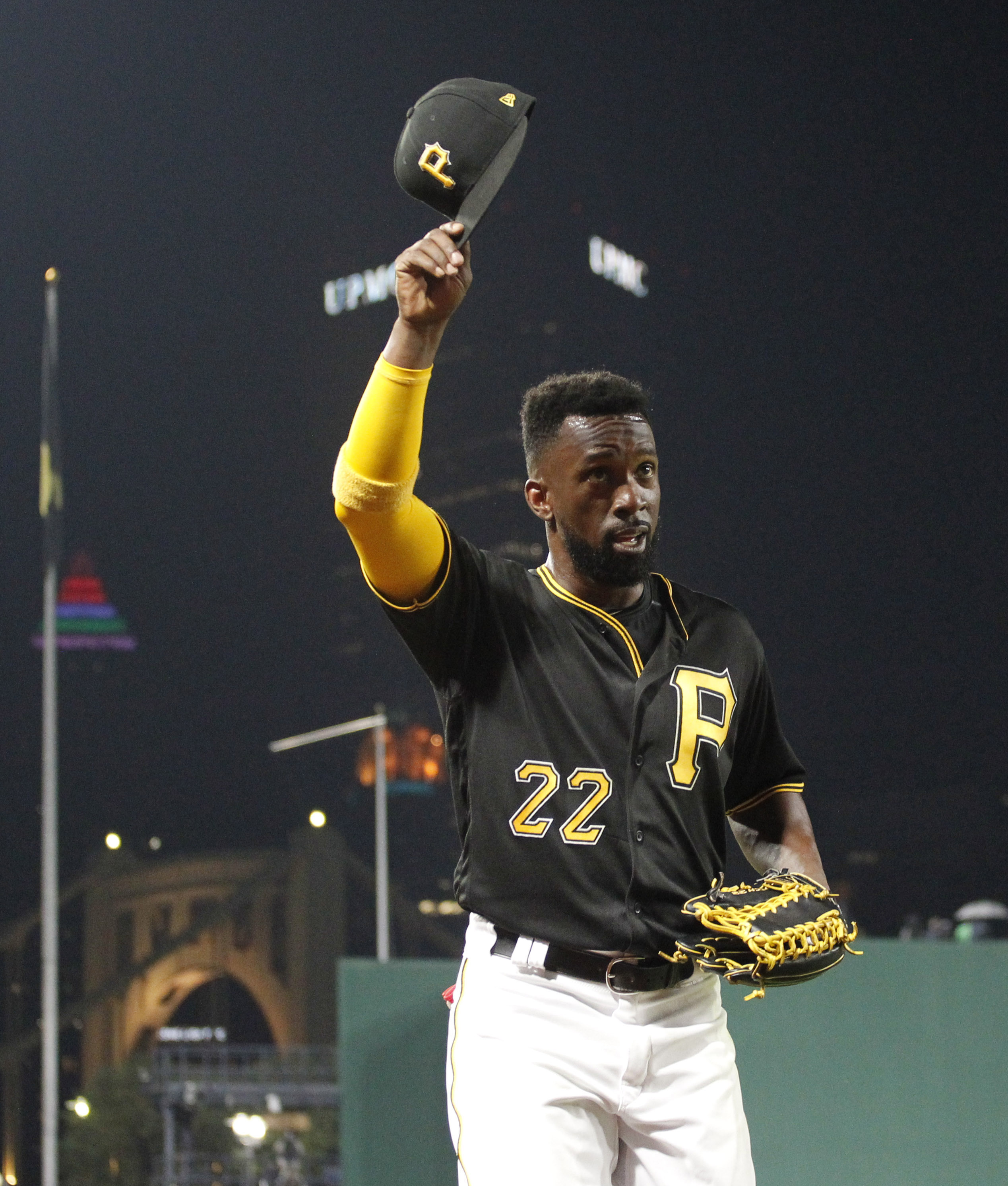
This winter, on the heels of a rebound year, rumors regarding McCutchen haven’t been nearly as abundant. The Giants are the only known team with interest in the 31-year-old, yet they don’t seem to view him as a priority. Still, although nothing looks imminent on the McCutchen front, it’s possible the five-time All-Star has played his last game with the Pirates – who drafted him 11th overall in 2005.
With McCutchen entering a contract year in 2018, in which he’ll make $14.75MM, general manager Neal Huntington acknowledged this month that the player’s time in Pittsburgh may be winding down. Trading McCutchen prior to the season wouldn’t seem to make much sense if the Pirates plan to compete next season and avoid a third straight non-playoff campaign, but a return to prominence may be a long shot.
With McCutchen in the fold, the Pirates are projected to start 2018 with a payroll of just under $104MM. That would represent a season-opening high for owner Bob Nutting, whose rosters haven’t begun any campaign above the $100MM mark since he took the helm of the franchise in 2007. The Pirates’ low-spending ways may make an offseason McCutchen trade all the more likely, though he’s not the only notable veteran they could jettison to help cut costs. Infielder Josh Harrison, who will make $10MM in his third-last year of team control next season, has drawn widespread trade interest and might find himself in the uniform of the Yankees, Mets, Blue Jays or another club by the springtime.
Unlike McCutchen and Harrison – two useful but not great assets – right-hander Gerrit Cole would bring back a significant return in a trade. Not only is the flamethrowing 27-year-old a bona fide No. 2/3 starter, but he’s due a relatively modest $7.5MM in 2018. Considering Cole’s a Scott Boras client, the likelihood of him eschewing free agency in favor of a long-term extension with the Pirates seems low. That could increase their urgency to trade Cole, who’s going into his penultimate year of team control.
No doubt cognizant of the Boras factor, Huntington was reportedly “motivated” to part with Cole earlier this month. It appeared then that Cole would join the Yankees, but talks between them and the Pirates subsequently lost momentum. Even if Pittsburgh and New York don’t eventually find common ground, though, there are plenty of other teams that would benefit from a Cole addition – and the Bucs have engaged with some of those clubs.
At times, the 2017 portion of the offseason was a slow-moving bore, but the payoff is that there will be copious trades and signings in the New Year. With enticing trade chips in McCutchen, Harrison and Cole, the Pirates may often find themselves at the center of the action leading up to April. If you were calling the shots for the club, how would you approach the next couple months?
(poll link for app users)
What should the Pirates do this winter?
-
Trade more than one 57% (8,927)
-
Keep all three and reassess during the season 22% (3,426)
-
Trade Cole 10% (1,581)
-
Trade McCutchen 8% (1,223)
-
Trade Harrison 3% (507)
Total votes: 15,664
Photo courtesy of USA Today Sports Images.
Taking Inventory: Tampa Bay Rays
Coming off an 80-win campaign, its fourth straight sub-.500 season, Tampa Bay entered the winter in payroll-trimming mode. The Rays opened last season with a paltry payroll of just over $70MM, and if they’re not even willing to spend that amount in 2018, it’ll make competing in a division with the Yankees and Red Sox all the more difficult. It’s possible, then, that the Rays will opt for a major rebuild in the coming months. So far this offseason, they’ve already subtracted third baseman and longtime face of the franchise Evan Longoria, who went to the Giants in a late-December, five-player trade. Odds are that Longoria won’t be the last notable veteran the Rays jettison over the next few months – especially considering they still have multiple trade candidates who would garner strong returns, as you’ll see below.
One-Year Rentals
Denard Span, OF ($13MM, including a $4MM buyout in 2019): The Rays acquired Span in the Longoria trade to help balance out money, so they could flip the 33-year-old before he ever plays a game for them. However, Span didn’t do his trade value any favors in 2017, combining roughly league-average offense (.272/.329/.427 in 542 plate appearances) with the ugliest defensive showing of his career (minus-27 Defensive Runs Saved, minus-7.5 Ultimate Zone Rating). Span may have been the worst defensive outfielder in the majors last season, likely his last as a center fielder. So, Span’s now a defensively limited corner outfielder without a big bat. That’s not a great combination, especially at his price tag and with so many corner options remaining in free agency. In the event the Rays shop Span but don’t find a taker for him, the Tampa Bay native would be thrilled to suit up for his hometown team.
Wilson Ramos, C ($10.5MM): Ramos wasn’t effective in 2017, nor are there many contending teams looking for short-term upgrades at catcher (for those that are, free agents Jonathan Lucroy and Alex Avila could be more appealing). Those factors, not to mention Ramos’ salary, figure to make him a tough sell. Ramos deserves credit for returning last season from the torn ACL he suffered in September 2016, but his offensive production took a dive (he logged a 124 wRC+ in 2016 and a 92 wRC+ in 2017). The former National also endured an uncharacteristically poor defensive season and threw out only 17 percent of would-be base stealers (down from 37 percent the prior year).
Adeiny Hechavarria, SS ($5MM projected arbitration salary): The Marlins sent Hechavarria to the Rays in a payroll-cutting move last June, which should tell you he doesn’t have much trade value. Hechavarria has been an excellent defender of late (23 DRS, 27.9 UZR since 2015), though, and that could make him a target for a team in need of a slick-fielding infielder. Of course, Hechavarria’s inability to contribute offensively has somewhat undermined his terrific glove work. The 29-year-old owns a lifetime .255/.291/.345 batting line (granted, he hit a more respectable .261/.289/406 last season), and he doesn’t offer much power (.090 ISO) or base-stealing prowess (30 of 48 in his career).
Two Years Of Control
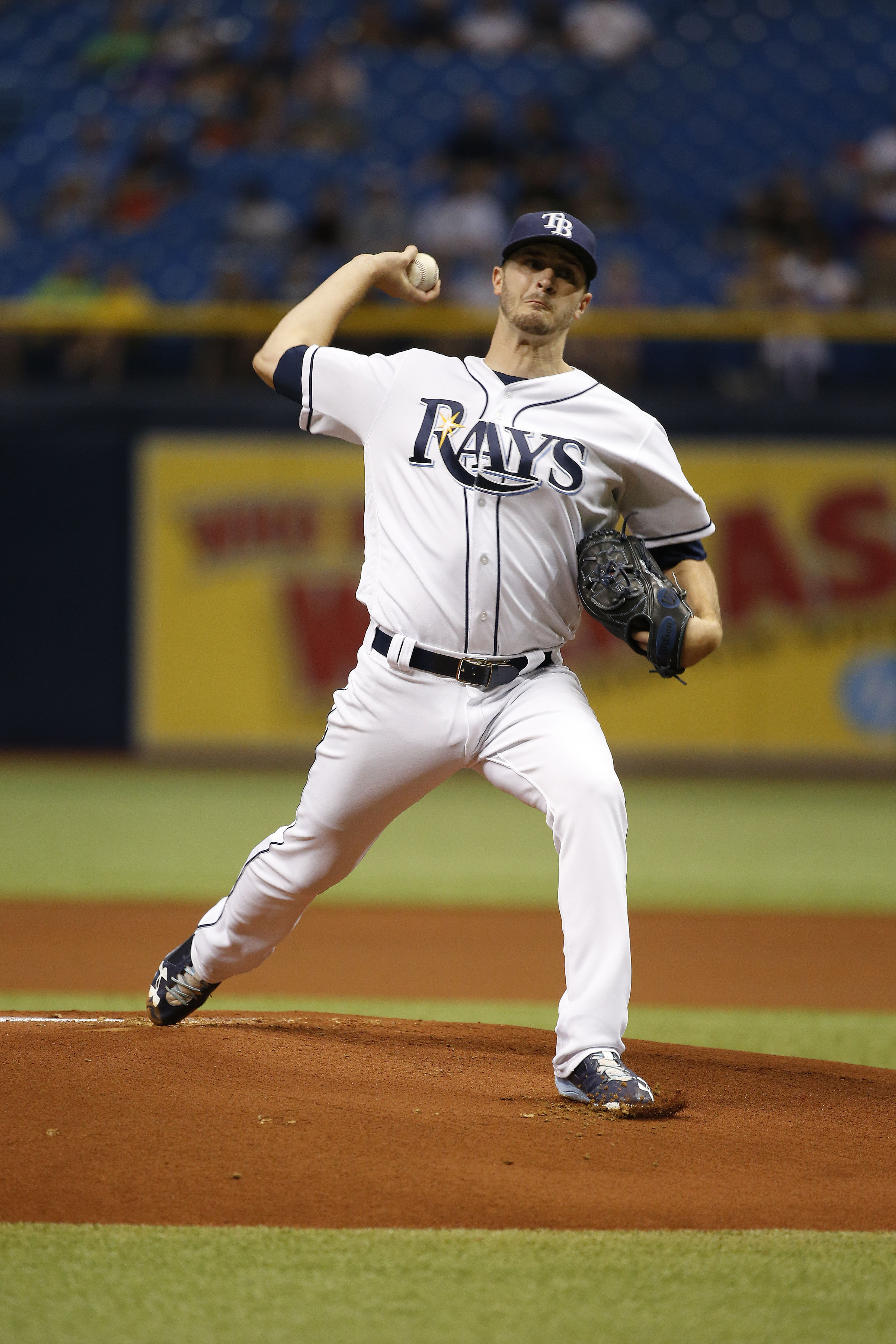
Jake Odorizzi, SP ($6.5MM projected salary): The Rays understandably want a respectable haul for the right-handed Odorizzi, who’s a proven big league starter with youth on his side (28 in March). Unfortunately for them, Odorizzi was a disappointment last year (4.14 ERA/5.43 FIP in 143 1/3 innings), thanks in part to injuries (he went on the disabled list once for a hamstring issue and another time on account of back problems), a career-worst walk mark (3.83 per nine) and a bloated home run-to-fly ball rate (15.5 percent).
Both Odorizzi’s struggles last year and a lifetime groundball rate of 33.7 percent stand out as red flags, though he’s not far removed from a 2014-16 stretch in which he averaged 175 frames per season and pitched to a 3.72 ERA/3.91 FIP. Given Odorizzi’s overall track record, the Rays shouldn’t have trouble finding a team for him if they’re motivated to ship him out.
Corey Dickerson, OF/DH ($6.4MM projected salary): Dickerson opened his career in impressive fashion as a Rockie from 2013-15, though the lefty-swinger struggled against same-handed pitchers and away from hitter-friendly Coors Field during that stretch. In 2016, his first year in Tampa Bay, Dickerson did little to quell concerns that he was a platoon bat and a product of the Mile High air, but he bounced back to a degree last season. The 28-year-old earned his first All-Star nod on the strength of a .312/.355/.548 first-half line, though his production dropped off sharply after mid-July (.241/.282/.408). Moreover, Statcast indicates Dickerson’s expected weighted-on base average (.310) paled in comparison to his actual wOBA (.350). There remain questions about Dickerson’s offensive game, then; on the positive side, Dickerson was similarly solid against both right- and left-handed pitchers for the first time in his career last season, and the advanced metrics (one DRS, 8.7 UZR) looked favorably on his defense from 2016-17. Still, this probably isn’t a player who’s teeming with trade value.
Brad Miller, IF ($4.4MM projected salary): The Rays may have shopped Miller, 28, before tendering him a contract last month. If they did, teams likely weren’t lining up for a player who trudged through a miserable, injury-affected 2017. After posting terrific power numbers (30 homers, .239 ISO) and hitting .243/.304/.482 as a first baseman/shortstop in 2016, he limped to a .201/.327/.337 line with nine HRs and a .136 ISO as a second baseman last season. While Miller is versatile defensively, he has never held his own anywhere with the glove. All things considered, there’s not much value here at the moment.
Dan Jennings, RP ($2.5MM projected salary): Tampa Bay was in the playoff race approaching last July’s non-waiver trade deadline, which led the club to ship a decent prospect – first baseman Casey Gillaspie – to the White Sox for the left-handed Jennings. The Rays fell apart over the season’s final couple months, making the acquisition somewhat of a waste. The club could now try to flip the inexpensive Jennings, who has held his own for most of his career. Jennings has fared nicely against both left- and right-handed hitters, having limited the former to a .307 wOBA and the latter to a .300 mark. While his lifetime strikeout and walk numbers aren’t palatable (7.31 K/9, 4.09 BB/9), Jennings has induced grounders at a 55.2 percent clip and managed a 2.90 ERA over 279 2/3 innings. The soon-to-be 31-year-old may bring back something useful in a trade, then, if the Rays are inclined to move him.
Longer-Term Assets
Kevin Kiermaier, OF (controllable through 2023 for $60MM): There has been no real chatter this winter about the Rays dealing Kiermaier, whom they locked up to an extension prior to last season. Although the solid-hitting defensive maven seems likely to stick in Tampa Bay for the foreseeable future, he’d certainly draw plenty of looks on the trade market. Dating back to 2014, his breakout season, Kiermaier ranks eighth among outfielders in fWAR (16.1), owing to his all-around game. Kiermaier, who will turn 28 in April, combined for ridiculous defensive numbers in center over the previous four seasons (103 DRS, 62.8 UZR) and complemented those with an above-average batting line (.262/.319/.431) and base-stealing ability (60 on 79 tries).
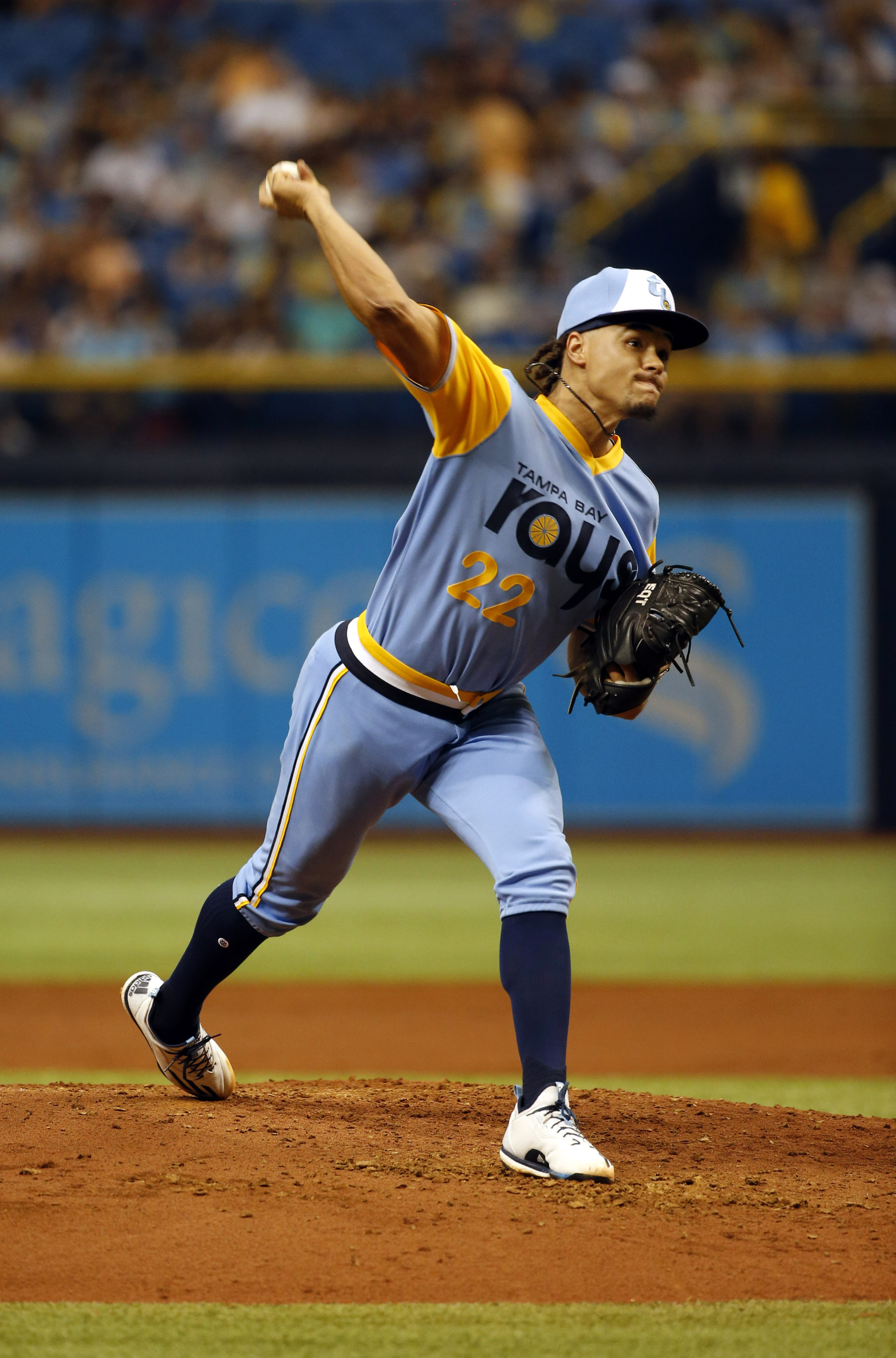
Chris Archer, SP (controllable through 2021 for $34MM): With Kiermaier unlikely to go anywhere, the 29-year-old Archer stands out as the crown jewel of the Rays’ realistic trade possibilities; more than that, the durable, hard-throwing righty’s track record and team-friendly contract combine to make him one of the game’s most valuable assets. As a result, the Rays could simply keep him and continue to benefit from his presence. But if they opt for a full-scale rebuild, aggressively shopping Archer would make sense. While it’s unclear how serious the Rays actually are about trading Archer, he has already garnered significant interest this offseason, unsurprisingly.
Alex Colome, RP ($5.5MM projected arbitration salary; controllable through 2020): A Colome trade looked like an inevitably entering the offseason, and multiple teams have aggressively pursued him recently, but no deal has come together yet. One of those suitors, Colorado, is likely out of the Colome market after signing fellow closer Wade Davis this week. Still, there are other teams with late-game needs – namely St. Louis – that could put together a package for the former starter. Colome, who turned 29 on New Year’s Eve, is coming off a league-best 47-save season (his second full-time campaign as a reliever), though he did see his other numbers fall off precipitously compared to 2016. His K/9 (11.28 to 7.83), BB/9 (2.38 to 3.11), swinging-strike percentage (15.1 to 11.6) and ERA (1.91 to 3.24) all went in the wrong direction last year.
Steven Souza, OF ($3.6MM projected arbitration salary; controllable through 2020): At least one team has checked in with the Rays about the righty-hitting Souza this offseason, but there’s no indication he’s going anywhere. The Rays would be selling high on the three-year veteran if they did part with him, though; despite hip problems, Souza’s fresh off a season in which he slashed .239/.351/.459 with personal bests in PAs (617), home runs (30), ISO (.220) walk rate (13 percent) and strikeout rate (29 percent). It’s worth noting that Souza wasn’t nearly as effective in the two prior seasons, and his xwOBA (.334) fell well short of his actual wOBA (.353) in 2017. To his credit, the soon-to-be 29-year-old complemented his most recent output at the plate with plus defense (seven DRS, 4.3 UZR) in right field for the second straight season.
Photo courtesy of USA Today Sports Images.
MLBTR Originals
Here’s the roundup of all the original content from the MLBTR writing team through the holiday season…
- The offseason’s biggest news continues to be the relative lack of news on the free agent front, with most of the top names on the open market still looking for new teams as we head into 2018. Back on December 19, Jeff Todd noted that only 17 of the names on MLBTR’s Top 50 Free Agents list had signed new contracts. Since that date, only three additional players (Wade Davis, Yonder Alonso, Jhoulys Chacin) have signed, with Davis being the only member of the top 10 to find a new deal.
- Two of the remaining notables were subjects of the “Free Agent Profile” series, with Kyle Downing profiling Logan Morrison and Tim Dierkes looking at Lance Lynn‘s market.
- Lynn is one of a large number of free agent pitchers who have undergone at least one Tommy John surgery, so Tim’s list of the 20 biggest contracts signed by TJ patients will certainly look quite different after this offseason is complete.
- The Phillies‘ surprise signing of Carlos Santana inspired Tim to look at five recent instances of a seeming non-contender making a big free agent splash.
- In the latest edition of Free Agent Faceoff, Steve Adams asked the MLBTR readership whether they would rather sign Yu Darvish or Jake Arrieta. 60.23% of readers polled chose Darvish in the battle of the winter’s top free agent starters.
- In other polling news, Connor Byrne asked the readers where Eric Hosmer will sign, Tim made the same query about Arrieta’s next team, while Kyle wondered if any of the top free agents could sign a one-year “pillow contract” rather than a longer-term deal.
- The “Taking Inventory” series lists the potential remaining trade chips on rebuilding teams, with Steve looking at the Tigers and Kyle focusing on the White Sox and the Marlins.
- Speaking of Miami, J.T. Realmuto could be the latest Marlins star to be shipped out of town, as Kyle runs through the potential trade market for the catcher.
- Mark Polishuk outlined each team’s weakest position from 2017 (by bWAR) and what each club has so far done (if anything) to upgrade that position for next season.
- Several managers and front office executives are known to be entering their last guaranteed year under contract, and Jeff has the breakdown of these teams that could be weighing a change in leadership in 2018.
- We just passed the two-year anniversary of the trade that sent Aroldis Chapman from the Reds to the Yankees. Jeff looked back on that deal, which generated quite a bit of off-the-field controversy and ultimately generated more top tier young talent for the Yankees (via their subsequent trade of Chapman to the Cubs) than it did for Cincinnati.
How Teams Have Addressed Their Weakest Positions Of 2017
While this winter has been notably thin on major transactions, several clubs have already made big strides to shore up the positions that plagued them last season. Baseball Reference breaks down how all 30 teams fared in 2017 on a position-by-position basis, as ranked by bWAR. Here’s a rundown of what each team has done to address its most glaring weak point…
Angels (DH, -1.3 bWAR): Shohei Ohtani‘s attempt to be a two-way player in the big leagues will be one of baseball’s most fascinating stories in 2018, and the Angels are intent on giving the Japanese star some DH at-bats on days he isn’t pitching. Even if it takes a while for Ohtani to adjust to MLB pitching, there’s really nowhere to go but up for the Angels at the DH spot in the wake of Albert Pujols‘ career-worst year. The Halos can only hope that the slugger (owed $114MM through 2021) still has something left in the tank as he enters his age-38 season. One plus is that Pujols has enjoyed a normal offseason this year, as opposed to surgeries and rehabs in the previous two winters, and L.A. hopes to even deploy Pujols at first base for a couple of games per week to accommodate Ohtani at designated hitter.
Astros (DH, 0.5 bWAR): Age finally caught up with Carlos Beltran in 2017, as the veteran struggled in what ended up being his final Major League season. With Beltran now retired, the Astros plan to use Evan Gattis as their primary designated hitter, though you could see several players rotated through the DH spot to provide rest and at-bats to Houston’s wide array of talented hitters.
Athletics (Catcher, -0.2 bWAR): Bruce Maxwell, Josh Phegley, and Stephen Vogt (who is now a Brewer) didn’t give the A’s much behind the plate last year, and the position was further complicated after Maxwell was arrested on charges of aggravated assault with a deadly weapon and disorderly conduct. While GM David Forst said in November that the team still expects Maxwell to be its primary catcher next season, Oakland stands out as a potential dark horse candidate for a catching upgrade. Jonathan Lucroy and Alex Avila are notable names on the free agent market, and J.T. Realmuto seems to be available if the A’s are willing to meet the Marlins’ very high asking price.
Blue Jays (Right field, -1.4 bWAR): The Jose Bautista era ended on a sour note, as the longtime slugger delivered sub-replacement numbers in his final season in Toronto. Teoscar Hernandez is the favorite for the right field job after his strong late-season debut with the Jays, though it wouldn’t be a surprise to see Toronto make a big acquisition for either corner outfield slot, especially since the team’s contention window is already closing. The Blue Jays have reportedly checked in on several notable outfielders, including J.D. Martinez, Lorenzo Cain, and Jay Bruce.
Braves (Left field, -1.6 bWAR): This was the lowest bWAR of any left field situation in the game last season, largely thanks to Matt Kemp‘s sub-replacement level performance. Kemp, however, is no longer in the mix after a unique five-player trade with the Dodgers that re-arranged both teams’ salary commitments and created a much-needed opening in Atlanta’s outfield for star prospect Ronald Acuna. It isn’t clear if Acuna will play in left or right field when he arrives in the bigs, so veteran Nick Markakis (if he isn’t himself traded) could be taking over for Kemp in left field on Opening Day.
Brewers (Center field, 1.0 bWAR): Keon Broxton is the incumbent with Brett Phillips on hand as a platoon option, though star prospect Lewis Brinson is expected to work his way into the lineup in 2018. While Milwaukee’s young center field mix didn’t produce much in 2017, therefore, the team is still quite comfortable with the position going forward. Broxton has even received some trade attention, so it’s possible the Brew Crew could clear a path for Brinson to make an even earlier impact.
Taking Inventory: Miami Marlins
In an effort to cut payroll, the new Marlins ownership group (headlined by Derek Jeter) has already kicked off a fire sale of major league assets. They’ve traded three significant players so far in Giancarlo Stanton, Dee Gordon and Marcell Ozuna, and only the latter of the three netted any significant prospect haul. Miami has succeeded in getting big salaries off the books, but their farm system still looks bleak and lacks top-rated prospects (though some pitchers in their system have upside).
So while the team has already completed its stated salary-slashing objective, the moves made so far have put the franchise in an in-between kind of state. Miami finished last season with a 77-85 record, and then traded away three players who were worth a combined 15 fWAR. The only major league asset who came back in return was Starlin Castro, who was worth about 2 fWAR in 2017. All told, the Marlins’ roster looks about 13 wins worse than last season, which in theory would make them about as good as last year’s Tigers club.
Of course, it doesn’t exactly work that way, but the writing on the wall here is that the Marlins aren’t going to do a whole lot of winning next season. They’d face enormous odds in challenging the Nationals for the NL East crown. Aside from that, their farm system is dwarfed by those of the division-rival Braves and Phillies, both of whom are on the rise. Clearly the club isn’t planning on improving the team through free agency, as that would counteract the enormous effort the team made to reduce payroll. As such, there appears to be no reason to stop selling now. There are a few players on the roster who could help the Fish add significant prospects to their minor league ranks and improve the organization’s future outlook…
Two Years of Control
Starlin Castro, 2B ($22MM owed through 2019, including $1MM buyout of $16MM option for 2020): When Castro came to Miami in the Stanton deal, trade speculation began immediately. There’s probably some surplus value to be had in the 27-year-old’s contract considering his reasonable salary and the fact that he’s still in his prime. With the Marlins having already met their payroll-related goals, they probably even have the flexibility to pay some of his salary in order to get better prospects in exchange. Castro is coming off a .300/.338/.454 season, but poor defensive play at second limits his value to an extent.
Longer-Term Assets
J.T. Realmuto, C ($4.2MM projected arb salary for 2018): MLBTR has already talked about Realmuto’s trade candidacy at length this month (including an in-depth piece on his market), so I’ll keep this short. Realmuto has already requested a trade, and although he doesn’t have any real leverage in the matter, he seems a likely candidate to be wearing another uniform even before he hits free agency following the 2020 season. The Marlins catcher was worth at least 3.5 fWAR in each of the past two seasons, and plenty of contenders and up-and-comers would love to have that kind of value coming from a premium position on the diamond. It would, however, take a reportedly “huge overpay” to pry him out of Miami’s hands.
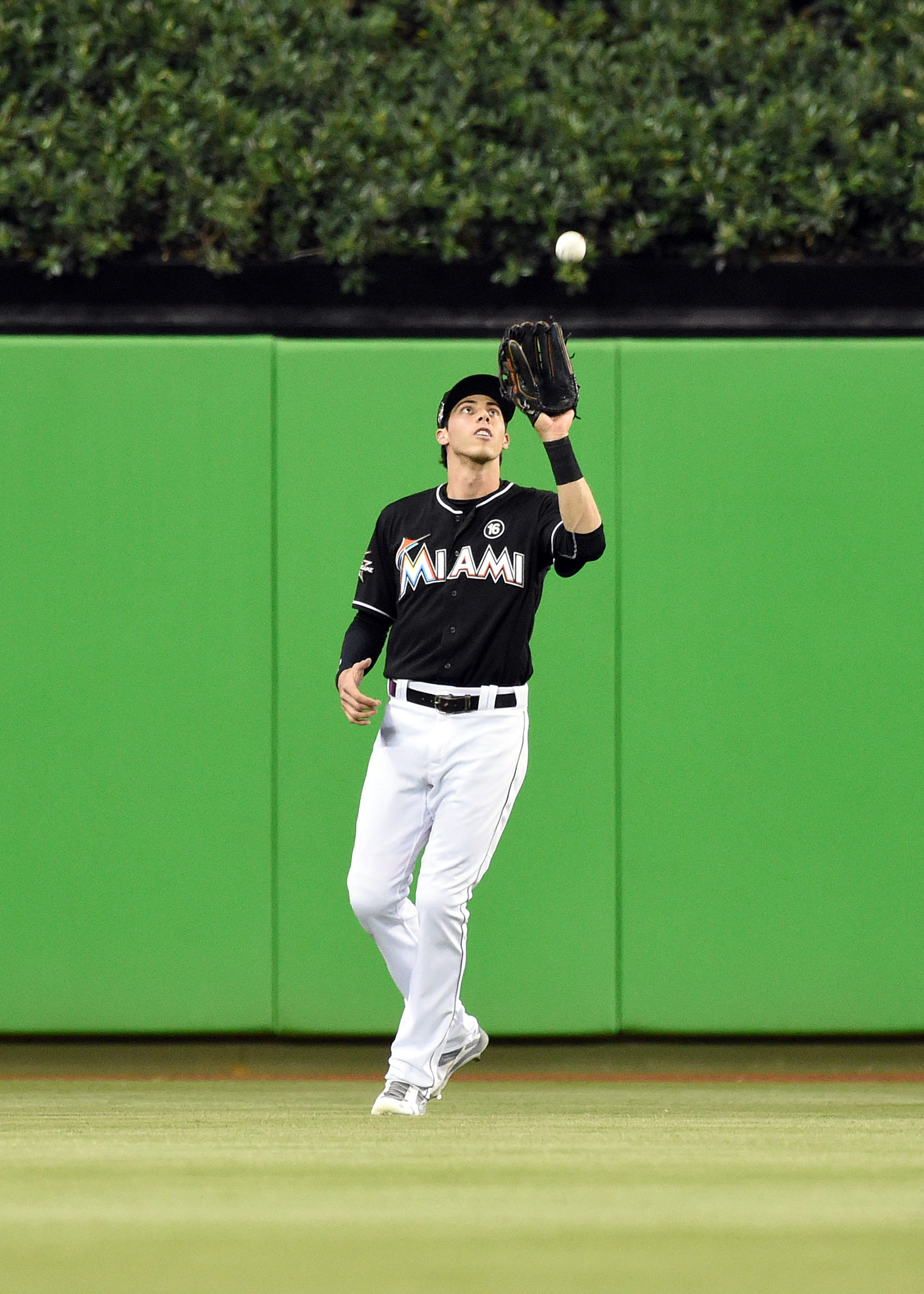 Christian Yelich, OF ($44.5MM owed through 2021, including $1.25MM buyout of $15MM option for 2022): Yelich has also been one of the more common names to pop up in trade rumors this offseason. He’s easily the Marlins’ most valuable asset; the former first round pick has been worth about 16 fWAR across the past four seasons combined. With five more years of team control, however, there’s at least a chance he could be part of the next winning Marlins club at a very reasonable price, so there’s less of a reason for the team to move him there is to move other assets. Among the plusses for Yelich are good defense in the outfield, a 10.7% career walk rate and improved baserunning ability.
Dan Straily, RHP ($4.6MM projected arbitration salary for 2018): While Straily isn’t as talented (or receiving as much trade attention) as elite options like Michael Fulmer, Chris Archer and Gerrit Cole, he’s a league-average MLB talent who could be made available in a thin and expensive market for pitching. Straily posted a 4.26 ERA in 2017 along with a 2.83 K/BB ratio and comes with three years of team control.
Justin Bour, 1B ($3.5MM projected arbitration salary for 2018): Amidst Marlins rumors, it’s somewhat of a surprise to me that Bour’s name hasn’t been mentioned more often. Miami’s left-handed-hitting first baseman enjoyed a breakout season in 2017 prior to an oblique injury. Upon his return in early September, he picked up right where he left off, and ultimately finished the season with an outstanding .289/.366/.536 slash line to go with 25 home runs across just 429 plate appearances. With the Rockies, Angels and Mariners still looking for first base help, it wouldn’t be a shock to see the market for Bour heat up at some point. He wouldn’t come cheap, though, as he’s cost-effective and controllable through arbitration from 2018-2020.
Kyle Barraclough, RHRP (League minimum salary for 2018): Barraclough has a sky-high career strikeout rate 12.05 K/9), but carries the downside of an equally absurd walk rate (5.52 BB/9). The net result is a sort of effectively-wild performance that’s led to fantastic career run-prevention numbers, headlined by a 2.87 ERA. With elite relievers becoming more and more in demand, it’s conceivable Barraclough could net a hefty return.
Derek Dietrich, INF ($3.2MM projected arbitration salary for 2018): Though he’s not a full-time player, Dietrich has managed to accrue at least 1.5 fWAR in each of the past two seasons, and can play both second and third base. He’d be a cheap utility infield option on a contending team, and comes with three years of team control. He hit .249/.334/.424 in 2017 with 13 homers, making him a nearly average offensive player at 99 wRC+.
Salary Dump Candidates
Wei-Yin Chen, LHP ($60MM owed through 2020, with a $16MM vesting option for 2021): Simply put, this offseason would be the worst possible time to trade Chen. After missing most of the season due to elbow issues, Chen returned to make just four appearances out of the bullpen in September prior to being shut down. While he was generally good when on the field (3.82 ERA, 3.73 FIP), the Marlins would have an incredibly difficult time trying to move any of his salary until he can settle concerns about his elbow.
Martin Prado, 3B ($28.5MM owed through 2019): Prado is coming off a dreadful 2017 season in which he was able to muster just 147 plate appearances due to multiple injuries. He posted just a 67 wRC+ across that time, and will enter the 2018 season at 34 years of age. There have been reports that the Marlins might try to attach Prado to a trade of a more valuable asset in order to clear his salary, but like Chen, it might be the wrong time to trade him. After all, he averaged 3 WAR from 2014-2016 thanks to a .295/.341/.407 slash line and elite defense at the hot corner.
Brad Ziegler, RHRP ($9MM salary for 2018): The issue with Ziegler is his recent inability to miss bats. The righty struck out fewer than five batters per nine innings in 2018 and experienced a steep drop in velocity on his sinker. All told, Ziegler was tagged for 25 earned runs in 47 innings. Perhaps he’s another candidate to re-established value prior to the trade deadline, but he’s also 38 years old; it’s also possible the Marlins could be better served simply trying to find a taker for as much of his salary as possible.
Junichi Tazawa, RHRP ($7MM salary for 2018): See Ziegler. Okay, not exactly, but Tazawa’s outlook isn’t much more promising other than the fact that he’s seven years younger. The righty is two years removed from his last respectable season. Last year was his worst performance yet: he was valued below replacement level thanks to a 5.69 ERA and 4.96 FIP. Miami’s best chance to move his salary would be to try to include him in a trade along with Realmuto, Yelich or another contract with significant excess value.
Photo courtesy of USA Today Sports Images