
GM Trade History: Mariners’ Jerry Dipoto
It seems we’ve reached the point in our GM Trade History series where someone at MLBTR has taken on the foolhardy, daunting task of re-chronicling the unyielding exploits of Mariners GM Jerry Dipoto — far and away the most active executive on MLB’s trade market. (What have I done?!) Commonly referred to as “Trader Jerry,” the seemingly tireless Dipoto has fueled hundreds of posts here at MLBTR (thanks, Jerry!) through a series of win-now moves, fringe roster tinkerings and, more recently, a “reimagining” of his organization.
Dipoto took the reins as the Mariners’ general manager at the conclusion of the 2015 campaign. Predecessor Jack Zduriencik had been unable to break the club’s mounting postseason drought, and ownership turned to a former division rival to try to turn things around. Dipoto held the GM post with the Angels from 2011-15 but saw a relatively publicized rift grow between himself and skipper Mike Scioscia over the manager’s unwillingness to utilize data from the club’s analytics department. The frustration boiled to the point where Dipoto resigned in early July despite reported attempts from owner Arte Moreno to persuade him to stay on board. Dipoto quickly landed an interim post in the Red Sox’ front office, and less than three months after walking away from the Angels, he was named the new GM in Seattle.
There’s a narrative that Dipoto’s constant activity rendered the Mariners’ farm bare early in his tenure, and while there’s probably some truth within that generalization, it’s equally important to note that he inherited a losing club with a relatively high payroll and an already-poor minor league system. That was four and a half years ago, though. How have things worked out for Dipoto since? Let’s take a (very long) look! Trades are in chronological order and exclude particularly minor swaps. (More details on each trade is available in the “acquired” link on each bullet.)
2015-16 Offseason
- Acquired RHP Nate Karns, LHP C.J. Riefenhauser and OF Boog Powell from the Rays in exchange for 1B Logan Morrison, INF Brad Miller and RHP Danny Farquhar
- Acquired RHP Joaquin Benoit from the Padres in exchange for RHP Enyel De Los Santos and INF Nelson Ward
- Acquired OF Leonys Martin and RHP Anthony Bass from the Rangers in exchange for RHP Tom Wilhelmsen, OF James Jones and PTBNL (INF/OF Patrick Kivlehan)
- Acquired INF Luis Sardinas from the Brewers in exchange for OF Ramon Flores
- Acquired C Steve Clevenger from the Orioles in exchange for 1B Mark Trumbo and LHP C.J. Riefenhauser
- Acquired LHP Wade Miley and RHP Jonathan Aro from the Red Sox in exchange for RHP Carson Smith and LHP Roenis Elias
- Acquired 1B Adam Lind from the Brewers in exchange for RHPs Freddy Peralta, Carlos Herrera and Daniel Missaki
2016 Season
- Acquired RHP Nick Vincent from the Padres in exchange for cash
- Acquired RHP Zach Lee from the Dodgers in exchange for INF/OF Chris Taylor
- Acquired LHP Wade LeBlanc from the Blue Jays in exchange for cash
- Acquired 1B/DH Daniel Vogelbach and RHP Paul Blackburn from the Cubs in exchange for LHP Mike Montgomery and RHP Jordan Pries
- Acquired RHP Drew Storen and cash from the Blue Jays in exchange for RHP Joaquin Benoit
- Acquired LHP Ariel Miranda from the Orioles in exchange for LHP Wade Miley
- Acquired RHP Arquimedes Caminero from the Pirates in exchange for two PTBNLs (RHP Pedro Vasquez and LHP Jake Brentz)
- Acquired SHP Pat Venditte from the Blue Jays in exchange for PTBNL (INF/OF Tim Lopes)
- Acquired OF Ben Gamel from the Yankees in exchange for RHPs Juan De Paula and Jio Orozco
2016-17 Offseason
- Acquired C Carlos Ruiz from Dodgers in exchange for LHP Vidal Nuno
- Acquired INF Danny Valencia from the Athletics in exchange for RHP Paul Blackburn
- Acquired INF Richie Shaffer and INF/OF Taylor Motter from the Rays in exchange for 1B Dalton Kelly, RHP Andrew Kittredge and RHP Dylan Thompson
- Acquired LHP James Pazos from the Yankees in exchange for RHP Zack Littell
- Acquired SS Jean Segura, OF Mitch Haniger and LHP Zac Curtis from the D-backs in exchange for INF/OF Ketel Marte and RHP Taijuan Walker
- Acquired RHP Rob Whalen and RHP Max Povse from the Braves in exchange for C/OF Alex Jackson and PTBNL (LHP Tyler Pike)
- Acquired RHP Chris Heston from the Giants in exchange for PTBNL (RHP Tyler Herb)
- Acquired RHP Yovani Gallardo and cash from the Orioles in exchange for OF Seth Smith
- Acquired OF Jarrod Dyson from the Royals in exchange for RHP Nate Karns
- Acquired OF Mallex Smith and RHP Shae Simmons from the Braves in exchange for LHPs Luiz Gohara and Thomas Burrows
- Acquired LHP Drew Smyly from the Rays in exchange for OF Mallex Smith, LHP Ryan Yarbrough and INF Carlos Vargas
2017 Season
- Acquired RHP David Phelps from the Marlins in exchange for RHP Pablo Lopez, OF Brayan Hernandez and RHP Lukas Schiraldi
- Acquired LHP Marco Gonzales from the Cardinals in exchange for OF Tyler O’Neill
- Acquired RHP Erasmo Ramirez from the Rays in exchange for RHP Steve Cishek
- Acquired 1B Yonder Alonso from the Athletics in exchange for OF Boog Powell
- Acquired RHP Ryan Garton and C Mike Marjama from the Rays in exchange for INF Luis Rengifo, LHP Anthony Misiewicz and PTBNL (INF Osmy Gregorio)
- Acquired LHP Andrew Albers from the Braves for cash
- Acquired RHP Mike Leake, $750K of international bonus space and $17MM from the Cardinals in exchange for INF Rayder Ascanio
2017-18 Offseason
- Acquired 1B Ryon Healy from the Athletics in exchange for RHP Emilio Pagan and INF Alexander Campos
- Acquired RHP Nick Rumbelow from the Yankees in exchange for LHP JP Sears and RHP Juan Then
- Acquired 2B Dee Gordon and $1MM of international bonus space from the Marlins in exchange for RHP Nick Neidert, RHP Robert Dugger and INF Christopher Torres
2018 Season
- Acquired LHP Roenis Elias from the Red Sox in exchange for cash
- Acquired OF Denard Span, RHP Alex Colome and $4.75MM from the Rays in exchange for RHPs Andrew Moore and Tommy Romero
- Acquired RHP Sam Tuivailala from the Cardinals in exchange for RHP Seth Elledge
- Acquired LHP Zach Duke from the Twins in exchange for RHP Chase De Jong and INF Ryan Costello
- Acquired RHP Adam Warren from the Yankees in exchange for $1MM international bonus space
- Acquired OF Cameron Maybin from the Marlins in exchange for INF Bryson Brigman and $250K international bonus space
2018-19 Offseason
- Acquired LHP Justus Sheffield, RHP Erik Swanson and OF Dom Thompson-Williams from the Yankees in exchange for LHP James Paxton
- Acquired C Omar Narvaez from the White Sox in exchange for RHP Alex Colome
- Acquired OF Jarred Kelenic, RHP Justin Dunn, RHP Gerson Bautista, RHP Anthony Swarzak and OF Jay Bruce from the Mets in exchange for 2B Robinson Cano and RHP Edwin Diaz
- Acquired SS J.P. Crawford and 1B Carlos Santana from the Phillies in exchange for SS Jean Segura, RHP Juan Nicasio and LHP James Pazos
- Acquired 1B Edwin Encarnacion and Competitive Balance Draft pick from Indians in three-team deal sending 1B Carlos Santana and $6MM from Seattle to Cleveland (Indians also traded INF Yandy Diaz, RHP Cole Sulser to Rays; Rays traded 1B/OF Jake Bauers to Indians and sent $5MM to Mariners in deal)
- Acquired OF Domingo Santana from Brewers in exchange for OF Ben Gamel and RHP Noah Zavolas
- Acquired 2B Shed Long from the Yankees in exchange for OF Josh Stowers (Mariners were third team in trade sending Sonny Gray from New York to Cincinnati)
- Acquired C Tom Murphy from the Giants in exchange for RHP Jesus Ozoria
2019 Season
- Acquired RHP Connor Sadzeck from the Rangers in exchange for RHP Grant Anderson
- Acquired RHP Mike Wright from the Orioles in exchange for INF Ryne Ogren
- Acquired RHP Austin L. Adams from the Nationals in exchange for LHP Nick Wells and cash
- Acquired LHP Jesse Biddle and injured RHP Arodys Vizcaino from the Braves in exchange for RHP Anthony Swarzak and cash
- Acquired INF Jake Scheiner from the Phillies in exchange for OF Jay Bruce and $18MM
- Acquired RHP Juan Then and cash from the Yankees in exchange for 1B Edwin Encarnacion
- Acquired RHP Matt Magill from the Twins for cash
- Acquired INF Daniel Castro from the Dodgers in exchange for INF/OF Kristopher Negron
- Acquired LHP Taylor Guilbeau and RHP Elvis Alvarado from the Nationals in exchange for LHP Roenis Elias
- Acquired LHP Aaron Fletcher from the Nationals in exchange for RHP Hunter Strickland
- Acquired INF Jose Caballero from the D-backs in exchange for RHP Mike Leake
2019-20 Offseason
- Acquired RHP Adam Hill and a Competitive Balance Draft pick from the Brewers in exchange for C Omar Narvaez
- Acquired LHP Nestor Cortes Jr. from the Yankees in exchange for $28,300 international bonus space
—
How do MLBTR readers feel about Dipoto’s landslide of trade activity? (Link to poll for Trade Rumors mobile app users.)
Grade Jerry Dipoto's trades as Seattle GM:
-
B 34% (1,769)
-
C 33% (1,703)
-
D 16% (842)
-
A 10% (502)
-
F 8% (400)
Total votes: 5,216
Interested in how other GMs hold up under this exercise? We’ve covered Diamondbacks GM Mike Hazen, recently fired Astros president Jeff Luhnow, Brewers president of baseball ops David Stearns, Angels GM Billy Eppler, Rockies GM Jeff Bridich, Tigers GM Al Avila, Braves GM Alex Anthopoulos and Blue Jays GM Ross Atkins as well.
Revisiting Yasiel Puig’s 2019
Free agency in Major League Baseball opened way back in the beginning of November. At that point, nobody would have expected outfielder Yasiel Puig to remain without a job into April, but here we are. It’s going to stay that way for at least a little while longer, too, after MLB put a stop to transactions last week in response to the coronavirus pandemic.
It’s hard to believe it has come to this for Puig, who has enjoyed an impressive career overall and who entered the offseason as MLBTR’s 37th-ranked free agent. We predicted Puig would land a one-year, $8MM contract, and he reportedly rejected a $10MM offer at some point during the winter, but it’s now difficult to envision him matching or eclipsing either figure on his next contract.
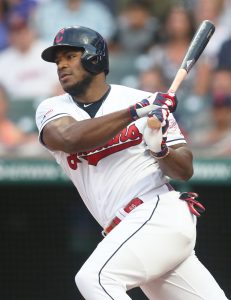
Why is Puig still a man without a team? Well, he didn’t do himself any favors with a middling 2019 performance divided between the Reds and Indians. Puig, a high-profile, oft-electrifying Dodger from 2013-18, entered Cincinnati as a .279/.353/.478 hitter (good for a 129 wRC+) with 108 home runs, 60 stolen bases and 19.7 fWAR in 2,765 plate appearances. Despite his generally above-average numbers, the Dodgers grew weary of the mercurial Puig even before they traded him, as they optioned him to the minors and placed him on revocable trade waivers during the 2016 season. That was one of the least productive seasons Puig has ever had, but he at least bounced back on offense from 2017-18.
Unfortunately for Puig, he regressed to his 2016 form during his platform campaign, even posting a matching 101 wRC+. The 29-year-old did smack 24 home runs and steal 19 bases, but his .267/.327/.458 line across 611 plate appearances was essentially average, while the 1.2 fWAR he logged represents the worst of his career over a full season. That said, Puig’s output last year wasn’t entirely dissimilar from his 2018, during which his batting line was 23 percent better than the league mean, according to wRC+. He also batted .267 and recorded a .327 on-base percentage that year, but Puig’s slugging percentage (.494) was superior by 36 points; meanwhile, his isolated power number (.227) was better by 36.
For the most part, Puig’s hard-hit percentage and average exit velocity stayed static in 2019, but he went to the opposite field about 5 percent more than he had during his Dodgers day. That helps explain the drop in power from 2018, as does Puig’s ineptitude against offspeed pitches. After battering offspeed offerings for a .380 weighted on-base average in 2018, Puig sunk to .281 last year. That won’t necessarily stick, though – after all, Puig did put up an even worse .226 in the offspeed category in 2016 before raising his output by 100-some points from 2017-18.
Meantime, Puig was a mixed bag at best on the defensive front in 2019. Overall, Puig has been a plus defender in the majors, but he ended last season with zero Defensive Runs Saved (only the second season in which he wasn’t a plus in that category), zero Outs Above Average and a minus-0.7 Ultimate Zone Rating. Puig also ranked in the bottom sixth percentile on Statcast’s Outfielder Jump leaderboard, though he did wind up in the league’s top 79th percentile in Sprint Speed.
While last season was clearly a mediocre showing by Puig, that doesn’t mean he should still be without an employer – especially considering his track record. Of course, if Puig did indeed misread things enough to say no to a $10MM guarantee, it’s partially his fault that he remains the most prominent free agent on a market that has come to a temporary halt. If and when life gets back to normal this year, it’ll be interesting to see whether Puig signs. He still looks like a player who could benefit at least some teams, particularly rebuilding types that could take a short-term flier on him and then flip him around the trade deadline (that’s assuming a season and a deadline occur).
Photo courtesy of USA Today Sports Images.
Griffin Canning Cleared To Begin Throwing Program
Angels right-hander Griffin Canning has been cleared to begin a throwing program, general manager Billy Eppler announced to reporters Wednesday (Twitter link via Jeff Fletcher of the Orange County Register). Barring setbacks, he could be ready to throw off a mound at month’s end.
Canning, 23, was shut down early in camp after an MRI revealed “chronic changes” to the ulnar collateral ligament in his right elbow in addition to “acute irritation” in the joint. However, while the initial diagnosis was ominous, Canning was eventually cleared of any tearing to his ligament and received a recommendation for a platelet-rich plasma injection to treat the issue. That step came after getting a second opinion from non-Angels personnel, and the injection was administered just under a month ago.
Angels fans have been witness to a calamitous array of injuries on the pitching staff in recent years, and many are holding their breath with regard to Canning — hoping for the best but fearing a major surgery is in the offing. For the time being, that doesn’t appear to be in the cards, and the indefinite suspension of play will give the talented young Canning some additional time to work back to health.
A second-round pick by the Angels in 2017, Canning entered the 2019 campaign ranked among baseball’s 100 best prospects and made his Major League debut on April 30 after breezing through three starts in Triple-A to open the season (one run with a 17-to-2 K/BB ratio in 16 innings). He’d stick in the big leagues for the long haul, tallying 90 1/3 innings over 18 appearances (17 starts) while compiling a 4.58 ERA with averages of 9.6 K/9, 3.0 BB/9 and 1.4 HR/9. It may not have been the dominant debut for which many fans had hoped, but Canning held his own in the most hitter-friendly season in recent history, and his 13.8 percent swinging-strike rate and 32 percent opponents’ chase rate are both encouraging signs moving forward.
The Angels, of course, never added the top-of-the-rotation arm they coveted in the 2019-20 offseason, which makes a step forward from a healthy Canning all the more crucial to the club if they can get it. He and Shohei Ohtani could now have time to work themselves into mound form before a theoretical new Opening Day, which would allow the Halos to pencil that duo in alongside Andrew Heaney and newcomers Julio Teheran and Dylan Bundy in the 2020 rotation.
Shin-Soo Choo Donates $1K To Each Rangers Minor Leaguer
Rangers designated hitter Shin-Soo Choo has decided to donate $1,000 to each of the club’s nearly 200 minor leaguers, per a report from Naver Sports in Choo’s native South Korea (link in Korean). Evan Grant of the Dallas Morning News confirms the story and has more on Choo’s donation.
As Grant explains, Choo has often spoken of his desire to help the game’s next generation of players — just as he was helped out by veterans as an up-and-comer in the Mariners’ system. Upon overhearing Rangers minor leaguer Eli White discuss the financial pressures of the Spring Training shutdown with a fellow minor leaguer, Choo decided to take action and lend a hand. The uneasiness facing so many minor leaguers — particularly those not on the 40-man roster — resonated with the veteran Choo, who tells Grant that as a minor leaguer himself, he’d skip meals on the road and use his meal money to purchase diapers for his son (Twitter link).
Major League Baseball recently announced a plan to pay minor leaguers a $400 weekly stipend through the end of May, but there’s no guarantee of any income after that point (just as there hadn’t been any prior baseball-related income for such players since last September). Choo’s gesture, White says within the Naver story, brought his wife to tears. Choo, according to the Naver piece, has also donated more than $161,000 (200 million Korean won) to South Korea’s efforts to combat the COVID-19 pandemic.
Latest On James Paxton, Yankees’ Rotation
Yankees pitching coach Matt Blake told reporters Wednesday that left-hander James Paxton is progressing well in his rehab from back surgery (Twitter links via Brendan Kuty of the New Jersey Star-Ledger). The left-hander went under the knife in early February, after which the Yankees announced a timetable of three to four months for his recovery. Paxton is throwing at his home in Wisconsin, and the club is optimistic about his recovery.
As notably, Blake revealed that right-hander Jonathan Loaisiga would’ve factored “heavily” into the team’s rotation picture had the season begun on time. Absent Paxton, Luis Severino and Domingo German, it was clear that left-hander Jordan Montgomery was the team’s fourth starter (behind Gerrit Cole, Masahiro Tanaka and J.A. Happ). Loaisiga was one of many candidates vying for the fifth spot — a race that also included Mike King, Deivi Garcia, Luis Cessa and perhaps non-roster invitees such as Chad Bettis and Nick Tropeano.
Loaisiga’s standing could be rendered moot with Opening Day pushed back indefinitely, as it appears increasingly likely that Paxton could be ready to suit up when (or if) the season does eventually commence. But it’s nevertheless telling that Loaisiga appears to have had a leg up on his competitors, as that could provide some insight into the organization’s contingency plans in the event of additional early-season injuries.
The 25-year-old Loaisiga has been plagued by durability issues himself, including last season, when a shoulder strain limited him to 80 2/3 innings between the minors and the big leagues. However, MLB.com and Baseball Prospectus both ranked him among baseball’s 100 best prospects prior to the ’19 season. In a combined 88 2/3 minor league innings from 2017-18, he posted a 2.60 ERA with a 100-to-11 K/BB ratio.
Video: Grading Mike Hazen’s Trades As Diamondbacks GM
Since being hired as Executive Vice President & General Manager of the Diamondbacks in 2016, Mike Hazen has engineered trades involving Zack Greinke, Paul Goldschmidt, J.D. Martinez, Ketel Marte, Starling Marte, and more. MLBTR’s Jeff Todd assesses Hazen’s wheeling and dealing in today’s video.
GM Trade History: Blue Jays’ Ross Atkins
It’s not always fair to judge baseball operations leaders for free agent signings. In many cases, the biggest contracts are negotiated to varying extents by ownership. The same can hold true of major extensions. It’s just tough to know from the outside.
There’s obviously involvement from above in trade scenarios as well. But, when it comes to exchanging rights to some players for others, it stands to reason the role of the general manager is all the more clear.
In any event, for what it’s worth, it seemed an opportune moment to take a look back at the trade track records of some of the general managers around the game. We’ve already covered the Diamondbacks’ Mike Hazen, former Astros GM Jeff Luhnow, the Brewers’ David Stearns, the Angels’ Billy Eppler, the Rockies’ Jeff Bridich, the White Sox’ Rick Hahn, the Tigers’ Al Avila, the Braves’ Alex Anthopoulos, and the Padres’ A.J. Preller. We’ll now turn our focus to Ross Atkins of the Blue Jays, who followed Jays president Mark Shapiro in moving to the Toronto organization from Cleveland. (Deals are in chronological order and exclude minor moves; full details at transaction link).
2015-16 Offseason
- Acquired RHP Jesse Chavez from Athletics for RHP Liam Hendriks
- Acquired RHP Drew Storen from Nationals for OF Ben Revere
- Acquired INF Cliff Pennington and cash for INF Dawel Lugo
2016 Season
- Acquired LHP Francisco Liriano, OF Harold Ramirez and C Reese McGuire from Pirates for RHP Drew Hutchison
- Acquired RHP Joaquin Benoit from Mariners for RHP Drew Storen and cash
- Acquired OF Melvin Upton and cash from Padres for RHP Hansel Rodriguez
2017 Season
- Acquired OF Nori Aoki and OF Teoscar Hernandez from Astros for LHP Francisco Liriano
- Acquired LHP Thomas Pannone and SS Samad Taylor from Indians for RHP Joe Smith
2017-18 Offseason
- Acquired OF Randal Grichuk from Cardinals for RHP Dominic Leone and RHP Conner Greene
- Acquired INF Yangervis Solarte from Padres for OF Edward Olivares and RHP Jared Carkuff
- Acquired INF Aledmys Diaz from Cardinals for OF J.B. Woodman
2018 Season
- Acquired RHP Julian Merryweather (as PTBNL) from Indians for 3B Josh Donaldson
- Acquired RHP Ken Giles, RHP Hector Perez and RHP David Paulino from Astros for RHP Roberto Osuna
- Acquired INF Brandon Drury and OF Billy McKinney from Yankees for LHP J.A. Happ
- Acquired 1B Chad Spanberger, 1B Sean Bouchard and INF/OF Forrest Wall from Rockies for RHP Seunghwan Oh
- Acquired RHP Jacob Waguespack from Phillies for LHP Aaron Loup
- Acquired RHP Corey Copping from Dodgers for RHP John Axford
2018-19 Offseason
- Acquired INF Jesus Lopez and international bonus capacity from Athletics for DH Kendrys Morales
- Acquired SS Ronny Brito and RHP Andrew Sopko from Dodgers for C Russell Martin and cash
- Acquired LHP Clayton Richard and cash from Padres for OF Connor Panas
2019 Season
- Acquired RHP Derek Law, INF Alen Hanson and RHP Juan De Paula from Giants for OF Kevin Pillar
- Acquired LHP Anthony Kay and RHP Simeon Woods Richardson from Mets for RHP Marcus Stroman
- Acquired OF Derek Fisher from Astros for RHP Aaron Sanchez and RHP Joe Biagini
- Acquired RHP Kyle Johnston from Nationals for RHP Daniel Hudson
- Acquired RHP Thomas Hatch from Cubs for RHP David Phelps
2019-20 Offseason
- Acquired RHP Chase Anderson from Brewers for 1B Chad Spanberger
—
How do you grade the overall work on the trade market? (Poll link for app users.)
Grade Ross Atkins's trade history
-
C 42% (1,850)
-
B 30% (1,329)
-
D 16% (699)
-
F 8% (345)
-
A 4% (179)
Total votes: 4,402
New Dodgers TV Deal Announced
While the 2020 season remains paused, many Dodgers fans can now at least look forward to catching their team in action when MLB resumes play. An agreement has at long last been reached that will bring Dodgers games back to many televisions in Southern California, as Ramona Shelburne of ESPN reports (Twitter link) and has now been announced.
The 2013 creation of the Spectrum SportsNet LA network — jointly owned by the Dodgers and Charter Communications — promised more content, but came with a catch. Carriage fees agreements were not forthcoming between SportsNet LA and TV providers such as Direct TV and Dish Network. That left an effective blackout for large swaths of the market.
Now, SportsNet LA has a deal in place with AT&T to carry Dodgers games on Direct TV and other AT&T-owned outlets. Other major providers still don’t have deals in place with SportsNet LA, so the situation hasn’t yet improved for all fans. But many will now be able to watch games as before. And perhaps this agreement is cause for optimism that bargains can be struck with the other providers as well.
The timing is obviously interesting, with the Dodgers staring at a major loss of revenue in 2020. With an increasing likelihood that MLB will stage contests without fans for at least part of a truncated season, it’s all the more important for the team to deliver its media content to fans. Whether the coronavirus pandemic specifically prompted this agreement isn’t known. No doubt we’ll learn more as further details emerge.
Prospect Faceoff: Gore v. Luzardo
It’s easy to dream on top prospects. Such players have not only exhibited great play and immense talent, but have been hyped up yet further by those who judge young players for a living. We tend to see the “top-of-the-rotation” (!!!) and ignore the “potential” … with its implicit acknowledgement of a downside scenario.
This is nothing new to MLBTR readers. All fans have tales of prospect heartbreak — the would-be great ones that weren’t. It’s usually not too tough to diagnose where things went wrong after the fact … but how about predicting in advance? Here’s your chance.
Today, we’ll take a brief look at two of the top pitching prospects in baseball — southpaws Jesus Luzardo (Athletics) and MacKenzie Gore (Padres) — and give you a chance to prognosticate.
We should note at the outset that prospect watchers have a clear preference for Gore. But it’s awfully close. Fangraphs ranks Gore third and Luzardo sixth among all prospects. MLB.com has them five and twelve. Baseball Prospectus: five and nine. Baseball America: six and nine.
Then again … Luzardo is the one that has already reached the majors. It was only a brief showing, but he sure did impress. In a dozen innings, he racked up 16 strikeouts while allowing just two earned runs on five hits and three walks. Luzardo generated an excellent 14.6% swinging-strike rate. He pumped 97 mph heat and showed a balanced, four-pitch arsenal. And he did all this at just 21 years of age (he turned 22 at the end of September) in the same season in which he worked back from a shoulder and lat injuries.
There doesn’t seem to be much of a ceiling on Luzardo. You might worry about the health risks, but the A’s were also surely exercising ample caution. Luzardo had already extended to over 100 frames in 2018. And he seems to have come through just fine. He was absurdly dominant in Cactus League action this spring. Luzardo carried a roughly 50 percent groundball rate in his minor-league career, so that’s another strength.
Whereas Luzardo was a third-round pick in 2016, Gore was the third overall choice in the ensuing draft. Does that added pedigree explain the fact that he’s seen as the better prospect? On the health front, Gore has had some blister problems, though like Luzardo he also passed the century mark in innings pitched in his second full professional season.
In terms of track record … well, Gore just hasn’t gone as far quite yet. That’s no surprise: he’s a year younger and a season behind. Gore annihilated High-A hitters last year, working to a ridiculous 1.02 ERA in 15 starts. But he did run into at least some headwind after a promotion to Double-A. Through 21 2/3 innings over five outings, Gore surrendered 4.15 earned runs per nine innings on twenty hits (three of which left the yard) with a 25:8 K/BB ratio.
Prospect watchers are looking at quite a bit more than short-sample results. And they see a future ace in Gore. Though he’s still fine-tuning some of his offerings and doesn’t throw quite as hard as Luzardo, Gore carries a highly promising four-pitch mix and is said to possess exceptional athleticism and command. If he can finish honing those offerings and figure out just how to use them, he could carve up MLB hitters for years to come.
This isn’t exactly the next Trout v. Harper debate. But it’s interesting to look at these two lefties. Luzardo arguably has a smidge more certainty having already shown his stuff at the game’s highest level. Evaluators credit Gore with a bit loftier ceiling, but he has a bit more finishing work left to do.
Which do you think will have the better career? (Poll link for app users.)
Who's the better prospect?
-
MacKenzie Gore 53% (2,421)
-
Jesus Luzardo 47% (2,133)
Total votes: 4,554
MLB Cancels 2020 London Series
Major League Baseball has officially announced the cancellation of the 2020 London Series. The Cubs and Cardinals had been scheduled to play a two-game UK set in mid-June.
This hardly rates as a surprise given the coronavirus crisis that has engulfed the world. Putting on MLB contests, with or without fans in attendance, will be hard enough to pull off in North America. There was little reason to attempt play across the pond when it’s quite likely a live audience wouldn’t even be permitted.
One might have expected the league to postpone the London series rather than cancelling it outright. But even a move to a later point in 2020 would’ve come with immense challenges: added logistics, difficulties of international travel, and conflict with a highly condensed schedule.
In the long run, MLB surely hopes to resume play in London. The league was able to do so in 2019. It has also held regular season contests in Tokyo, Sydney, and Monterrey over the years.