
MLB Daily Roster Roundup: Davies, Donaldson, Ryu, Souza
ROSTER MOVES BY TEAM
(May 3rd)
NATIONAL LEAGUE
- ARIZONA DIAMONDBACKS | Depth Chart
- Activated from 10-Day DL: OF Steven Souza Jr.
- Souza played RF and batted 5th in his Diamondbacks debut.
- Optioned: 1B Christian Walker
- Activated from 10-Day DL: OF Steven Souza Jr.
- ATLANTA BRAVES | Depth Chart
- Acquisition: INF/OF Phil Gosselin (claimed off waivers from the Braves)
- Gosselin was optioned to Triple-A.
- Acquisition: INF/OF Phil Gosselin (claimed off waivers from the Braves)
- CINCINNATI REDS | Depth Chart
- Placed on Bereavement List: RP Amir Garrett
- Corresponding move will be made on Friday.
- Placed on Bereavement List: RP Amir Garrett
- LOS ANGELES DODGERS | Depth Chart
- Placed on 10-Day DL: SP Hyun-Jin Ryu (strained groin)
- Ryu is out through at least mid-July.
- Promoted: OF/INF Tim Locastro, RP Yimi Garcia
- Locastro played CF and batted 8th on Thursday.
- Optioned: INF/OF Breyvic Valera
- Placed on 10-Day DL: SP Hyun-Jin Ryu (strained groin)
- MIAMI MARLINS | Depth Chart
- Reinstated from Paternity List: RP Tyler Cloyd
- Optioned: SP/RP Dillon Peters
- MILWAUKEE BREWERS | Depth Chart
- Placed on 10-Day DL: SP Zach Davies (rotator cuff inflammation)
- With two upcoming off days, Davies is expected to miss only one start.
- Placed on 10-Day DL: SP Zach Davies (rotator cuff inflammation)
—
AMERICAN LEAGUE
- CLEVELAND INDIANS | Depth Chart
- Promoted: SP Adam Plutko (26th man), Evan Marshall (contract purchased)
- Plutko started Game 2 of Thursday’s double-header
- Placed on 10-Day DL: RP Nick Goody (elbow inflammation)
- Goody pitched in Game 1 and was placed on the disabled list prior to Game 2.
- Transferred to 60-Day DL: SP Danny Salazar
- Promoted: SP Adam Plutko (26th man), Evan Marshall (contract purchased)
- KANSAS CITY ROYALS | Depth Chart
- Outrighted: RP Brandon Maurer
- LOS ANGELES ANGELS | Depth Chart
- Promoted: SP Jaime Barria
- Optioned: INF/OF Ryan Schimpf
- SEATTLE MARINERS | Depth Chart
- Released: OF Ichiro Suzuki
- Suzuki has been named Special Assistant to the Chairman. He will not play in 2018, but has not officially retired.
- Optioned: RP Erik Goeddel (contract purchased)
- Released: OF Ichiro Suzuki
- TEXAS RANGERS | Depth Chart
- Added to 25-man roster: C Carlos Perez (claimed off waivers from Braves on Wednesday)
- Promoted: RP Yohander Mendez
- Mendez is available out of the bullpen. He is a starting candidate if the Rangers return to a six-man rotation with Martin Perez on the disabled list.
- Designated for assignment: C Juan Centeno
- Optioned: RP Nick Gardewine
- TORONTO BLUE JAYS | Depth Chart
- Activated from 10-Day DL: 3B Josh Donaldson
- Donaldson hit 2nd in both games of Thursday’s double-header. He played 3B in Game 1 and DH in Game 2.
- Placed on Paternity List: 1B Justin Smoak
- Placed on 10-Day DL: INF/OF Steve Pearce (strained oblique)
- Pearce started at 1B in Game 1 and was placed on the disabled list prior to Game 2.
- Promoted: OF Dwight Smith Jr., SP Joe Biagini, RP Tim Mayza (26th man), RP Luis Santos (contract purchased)
- Smith played LF and batted 7th in Game 2.
- Biagini started Game 2.
- Optioned: RP Danny Barnes
- Barnes was optioned to Triple-A prior to Game 2.
- Designated for assignment: INF Gift Ngoepe
- Activated from 10-Day DL: 3B Josh Donaldson
—
FUTURE EXPECTED MOVES
- ARZ: SP Kris Medlen will have his contract purchased from the minors on Friday May 4th, the team announced. Medlen will be making his first MLB start since May 2016 with the Royals.
- LAD: SP Walker Buehler will be recalled from the minors on Friday May 4th, according to J.P. Hoornstra of the Southern California News Group. SP Rich Hill will be activated from the 10-Day DL on Sunday May 6th, also according to Hoornstra.
Early Returns On Minor League Signings: Relievers
Over the past couple of days, Jeff Todd has highlighted some of the early returns on minor league signings from the offseason and Spring Training, as pertains to starting pitchers and position players. It’s obviously early to glean too much from such investments, and that’s all the more true when it comes to relief pitchers, most of whom have worked fewer than 15 innings thus far in the season. That said, there are still several minor pickups who have played a relatively sizable role through the season’s first five weeks.
A look at some of the most oft-used arms (10+ innings pitched)…
- Fernando Salas & Jorge De La Rosa, Diamondbacks: Salas (17 1/3 innings) and De La Rosa (10 1/3 innings) have combined to yield just four runs through their 27 2/3 frames this season. Neither is missing many bats, and De La Rosa has issued as many walks as strikeouts (six), but it’s hard to argue with the bottom-line results they’ve delivered to date. Salas leads all minor league signees in terms of relief innings thrown thus far in the 2018 season.
- Hector Santiago, White Sox: Santiago tossed 16 innings of 3.38 ERA ball out of the Chicago ‘pen before shifting into a starting role and logging 4 2/3 frames in his first outing. In all, he has a 3.48 ERA in 20 2/3 innings of work with 20 strikeouts, though he’s also issued 10 walks and hit two batters. The control issues could come back to haunt the Sox, but he’s been a useful depth add so far in 2018.
- Tyler Clippard & John Axford, Blue Jays: Clippard (15 1/3 innings) and Axford (14 innings) have combined for 29 1/3 frames of sub-2.00 ERA ball, with each yielding just three runs on the season. Clippard has issued eight walks and has seen his extreme fly-ball tendencies become even more pronounced, which has caused fielding-independent metrics to forecast some regression. Axford boasts a 14-to-4 K/BB ratio and 52.6 percent ground-ball rate.
- Kevin Jepsen, Rangers: Jepsen has soaked up 14 innings for the Rangers, albeit with a pedestrian 4.50 ERA and as many walks (seven) as strikeouts. Texas has had plenty of injuries both in the rotation and the bullpen, so his spot seems safe for now.
- Dylan Floro, Reds: Through 11 2/3 innings, Floro has been dominant in the Cincinnati bullpen. He’s logged an impressive 11-to-2 K/BB ratio (one of those walks was intentional) and run up a sensational 66.7 percent ground-ball rate when allowing hitters to put the ball in play. Floro has quadrupled the frequency of his changeup, jumping from a 4.5 percent usage rate to more than 18 percent in 2018 (largely at the expense of his fastball), and the early results are obviously very promising.
- Drew Hutchison, Phillies: Hutchison has given the Phils 11 1/3 innings and a 3.18 ERA so far, with an 11-to-6 K/BB ratio and a grounder rate just north of 53 percent. The control could be better, but he’s been a solid enough pickup that can be counted upon for multiple innings of relief work. He also provides the club with some rotation depth after starting in Spring Training, though the longer he works in shorter relief stints the less likely he is to make any spot starts.
- Bruce Rondon, White Sox: Rondon has had a pair of nightmarish outings but is unscored upon in seven of nine relief appearances this year. He’s showing the velocity that tantalized the Tigers for so long (96.9 mph average fastball velocity) and an ability to miss bats (14 strikeouts, 16.3 percent swinging-strike rate), but control remains an issue (six walks, one hit batter, two wild pitches). His 5.06 ERA in 10 2/3 innings isn’t impressive, but he figures to get a longer look.
- Matt Belisle, Indians: The veteran Belisle finished out the 2017 on a strong run with the Twins but didn’t carry that over to his new gig with the Indians. In 10 2/3 innings, he allowed six runs before being designated for assignment yesterday. Belisle walked just one batter in his short time with Cleveland, though he also hit a pair of batters and whiffed just four hitters while averaging 89.8 mph on his fastball.
- Blaine Boyer, Royals: The 36-year-old had a nice run with four teams from 2014-17 after a two-year MLB hiatus, but he’s had a dismal start to his Royals tenure. In 10 innings, Boyer has surrendered 19 runs (15 earned) on 17 hits and eight walks with three strikeouts. He’s given up four homers as well.
Certainly, there are other names that will become factors in due time. Jonny Venters‘ call to the Majors from the Rays after five years lost to multiple arm surgeries is a feel-good story for any baseball fan. Carlos Torres, Brooks Pounders, Matt Magill and Casey Lawrence are among the minor league signees who’ve recently emerged at the big league level, while recognizable veterans like Josh Edgin (Orioles), Xavier Cedeno (White Sox), Jeanmar Gomez (White Sox), Edward Mujica (Cardinals), Oliver Perez (Yankees) and Sean Burnett (Marlins) have thrown rather well in Triple-A to this point in the young season.
MLB Daily Roster Roundup: Anderson, Miley, Montgomery, Romero
ROSTER MOVES BY TEAM
(May 2nd)
NATIONAL LEAGUE
- MIAMI MARLINS | Depth Chart
- Activated from 10-Day DL: SS JT Riddle
- Riddle was optioned to Triple-A
- Activated from 10-Day DL: SS JT Riddle
- MILWAUKEE BREWERS | Depth Chart
- Promoted: SP Wade Miley (contract purchased)
- Designated for assignment: RP Oliver Drake
- SAN FRANCISCO GIANTS | Depth Chart
- Activated from 10-Day DL: RP Will Smith
- Optioned: OF Austin Slater
—
AMERICAN LEAGUE
- BOSTON RED SOX | Depth Chart
- Placed on Family Medical Leave: SP Eduardo Rodriguez
- Rodriguez is scheduled to make his next start on Saturday.
- Reinstated from six-game suspension: RP Joe Kelly
- Promoted: RP Marcus Walden
- Placed on Family Medical Leave: SP Eduardo Rodriguez
- CLEVELAND INDIANS | Depth Chart
- Promoted: RP Ben Taylor
- Designated for assignment: RP Matt Belisle
- LOS ANGELES ANGELS | Depth Chart
- Placed on 10-Day DL: SP Nick Tropeano (shoulder inflammation)
- Promoted: INF/OF Ryan Schimpf
- MINNESOTA TWINS | Depth Chart
- Promoted: SP Fernando Romero
- Romero won his MLB debut after pitching 5 2/3 scoreless innings.
- Optioned: RP John Curtiss
- Promoted: SP Fernando Romero
- NEW YORK YANKEES | Depth Chart
- Placed on 10-Day DL: SP Jordan Montgomery (strained flexor)
- Montgomery is expected to miss 6-8 weeks.
- Domingo German is the leading candidate to take Montgomery’s next turn.
- Promoted: RP David Hale (contract purchased)
- Transferred to 60-Day DL: OF Jacoby Ellsbury
- Activated from 10-Day DL: OF Clint Frazier
- Frazier was optioned to Triple-A
- Placed on 10-Day DL: SP Jordan Montgomery (strained flexor)
- OAKLAND ATHLETICS | Depth Chart
- Promoted: SP Brett Anderson (contract purchased)
- Optioned: RP Emilio Pagan
- TEXAS RANGERS| Depth Chart
- Placed on 10-Day DL: RP Chris Martin (forearm irritation)
- Acquisition: C Carlos Perez (claimed off waivers from Braves)
- Perez will be added to the 25-man roster on Thursday.
- Promoted: RP Nick Gardewine
- Transferred to 60-Day DL: SS Elvis Andrus
—
FUTURE EXPECTED MOVES
- CLE: SP Adam Plutko will be recalled from the minors on Thursday May 3rd, according to Jordan Bastian of MLB.com. He will start Game 2 of the scheduled double-header.
- LAA: SP Jaime Barria will be recalled from the minors on Thursday May 3rd, according to Jeff Fletcher of the Southern California News Group.
- LAD: SP Rich Hill will be activated from the 10-Day DL on Sunday May 6th, according to J.P. Hoornstra of the Southern California News Group.
- TOR: 3B Josh Donaldson will likely be activated from the DL on Thursday May 3rd, according to John Lott of The Athletic. SP Joe Biagini will be recalled from the minors on Thursday May 3rd, according to Gregor Chisholm of MLB.com. He will start Game 2 of the scheduled double-header.
Early Returns On Minor-League Signings: Starting Pitchers
We checked in yesterday on the position players that have carved out major roles despite signing minor-league deals over the winter. Today, we’ll turn to the hurlers, where it’s generally more difficult — but hardly impossible — to find serviceable assets in the rotation than in the bullpen.
These pitchers have to this point filled rotation slots with their organizations despite inking non-roster deals entering the season (presented by order of innings pitched):
- Tyson Ross, Padres: Thus far, Ross has been a jackpot signing for the Pads. He won’t be cheap if he keeps performing, as his deal includes a base salary of $1.75MM with another $4.25MM in potential incentives, but that’s still plenty reasonable given what Ross has shown thus far. The 31-year-old has rediscovered much of his pre-injury ability to miss bats and currently owns a 3.28 ERA with 10.1 K/9, 3.3 BB/9, and a 47.3% groundball rate through 35 2/3 innings. Oh, and he very nearly threw a no-hitter.
- Bartolo Colon, Rangers: The ageless wonder was just named the Rangers’ player of the month, if you’re looking for a concise explanation of how things are going for both player and team. He’s allowing less than a walk per nine while carrying a .225 BABIP-against. That’s not really sustainable, but while Statcast suggests some good fortune, it also indicates that Colon is legitimately drawing poor contact (.251 wOBA vs. .326 xwOB).
- Derek Holland, Giants: Though he’s coughing up 5.76 earned runs per nine and has only averaged five innings in his five outings, Holland is filling an important need for the Giants and has probably thrown better than the results. He owns a 25:11 K/BB ratio, after all, and fielding-independent pitching metrics value him as a more serviceable hurler thus far (4.57 FIP, 4.61 xFIP, 4.33 SIERA). Holland can earn up to $4MM if he reaches all his incentives.
- Jeremy Hellickson, Nationals: After signing late and getting up to speed, Hellickson has stepped into the Nats rotation and been a useful fifth starter. He’s not getting many strikeouts, and his FIP numbers look more like Holland’s, but he has worked to a 4.11 ERA over 15 1/3 innings. Unless injury or a trade acquisition intervened, Hellickson will have a chance to maintain his role. He’s earning $2MM with another $4MM possible via incentive pay.
- Anibal Sanchez, Braves: Sanchez spent camp with the Twins after agreeing to a non-guaranteed MLB deal. He collected the portion that was guaranteed when he was released late in camp and shortly thereafter joined the Braves on a minors arrangement. While he’s currently working back from the DL, and will need to hold off impressive youngster Mike Soroka and others, Sanchez has been rather impressive in Atlanta. He has allowed just two earned runs in 14 innings while recording 14 strikeouts and six walks, with a swinging-strike rate (11.2%) that sits near his career peak.
A few other minor-league signees have taken starts, such as Miguel Gonzalez, but no others have produced useful results over a relatively sizable number of innings. That could still change, of course. Wade Miley is up for the Brewers, while Brett Anderson is slated to take the hill for Oakland tonight. A few other hurlers — Kris Medlen is a candidate to step up for the D-backs next week — could press for rotation opportunities before long.
Free Agent Stock Watch: A.J. Pollock
The expectation had been that the 2018-19 free agent class would feature superstars at a variety of areas: starting pitcher (Clayton Kershaw), closer (Craig Kimbrel), corner outfield slugger (Bryce Harper), shortstop (Manny Machado), third baseman (Josh Donaldson), and center fielder (Charlie Blackmon). But the Rockies hammered out a deal with Blackmon that will keep him in Colorado.
Perhaps it was somewhat overlooked, though, that another top-shelf, up-the-middle outfield talent was (and still is) a part of this free-agent gold mine. Diamondbacks center fielder A.J. Pollock, who is over a year younger than Blackmon, is also slated to test the open market after the 2018 campaign. And his early showing this season suggests he could step right into Blackmon’s shoes as the featured center fielder.
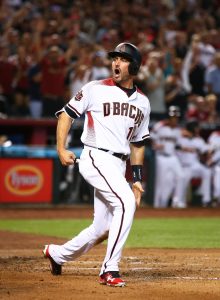
It’s important to emphasize that Pollock is not just some flash in the pan. He has been a MLB powerhouse before. Back in 2015, the then-27-year-old turned in a stunning campaign for the D-Backs, slashing .315/.367/.498 while driving twenty home runs, swiping 39 bags, and providing top-end glovework in center.
That output, which followed an excellent but injury-shortened 2014 effort, was valued in the range of 7 WAR. A career year? Perhaps. But nothing stood out as particularly unsustainable; Pollock carried a healthy but hardly otherworldly .338 batting average on balls in play. Ultimately, that kind of output over a full season just isn’t possible without supreme talent.
Pollock, really, was Blackmon before the bearded wonder came into his own as a power-speed force. Then came a terrible elbow injury that cost Pollock almost all of the 2016 season. He returned with a quality showing in 2017 — a league-average (park-adjusted) .266/.330/.471 slash with 14 home runs and twenty steals — but produced more as a high-quality regular than a superstar and missed nearly a third of the season with a groin injury.
At the outset of the current season, MLBTR’s Tim Dierkes graded Pollock the ninth-best free agent on the upcoming market. Health, he rightly emphasized, would be a major factor in Pollock’s market. Dierkes certainly did not short Pollock’s talent in suggesting he could conceivably play his way into a deal in the range of the five-year, $80MM deal signed by Lorenzo Cain. Perhaps, though, there’s greater potential earning upside even than that for a player who has already established a lofty ceiling and who is still relatively youthful.
Thus far in 2018, after all, Pollock has had that 2015 look about him. He has already blasted ten long balls and stolen seven bags. He’s sporting an excellent .292/.356/.689 slash despite only carrying a .296 BABIP. Statcast numbers (.422 wOBA vs. .405 xwOBA) largely support his output. And the early returns from defensive metrics suggest that Pollock is still a well-above-average fielder in center — an area he shines in relation to Blackmon and perhaps even Cain, whose grades have trended more toward average in recent years.
No matter how things turn out, Pollock’s somewhat worrying history of elbow surgeries will likely weigh on his market. And the holes in his track record won’t be closed up retrospectively. Still, if Pollock can sustain a substantially above-average offensive performance over the duration of the 2018 campaign — and, of course, remain healthy along he way — he could have a free-agent case that is in many ways as compelling as the one Blackmon decided to forego.
Photo courtesy of USA Today Sports Images.
MLB Daily Roster Roundup: Cueto, Middleton, Sano, Soroka
ROSTER MOVES BY TEAM
(May 1st)
NATIONAL LEAGUE
- ATLANTA BRAVES | Depth Chart
- Promoted: SP Mike Soroka (contract purchased)
- Soroka made his MLB debut on Tuesday.
- Optioned: RP Chase Whitley
- Re-signed: OF Peter Bourjos (MiLB contract)
- Promoted: SP Mike Soroka (contract purchased)
- COLORADO ROCKIES | Depth Chart
- Promoted: INF Daniel Castro (contract purchased)
- Castro played 2B and batted 7th on Tuesday.
- Optioned: 1B/3B Ryan McMahon
- Transferred to 60-Day DL: RP Zac Rosscup
- Promoted: INF Daniel Castro (contract purchased)
- LOS ANGELES DODGERS | Depth Chart
- Promoted: RP Edward Paredes
- Optioned: RP Brock Stewart
- MIAMI MARLINS | Depth Chart
- Rule 5 return: RP Tyler Kinley (returned from Twins)
- MILWAUKEE BREWERS | Depth Chart
- Promoted: OF Brett Phillips
- Optioned: RP Brandon Woodruff
- SAN DIEGO PADRES | Depth Chart
- Placed on 10-Day DL: C Austin Hedges (elbow tendinitis)
- Recalled: C Raffy Lopez
- Lopez is expected to be the starting catcher while Hedges is out.
- SAN FRANCISCO GIANTS | Depth Chart
- Placed on 10-Day DL: SP Johnny Cueto (elbow inflammation)
- Promoted: SP Andrew Suarez
- ST. LOUIS CARDINALS | Depth Chart
- Promoted: 1B/OF Luke Voit
- Optioned: RP Mike Mayers
—
AMERICAN LEAGUE
- BALTIMORE ORIOLES | Depth Chart
- Activated from 10-Day DL: 1B/OF Mark Trumbo
- Trumbo was the DH and batted 6th on Tuesday.
- Promoted: INF Engelb Vielma
- Placed on 10-Day DL: INF Luis Sardinas (strained lower back)
- Optioned: OF Joey Rickard
- Activated from 10-Day DL: 1B/OF Mark Trumbo
- LOS ANGELES ANGELS | Depth Chart
- Placed on 10-Day DL: RP Keynan Middleton (elbow inflammation)
- Justin Anderson, Cam Bedrosian are Blake Parker are candidates for save chances while Middleton is out.
- Promoted: RP Eduardo Paredes
- Placed on 10-Day DL: RP Keynan Middleton (elbow inflammation)
- MINNESOTA TWINS | Depth Chart
- Placed on 10-Day DL: 3B Miguel Sano (strained hamstring)
- Eduardo Escobar has been playing 3B in Sano’s absence with Ehire Adrianza filling in for Escobar at shortstop.
- Promoted: INF Gregorio Petit (contract purchased)
- Designated for assignment: SP Dietrich Enns
- Placed on 10-Day DL: 3B Miguel Sano (strained hamstring)
- NEW YORK YANKEES | Depth Chart
- Reinstated from 4-game suspension: 1B Tyler Austin
- Austin played 1B and batted 8th on Tuesday.
- Reinstated from 4-game suspension: 1B Tyler Austin
- SEATTLE MARINERS | Depth Chart
- Placed on 10-Day DL: SP Erasmo Ramirez (strained Teres major), RP Dan Altavilla (AC joint inflammation)
- Wade LeBlanc will start in Ramirez’s spot on Thursday.
- Promoted: OF Guillermo Heredia, RP Casey Lawrence
- Placed on 10-Day DL: SP Erasmo Ramirez (strained Teres major), RP Dan Altavilla (AC joint inflammation)
- TAMPA BAY RAYS | Depth Chart
- Placed on 10-Day DL: SP Yonny Chirinos (strained forearm)
- Promoted: RP/SP Ryan Yarbrough
- Acquisitions: SP Sam McWilliams, RP Colin Poche (acquired from the Diamondbacks to complete the offseason trade for Steven Souza Jr.)
—
FUTURE EXPECTED MOVES
- CLE: SP Adam Plutko will be recalled from the minors on Thursday May 3rd, according to Jordan Bastian of MLB.com. He will start Game 1 or 2 of the scheduled double-header.
- LAD: SP Rich Hill will be activated from the 10-Day DL on Sunday May 6th, according to J.P. Hoornstra of the Southern California News Group.
- MIL: SP Wade Miley will have his contract purchased from the minors Wednesday May 2nd, according to Adam McCalvy of MLB.com.
- MIN: SP Fernando Romero will be recalled from the minors on Wednesday May 2nd, according to Rhett Bollinger of MLB.com.
- NYY: SP Jordan Montgomery left Tuesday’s start with elbow tightness, according to Marc Carig of The Athletic. A disabled list stint appears likely.
- OAK: SP Brett Anderson is likely to have his contract purchased from the minors on Wednesday May 2nd, according to John Shea of the San Francisco Chronicle. He would be making his 1st start for the A’s since April 2013.
- SFG: RP Will Smith will be activated from the 10-Day DL on Wednesday May 2nd, also according to Alex Pavlovic of NBC Sports Bay Area.
Knocking Down The Door: Fowler, Guerrero, Staumont, Stewart, Urias
“Knocking Down the Door” is a regular feature that identifies minor leaguers who are making a case for a big league promotion.
Dustin Fowler, CF, Athletics (Triple-A Nashville) | Athletics Depth Chart
Despite a devastating leg injury that occurred during the first inning of his MLB debut last June, many still expected Fowler to be the starting center fielder on Opening Day. While health did not appear to be a major factor—he had 47 plate appearances in 19 games this spring—the 23-year-old was understandably rusty at the plate. He hit just .222 with two walks and 13 strikeouts in the Cactus League. As a result, his Oakland A’s debut would have to wait until he began to show the form that catapulted him up prospect lists with the Yankees last season (.871 OPS, 13 HR, 19 2B, 8 3B, 13 SB in 70 Triple-A games). If the last seven games are any indication, he is getting close.
With 14 hits in his past 33 at-bats, including his first two homers of the season, a trio of three-hit games, three doubles and a pair of triples, Fowler has boosted his batting average over the .300 mark. He also has six stolen bases, which is a good indication that he’s recovered from his injury. The versatile Mark Canha has been productive while getting the majority of starts in center field as of late, but he’ll move back into a part-time role once Fowler arrives.
—
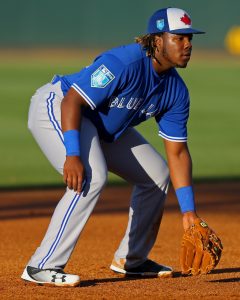
Vladimir Guerrero Jr., 3B, Blue Jays (Double-A New Hampshire) | Blue Jays Depth Chart
A 19-year-old with only a few weeks of Double-A experience has no business being on this list. Or being this good, even if his father is a Hall of Famer. But Vladimir Jr., after just 96 plate appearances, is making it clear that he has no business being at this level for much longer. The right-handed hitting third baseman is slashing .380/.442/.582 with two homers, eight doubles, 10 walks and 10 strikeouts in his first 20 games. He was also 7-for-13 in MLB camp during an impressive spring that he capped off with a walk-off homer in an exhibition game in Montreal.
The only question for now is whether he makes a stop in Triple-A before he begins his MLB career. Once he’s in the Majors, he’ll be in the lineup on a regular basis. With Josh Donaldson expected back soon from the disabled list after missing time with shoulder discomfort, it’s possible that Guerrero spells him at third base a few days per week and serves as the designated hitter on other days. The odd man out would be Kendrys Morales, who is hitless in his last 21 at-bats and is 8-for-50 on the season.
—
Josh Staumont, RP, Royals (Triple-A Omaha) | Royals Depth Chart
Entering 2017 as one of the Royals’ best prospects, Staumont flopped in his first full season in the upper minors with a 5.56 ERA and 7.0 BB/9 in 124 2/3 innings between Triple-A and Double-A. A move to the bullpen has him back on track so far in 2018.
While the walks are still an issue—he’s walked seven in 10 1/3 Triple-A innings—he’s allowed just one earned run and hasn’t walked more than one batter in seven of his eight appearances. The 24-year-old right-hander has also struck out 22 batters, including 10 over his past two outings (3 2/3 IP). Coincidentally, the Royals have one of the worst bullpens in the Majors. Their closer, Kelvin Herrera, isn’t part of the problem, but he’s expected to be traded to a contender by July 31st and probably sooner than that. Staumont should get a chance to prove that he can be a part of the team’s late-inning, post-Herrera relief crew.
—
Christin Stewart, OF, Tigers (Triple-A Toledo) | Tigers Depth Chart
The Tigers had a fairly uneventful offseason, which wasn’t totally unexpected as they moved toward a rebuild. But with several free agents available at a discounted rate—Carlos Gomez, Carlos Gonzalez and Jon Jay are just a few examples—it was a bit surprising that they took a hard pass and began the season with Mikie Mahtook and Leonys Martin in their starting outfield. While it’s not clear whether the Stewart factored in to the decision—he hit 28 homers in Double-A in 2017, but also struck out 138 times—he could soon get the chance to show that he can be a part of the solution.
Not only has the 24-year-old left fielder continued to mash in the upper minors—he’s slashing .311/.404/.568 with four homers, five doubles and 11 walks in his first 89 Triple-A plate appearances—he’s also striking out at a much lower rate than in year’s past (24 % in ’17; 15 % in ’18). Playing alongside Miguel Cabrera and Victor Martinez should only help to continue that trend.
—
Luis Urias, 2B, Padres (Triple-A El Paso) | Padres Depth Chart
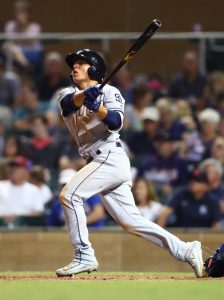 Padres hitters continue to rack up strikeouts at a record pace. They lead the league with 309 whiffs in 1135 plate appearances and are on their way to surpassing the MLB single-season record of 1571. As a comparison, Urias has struck out 150 times in 1618 plate appearances in the minors. He also has 166 walks. The 20-year-old won’t be their savior in 2018, but he can certainly help this bunch.
Over his first 19 games in Triple-A, Urias is slashing .307/.416/.440 with two homers, four doubles, 13 walks and 15 strikeouts. He has nine hits, six walks and one strikeout over his last 22 plate appearances. The Padres moved quickly to fill two rotation spots with prospects—Joey Lucchesi and Eric Lauer both debuted in April—and now it’s becoming increasingly possible that Urias joins them to replace the struggling Carlos Asuaje (.576 OPS) as the starting second baseman.
Photos courtesy of USA Today Sports Images.
Early Returns On Minor-League Signings: Position Players
With one month of the season in the books, we’ll check in on how this winter’s crop of minor-league signees is faring, starting on the position-player side. It’s fairly common to see quite a few relief pitchers emerge from the ranks of non-roster invitees to make Opening Day rosters and even earn significant bullpen roles. Hitters, though, tend to face a tougher path to playing time.
Every so often, there’s a gem — J.D. Martinez, anyone? — but for the most part, teams are hoping that some of the players they ink to minors pacts will help with depth and stability over the course of a long season. Here are the biggest contributors to date (by order of most to least plate appearances):
- Ryan Flaherty, INF, Braves: The long-time utility infielder broke out early after landing with the Atlanta organization right at the start of the season. He has started to cool but still owns an appealing (albeit almost certainly unsustainable) .300/.398/.400 slash line in his 93 plate appearances. With Johan Camargo back from the DL and Jose Bautista on the way, though, Flaherty’s window of opportunity promises to narrow significantly.
- Pedro Alvarez, DH, Orioles: If there’s a player who may have earned himself a much bigger role, it could be Alvarez. With the struggling, injury-riddled O’s desperate for any spark, he has swatted six long balls and posted a .237/.357/.576 slash over seventy plate appearances. It’s still anyone’s guess exactly how the Baltimore roster will evolve over the season, but the 32-year-old Alvarez ought to keep earning chances if he keeps hitting and might even end up becoming a bit of a trade asset.
- Abraham Almonte, OF, Royals: The 28-year-old can be a handy asset if he’s hitting at close to a league-average rate, which is just what he’s done for Kansas City. It’s hard to imagine Almonte functioning as more than a fourth outfielder for the Royals, barring injury or trade, but he could get a significant chance at MLB action over the course of what is shaping up to be a season to forget in K.C.
- Gregor Blanco, OF, Giants: Now that he’s back in the bay, Blanco has returned to doing what he does best: getting on base at surprisingly useful levels while providing sometimes excellent baserunning and solid glovework at all three outfield positions. He has been a quality reserve outfielder in the past and now has perhaps earned the presumption of a roster spot the rest of the way in 2018, though he’ll need to keep performing to fend off some younger players as the season progresses.
- Danny Valencia, 3B, Orioles: Valencia has earned a surprising amount of playing time owing to injuries but has not exactly produced compelling results through 17 games of action. He’s also not considered a quality fielder or baserunner. But it’s only fair to note that Valencia has likely been striking the ball much better than his three home runs and .204/.291/.429 batting line would suggest. He’s carrying only a .206 BABIP and a .301 wOBA that lags far behind the .350 xwOBA that the quality of his contact predicts.
Beyond this group, things thin out even further. Rajai Davis and Moises Sierra have received fairly significant time with the Indians and Nationals, respectively, but have contributed next to nothing with the bat. A.J. Ellis, Bryan Holaday, and Jose Lobaton have been marginal-hitting reserve backstops, while players such as Cliff Pennington and Ryan Goins have similarly provided backup infield gloves without hitting enough to stake anything but temporary claims to jobs.
Of course, the results will change as the season goes on. Perhaps next time we check in, there’ll be some interesting new names to consider … after all, such notable veterans as Bautista (Braves), Jayson Werth (Mariners), and Melky Cabrera (Indians) are all in the pipeline of their respective teams after striking minors deals in recent weeks.
The original version of this post mistakenly included reference to Alcides Escobar, who in fact signed a MLB deal his winter with the Royals.
Offseason In Review: Arizona Diamondbacks
This is the final entry in MLBTR’s 2017-18 Offseason In Review series. Click here to read the other completed reviews from around the league.
Last season, the Diamondbacks managed a remarkable reversal of their 2016 record by finishing 93-69, making the playoffs for the first time since 2011. With most key pieces of its Wild Card-winning core still intact, Arizona focused its energy on replacing J.D. Martinez and Fernando Rodney while piling on a horde of bullpen candidates.
Major League Signings
- Alex Avila, C: two years, $8.25MM
- Jarrod Dyson, OF: two years, $7.5MM
- Yoshihisa Hirano, RHP: two years, $6MM
- T.J. McFarland, LHP: one year, $850K
- Total spend: $22.6MM
Trades & Claims
- Acquired OF Steven Souza from Rays & RHP Taylor Widener from Yankees in exchange for LHP Anthony Banda & two PTBNL (to Rays) & INF Brandon Drury (to Yankees)
- Acquired RHP Brad Boxberger from Rays in exchange for RHP Curtis Taylor
- Acquired INF Deven Marrero from Red Sox in exchange for PTBNL or cash
- Acquired RHP Stefan Crichton from Orioles in exchange for PTBNL or cash
- Claimed LHP Henry Owens off waivers from Red Sox
- Selected RHP Albert Suarez from Giants in Rule 5 draft
Options Exercised
- Daniel Descalso, UTIL: exercised $2MM club option (instead of $150K buyout)
Extensions
- Ketel Marte, SS: five years, $24MM (plus two options)
Notable Minor League Signings
- Antonio Bastardo, Michael Blazek, Jake Buchanan, Cody Decker, Jorge De La Rosa, Rubby De La Rosa, Neftali Feliz, Ramon Flores, Kris Medlen, Tyler Pill, Cesar Puello, Anthony Recker, Daniel Robertson, Fernando Salas
Notable Losses
- Banda, Drury, Jeremy Hazelbaker, David Hernandez, J.J. Hoover, Chris Iannetta, Martinez, Rodney
[Arizona Diamondbacks Depth Chart/Arizona Diamondbacks Payroll]
Needs Addressed
The Snakes made a surprising postseason run in 2017, the first season under GM Mike Hazen and skipper Torey Lovullo. While the core of the roster remained under contract for 2018 (and, in many cases, beyond), the Hazen-led front office still faced challenges.
The most stinging loss for the Snakes headed into the offseason was outfielder J.D. Martinez, who was a monster after coming over at last year’s trade deadline. They always seemed a long shot to re-sign him, with Zack Greinke’s massive deal weighing heavily on the future payroll and the team’s 2018 tab already set to reach record heights.
Still, the club never really shut the door on Martinez through the first three and a half months of the offseason. After all, they had a King Kong-sized hole to fill in the lineup. It’s no coincidence that Martinez finally made things official with the Red Sox just a week after the Diamondbacks gave up on him and pivoted to Steven Souza on the trade market.
Of course, the team had a powerful right-handed bat set to return from injury. But it has been clear for a while now that Yasmany Tomas won’t meet the lofty expectations placed on him when he came over from Cuba. The club officially recognized that fact when it outrighted him to Triple-A at the start of the season. It’s unfortunate that he’s fallen so far in the eyes of the organization, which is surely disappointed that its $68.5MM investment won’t pay off.
Tomas, then, was not seen as a real part of the plan to replace Martinez. Rather, the club first picked up free agent Jarrod Dyson at what seems to be an appealing price. He provides another piece (and a different skillset) for the corner outfield mix while also ably complementing and providing insurance for oft-injured center fielder A.J. Pollock. While Tomas still could have been viewed as the righty thump to go with Dyson’s left-handed-hitting speed and defense, the front office elected instead to chase down Souza. Though that deal cost the D-Backs an important upper-level rotation asset in Anthony Banda and a quality infielder in Brandon Drury, the organization obviously felt it was dealing from depth in those areas.
Of course, parting with Drury also helped spur the Diamondbacks’ late move to acquire infielder Deven Marrero from the Red Sox. The depth has proven necessary following an injury to third baseman Jake Lamb, which has left Daniel Descalso seeing much of the action at the hot corner. Marrero was available at a minimal price owing to a roster crunch in Boston.
The D-Backs also had an opening at catcher with vet Chris Iannetta hitting the open market. While a reunion was pursued, market timing led Iannetta to join the division-rival Rockies and left the Snakes to pursue Alex Avila. Though he has had his ups and downs over the years — including, especially, a frightening run of concussion problems — Avila could be a great value if he can hit anything like he did last year (.264/.387/.447, 14 home runs).
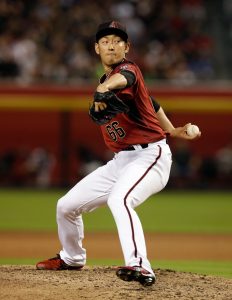 Outside of Archie Bradley, the Diamondbacks’ bullpen was the team’s other big area of concern. But without much room to spend, they certainly weren’t a likely landing spot for marquee relievers like Wade Davis, Greg Holland or Addison Reed. Instead, they opted to add Yoshihisa Hirano, who comes over after a long run of success in Japan’s top league. While he appears to be the beneficiary of some good batted ball fortune, holding hitters to a .215 wOBA despite a .329 xwOBA, Hirano has managed to induce a solid volume of swinging strikes. Arizona also turned to the trade market to add Brad Boxberger, an experienced late-inning arm who has had his share of injury troubles in recent years. Like Souza, he came courtesy of the Rays’ rebuild. Boxberger has performed well as the closer in the early going.
The organization didn’t stop there, though. It made a flurry of other moves to bolster the bullpen. MacFarland was added on a cheap major league deal, in addition to minor league reliever signings that reached double digits by the season’s outset. While there were no doubt some targeted arms in the group, to an extent the strategy seems to have been one of throwing possibilities against the proverbial wall to see what would stick. As of now, members of that group make up nearly half of the club’s bullpen, as MacFarland, Salas and De La Rosa have all captured middle relief jobs for the time being. Several others remain on hand in the upper minors as depth options.
While most of the above moves were geared towards a strong push for contention this season, the Dbacks did make one important move with their long-term future in mind. The extension of Ketel Marte helped them gain cost-certainty over their second baseman while picking up a pair of options over two of his would-be free agent seasons. It’s an intriguing move with a good bit of upside. Marte proved to be something of a Statcast darling last year with his batted ball profile. He finished in the top 25% of MLB hitters in xwOBA, a statistic that measures expected offensive output based on launch speed and angle of batted balls. That made him a popular breakout pick entering the season despite a mediocre offensive output in 2017 on the whole.
Questions Remaining
While Arizona’s starting rotation is a strength overall, it doesn’t come without its share of question marks. It’s no sure bet that Zack Godley or Robbie Ray will sustain the surprise breakouts they each enjoyed last season. Indeed, the latter had some struggles with walks and home runs in the early going (before being felled by an oblique injury). Patrick Corbin‘s off to a scorching start, but he and fellow veteran Zack Greinke both come with some injury concerns that ought not be overlooked.
The club’s pitching depth always seemed likely to be tested at some point this season. That’s now a certainty with Ray hitting the DL after the team already lost one starter for the campaign in Taijuan Walker, who underwent Tommy John surgery after suffering a torn UCL in his pitching elbow. As such, Matt Koch has been forced to take on a full-time role in the rotation, leaving the club without much in the way of inspiring depth options. Troy Scribner, Braden Shipley and Kris Medlen are probably next in line. As things stand, it wouldn’t be surprising at all if the D-Backs end up looking for a starter on the mid-season trade market.
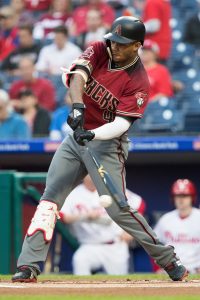 While Marte has a nice ceiling, the infield duo of he and Nick Ahmed did not look particularly strong entering the year and remains a question mark. Though Ahmed is off to a nice start with the bat, there’s still quite a lot for him to prove at the plate. And Marte has endured a brutal opening month with the bat. Whether or not these players can hit enough to provide a quality middle-infield unit will be a situation to monitor for the Diamondbacks throughout the season.
Despite the overwhelming quantity of moves geared towards patching it, Arizona’s bullpen looks a bit flawed outside of Bradley and Boxberger. While much of the relief corps has actually performed pretty admirably so far, one has to wonder how long a patchwork group of relievers with mediocre reputations can (in conjunction with that late-inning duo) continue to post the best ERA of any bullpen in baseball. Then again, their entire pitching staff is likely benefiting at least marginally from the new humidor that’s been installed at Chase Field; that’ll be an interesting sub-plot throughout the season.
Overview
The Diamondbacks didn’t need to do much outside of addressing their bullpen. As a result, they focused their energy on plugging an important hole in the lineup, finding a backstop, and making an avalanche of reliever additions. The result so far? They’ve won their first nine series of the season, and they’ve done it mostly without Souza or Lamb.
Arizona now has a great shot at a second consecutive playoff berth, but its roster depth will continue to be tested. The front office pulled off an impactful, high-value swap last summer to land Martinez. He won’t be available this time around, but Hazen and his compatriots may need to work similar magic again at this year’s trade deadline.
How would you rate the Diamondbacks’ offseason work? (Poll link for app users)
How Would You Grade The Diamondbacks' Offseason Work?
-
B 47% (836)
-
A 25% (447)
-
C 21% (365)
-
F 3% (60)
-
D 3% (53)
Total votes: 1,761
Photos courtesy of USA Today Sports Images.
MLB Daily Roster Roundup: Gonzalez, LeMahieu, Ray, Seager
ROSTER MOVES BY TEAM
(April 30th)
NATIONAL LEAGUE
- ARIZONA DIAMONDBACKS | Depth Chart
- Placed on 10-Day DL: SP Robbie Ray (strained oblique)
- Kris Medlen was scratched from his Triple-A start on Monday. He is the leading candidate to take Ray’s next turn.
- Promoted: RP Silvino Bracho
- Placed on 10-Day DL: SP Robbie Ray (strained oblique)
- COLORADO ROCKIES | Depth Chart
- Activated from 10-Day DL: OF Carlos Gonzalez
- Gonzalez was not in the starting lineup on Monday.
- Placed on 10-Day DL: 2B DJ LeMahieu (strained hamstring)
- Pat Valaika has been playing 2B in LeMahieu’s absence.
- Activated from 10-Day DL: OF Carlos Gonzalez
- LOS ANGELES DODGERS | Depth Chart
- Placed on 10-Day DL: SS Corey Seager (season-ending Tommy John surgery)
- Chris Taylor will be the team’s regular SS, allowing the team to better utilize a crowded outfield.
- Promoted: INF/OF Breyvic Valera
- Placed on 10-Day DL: SS Corey Seager (season-ending Tommy John surgery)
- MIAMI MARLINS | Depth Chart
- Activated from 10-Day DL: SP Dan Straily
- Placed on Paternity list: RP Tyler Cloyd
- PHILADELPHIA PHILLIES | Depth Chart
- Promoted: SP Zach Eflin, RP Zac Curtis
- Eflin will start on Tuesday, replacing the injured Ben Lively.
- Placed on 10-Day DL: RP Victor Arano (strained rotator cuff)
- Optioned: RP Jake Thompson
- Promoted: SP Zach Eflin, RP Zac Curtis
- PITTSBURGH PIRATES | Depth Chart
- Role change: P Steven Brault has been moved the bullpen.
- SP Nick Kingham will remain in the rotation after an impressive MLB debut on Sunday.
- Role change: P Steven Brault has been moved the bullpen.
- WASHINGTON NATIONALS | Depth Chart
- Promoted: RP Wander Suero
- Optioned: RP Austin Voth
—
AMERICAN LEAGUE
- DETROIT TIGERS | Depth Chart
- Placed on 10-Day DL: SP/RP Daniel Norris (groin surgery)
- Norris will miss 8-12 weeks.
- Promoted: RP Chad Bell
- Placed on 10-Day DL: SP/RP Daniel Norris (groin surgery)
- MINNESOTA TWINS | Depth Chart
- Role change: P Phil Hughes was moved to the bullpen.
- SP Fernando Romero will take Hughes’ rotation spot when he makes his MLB debut on Wednesday.
- Promoted: RP John Curtiss
- Optioned: RP Tyler Duffey
- Role change: P Phil Hughes was moved to the bullpen.
- KANSAS CITY ROYALS | Depth Chart
- Promoted: INF Adalberto Mondesi Jr.
- Mondesi was optioned to Triple-A.
- Promoted: INF Adalberto Mondesi Jr.
- TEXAS RANGERS | Depth Chart
- Placed on 10-Day DL: SP Martin Perez (elbow discomfort)
- The Rangers had six starters on their roster. No word on whether they’ll proceed with five or if Perez will be replaced in the rotation.
- Promoted: RP Jose Leclerc
- Placed on 10-Day DL: SP Martin Perez (elbow discomfort)
- TORONTO BLUE JAYS | Depth Chart
- Placed on 10-Day DL: OF Randal Grichuk (sprained knee)
- Promoted: INF Gift Ngoepe
- Released: INF Danny Espinosa opted out of his MiLB contract.
—
FUTURE EXPECTED MOVES
- BAL: 1B/OF Mark Trumbo will be activated from the DL and INF/OF Luis Sardinas (strained lower back) will be placed on the 10-Day DL prior to the team’s next game on Tuesday May 1st, according to Dan Connolly of BaltimoreBaseball.com.
- CLE: SP Adam Plutko will be recalled from the minors on Thursday May 3rd, according to Jordan Bastian of MLB.com. He will start Game 1 or 2 of the scheduled double-header.
- MIL: SP Wade Miley will have his contract purchased from the minors Wednesday May 2nd, according to Adam McCalvy of MLB.com.
- MIN: SP Fernando Romero will be recalled from the minors on Wednesday May 2nd, according to Rhett Bollinger of MLB.com. 3B Miguel Sano (strained hamstring) is a DL candidate, according to Phil Miller of the Star Tribune.
- SFG: SP Andrew Suarez will be recalled from the minors on Tuesday May 1st, according to Alex Pavlovic of NBC Sports Bay Area. RP Will Smith will be activated from the 10-Day DL on Wednesday May 2nd, also according to Pavlovic.
- WSH: 3B Anthony Rendon is likely to begin a rehab assignment or will be activated from the 10-Day DL on Tuesday May 1st, according to Jamal Collier of MLB.com.