
Best Deadline Rental Returns In Recent History, #6: The Cubs’ Fire Sale
With the trade deadline now less than two months away, we at MLBTR are setting our sights backwards for a bit to highlight past trades of rental players to provide a loose guideline of what sort of returns fans can expect with their teams’ current rental players. With an arbitrary cutoff point of 2017-21, we’re counting down the top 10 returns that a team got when selling a rental player. We’ve already published some honorable mentions as well as entries No. 10, No. 9, No. 8 and No. 7. If you disagree with our rankings, let us know! It’s all part of the subjective fun! Onto No. 6…
The 2021 season marked a turning point in Cubs franchise history. Half a decade had elapsed since the team’s curse-breaking 2016 World Series run. The “dynasty” chatter that followed that seven-game victory over Cleveland never really manifested into reality. Chicago was a perennial contender, but that vaunted Cubs core never reached the World Series again and only won one game beyond the National League Division Series before the group was suddenly nearing the end of its time together.
Kris Bryant, Anthony Rizzo, Javier Baez, Willson Contreras, Kyle Schwarber, Jon Lester, Jake Arrieta and Kyle Hendricks was a sensational group of talent around which to build, but Hendricks was the only one of the bunch to put pen to paper on an extension. The group continued inching closer to free agency, and as Lester and Arrieta declined in their latter years in Chicago, some of the shine wore off. The Cubs were a good team, but year after year, the season ended with now-former president of baseball operations Theo Epstein making similar comments about how the “offense broke” or something else went wrong.
Following a 2020 season that saw the Cubs swept out of a three-game Wild Card series against the Marlins in the expanded playoff format, Epstein stepped down from his role as president and turned baseball autonomy over to Jed Hoyer. It was baptism by fire in every sense of the cliche, as Hoyer faced a series of unenviable decisions, beginning with Schwarber. Fresh off a .188/.308/.393 showing in 244 plate appearances in 2020, Schwarber was non-tendered rather than offered a raise heading into his final year of arbitration. Not four weeks later, Yu Darvish was traded to the Padres in a salary-motivated deal that has to date produced just one prospect of any note (Owen Caissie).
Decision time was only just beginning for Hoyer and his staff. The Cubs would need to determine how to proceed with the trio of Bryant, Rizzo and Baez, each of whom were slated to become free agents following the 2021 season. Prior extension talks had never resulted in a deal — though Baez was reportedly quite close to signing before baseball grinded to a halt with the Covid pandemic in 2020. Chicago made one final effort to extend Rizzo that spring, but he spurned their five-year, $70MM offer (and has since banked three years and $56MM in guaranteed money with the Yankees).
The Cubs could’ve traded any of the bunch that offseason, and Bryant’s name in particular echoed throughout the rumor mill as much as it ever had. Ultimately, all three stayed put, and thus the ensuing narratives that would dominate the 2021 Cubs season were set into motion. Would any of Bryant, Baez or Rizzo stay? Was the core finally breaking up? Was this the team’s last chance?
The lackluster offseason headlined by trading the prior season’s Cy Young runner-up should’ve answered that final question on its own, but the Cubs surprised plenty of onlookers by not only fielding a competitive team but vying for first place in the division for much of the first few months. As late into the season as June 24, the Cubs were eight games over .500 and in a first-place tie for the NL Central lead with the Brewers.
A subsequent 11-game losing streak — the first of two 11-game losing streaks for that year’s Cubs — removed all doubt, however. By July 8, the Cubs were below .500, and the surging Brewers had remained hot. They held a 9.5-game lead over the second-place Reds, with Chicago and St. Louis tied for third in the division. The fire sale was coming, and virtually everyone knew it.
Rizzo was the first to go. A July 29 deal sent him to the Yankees in exchange for 19-year-old outfielder Kevin Alcantara and 24-year-old righty Alexander Vizcaino. A day later, Baez was following Rizzo out of Wrigley. Traded alongside right-hander Trevor Williams, Baez went to the Mets in exchange for 19-year-old outfielder Pete Crow-Armstrong. For the next 24 hours, there were serious questions about whether a trade for Bryant would ultimately come together, but in a buzzer-beating deal, Bryant was shipped to the Giants in exchange for 21-year-old outfielder Alexander Canario and 24-year-old righty Caleb Kilian.
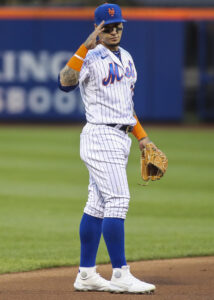
You can perhaps call the inclusion of Baez cheating a little bit for the purposes of this series, because Williams’ inclusion meant it wasn’t *technically* a rental. The Mets acquired two months of control over Baez and a year-plus of Williams in this swap. That extra year of control over Williams surely factored into the decision to part with Crow-Armstrong to an extent, but this was a trade about acquiring Baez first and foremost. Baez caught fire down the stretch for the Mets, too, posting a huge .299/.371/.515 slash in 186 plate appearances. The Mets still missed postseason, however, and the trade surely stings when looking at what’s become of the player they surrendered.
Fast forward less than two years, and “PCA” is regarded as one of the sport’s top outfield prospects. He’s ranked within the top-30 overall prospects in the sport on the most recent lists Baseball America, MLB.com, FanGraphs and Keith Law of The Athletic. ESPN’s Kiley McDaniel has the “low” ranking on Crow-Armstrong… at No. 39 in the game. Regarded as plus-plus defender in center field with plus speed, Crow-Armstrong has opened the season with a .278/.345/.513 showing in Double-A (131 wRC+). He’s knocked eight homers, seven doubles and three of triples while going 13-for-17 in steals.
Obviously, the Cubs haven’t yet gotten any big league value out of Crow-Armstrong, but it’s rare for a team to acquire a prospect in exchange for a rental and see him almost immediately ascend to the point that he’s regarded as one of the top 15 to 30 prospects in all of baseball. If the Cubs wanted to do so — they surely don’t, to be clear — they could use Crow-Armstrong as a headline piece to acquire just about any controllable veteran who hits the market this summer or next offseason. The likelier path for PCA is that he’ll be given every opportunity to become a franchise center fielder for a still-retooling Cubs club.
There’s no nitpicking with the other two swaps in this three-for-one entry. Rizzo and Bryant were shipped out as two-month mercenaries in exchange for a quartet of prospects, although Rizzo took to the Bronx quite nicely and is now locked in as a Yankee through the 2024 season. There was plenty for the Yankees to like, as Rizzo hit .249/.340/.428 (113 wRC+) down the stretch, swatting eight homers and seven postseason doubles before tacking on another dinger in that year’s Wild Card loss to the Red Sox. In parts of three seasons as a Yankee, Rizzo is a .245/.344/.468 hitter with 51 home runs.

I doubt the Yankees regret making this swap, but it’s worked out nicely for the Cubs as well. Alcantara, now 20 years old, isn’t as highly regarded as Crow-Armstrong, but he entered the season ranked No. 91 on Baseball America’s Top 100 prospect rankings. He’s dropped off that list after a slow start in High-A (.250/.281/.389), but he still sits at No. 75 at FanGraphs and is generally a very well regarded prospect.
It’s worth bearing in mind that those pedestrian High-A numbers have been posted against competition that is, on average, nearly two and a half years older than Alcantara. The towering 6’6″ toolbox is also just a season removed from a much heartier .273/.360/.451 showing in Class-A, where he was nearly two years younger than the league’s average player. He’s a ways off, but like Crow-Armstrong, Alcantara has significantly elevated his stock since that 2021 trade. If the Cubs were so inclined, he too could be a significant piece in any potential deadline trade for controllable big league help. That’s not likely to happen — granted, it’s a bit more plausible with Alcantara than with Crow-Armstrong — but Alcantara has become a reasonably high-profile prospect.
That’s not the case with the now-26-year-old Vizcaino, though the circumstances surrounding his departure from baseball remain unclear. The Cubs placed Vizcaino on the restricted list in 2022 after he failed to report to spring training. He spent the entire year on the restricted list. The Cubs non-tendered him last offseason, and he didn’t sign with another team. Details surrounding Vizcaino’s abrupt departure from the game are basically nonexistent. The obvious hope is that he’s happy and healthy wherever he’s at, but it’s a disappointing outcome for the Cubs.
As for the third and final chapter of this deadline trio, Bryant proved an important pickup for the Giants. True, San Francisco would’ve made the postseason regardless, evidenced by their MLB-best 107 wins that season, but they edged out the division-rival Dodgers for that NL West crown by a margin of just one game. Bryant’s solid .262/.344/.444 slash may not have been in line with his peak form, but he contributed a meaningful presence in the Giants’ lineup down the stretch. They’d go on to fall to those same Dodgers in the National League Division Series, but not through any fault of Bryant’s. He delivered an 8-for-17 performance in the NLDS, adding a homer and a walk with only three strikeouts in 18 total trips to the plate.

Unlike with the other two trades, Cubs fans have at least gotten a look at one element of this return, although the now-26-year-old Kilian’s big league work to date hasn’t been pretty. The 6’4″ righty is still widely regarded as one of the organization’s best pitching prospects, but he’s been tagged for 20 earned runs in 14 2/3 innings through a pair of very limited auditions. He’s pitched 148 Triple-A innings as a starter over the past two seasons, logging a 4.32 ERA with a 24.2% strikeout rate against an 11.1% walk rate.
Command wasn’t an issue for him prior to reaching Triple-A, but he struggled with walks last year. It’s encouraging that he’s walked just 6.8% of his opponents over his past seven Triple-A starts, pitching to a 3.09 ERA along the way, but Kilian has also plunked six hitters in that time so he’s not out of the woods with his shaky location just yet. He’s in the mix to come up and make some starts this year still, and depending on how he fares, Kilian could be a candidate for a rotation spot either later this season or in 2024.
As for Canario, he finished second among all minor leaguers with 37 home runs in 2022 and hit .252/.343/.556 across High-A, Double-A and Triple-A. He added 23 steals (in 26 tries) and walked at an 11% clip, though his 27.5% strikeout rate was more concerning. Baseball America calls him a potential low-average slugger with plenty of walks, above-average speed and above-average defense in right field. He hasn’t yet gotten a chance to build on last year’s breakout, as he dislocated his shoulder while playing in the Dominican Winter League.
We’re just shy of two years removed from the Cubs’ deadline fire sale, and while it’s still early to grade the overall strength of their return, things are looking promising. To trade three rental players and come away with a pair of top-100 prospects — including one who’s widely ranked in the top 25 — as well as a near-MLB starting pitcher and a strikeout-prone but prodigious slugging outfielder with power, speed and defensive upside is objectively impressive.
On the one hand, it’s a testament to the caliber of the players the Cubs were trading, but not all trades of star players result in this type of return. The Orioles have still barely gotten anything from the Manny Machado trade nearly five years after its completion. The Rangers’ trade of Darvish to the Dodgers netted them one immediate top prospect, but two years after the deal that prospect (Willie Calhoun) was already looking like a questionable big leaguer.
The tail-end of the development phase for the prospects acquired here — particularly Crow-Armstrong — will define this series of trades. But four of the five prospects acquired in this slate of trades have enhanced their stock since joining the Cubs, who now have a handful of near-MLB-ready talent and/or trade chips to show for parting with a trio of popular veterans. The 2021 trade deadline was a dark few days for Cubs fans, but there’s a good chance it’ll wind up leading to some brighter times ahead.
Images courtesy of USA Today Sports.
The Upcoming Shortstop Class Looks Increasingly Bleak
The top free agent storyline of each of the past two offseasons was the respective star-studded shortstop classes. In 2021-22, it was Carlos Correa, Corey Seager, Marcus Semien, Trevor Story and Javier Báez. Last winter, Correa was back on the market again, joined by Trea Turner, Xander Bogaerts and Dansby Swanson.
Next winter’s group was never going to rival that previous collection. The class in general is very light on star position player talent beyond Shohei Ohtani. It’s particularly barren up the middle of the diamond. It’s hard to imagine a more complete 180° turn than how things appear to be trending with the shortstop class, though. Virtually everyone involved is off to a very slow start.
The early-season performances from the impending free agents at the position:
Amed Rosario (28)*
While Rosario is not the superstar some evaluators had anticipated during his time in the Mets’ farm system, he’d been a solid regular for two seasons since landing in Cleveland in the Francisco Lindor blockbuster. Rosario’s solid batting averages helped offset his very low walk tallies. He hit 25+ doubles with double-digit homers in both 2021-22, playing on a near everyday basis. His cumulative .282/.316/.406 batting line was almost exactly league average. Public metrics were mixed on Rosario’s defense but the Guardians have been content to keep him at shortstop despite plenty of upper minors infield talent. Only 27 and without a ton of market competition, he entered the year in position for a strong three or four-year contract.
That could still be the case but Rosario is doing himself no favors with his early performance. He’s sitting on a .217/.262/.300 showing through his first 130 plate appearances. He has just one homer and is striking out at a 29.2% clip that’d easily be the worst full-season mark of his career if it holds. After making contact on 81.3% of his swings last season, he’s putting the bat on the ball only 71.5% of the time this year. He’s also committed six errors in 255 1/3 innings after being charged with just 12 in more than 1200 frames last year. Rosario is still the top impending free agent shortstop by default but he’s struggling in all areas right now.
Javier Báez (31), can opt out of final four years and $98MM on his contract
Báez is hitting .256/.318/.376 through his first 130 plate appearances. That’s an improvement over the lackluster .238/.278/.393 line he managed during his first season in Detroit. His 16.2% strikeout rate is the lowest of his career, pushing his overall offense near league average in spite of just three home runs in 32 games. Báez’s 2023 campaign has been fine but hardly overwhelming. It’s nowhere near what it’d take for him to beat the $98MM remaining on his existing contract. He’d need a torrid summer to put himself in position to test free agency.
Enrique Hernández (32)
Hernández has been pushed into primary shortstop duty by the Red Sox’ various injuries. The early reviews from public defensive metrics aren’t favorable, with Statcast putting him at seven outs below average in 199 innings. Hernández is off to an equally slow start at the plate. He’s hitting .236/.295/.362 over 139 plate appearances on the heels of a .222/.291/.338 showing last year. He’s been a valuable super-utility option and everyday center fielder at times in his career, including a 20-homer campaign in 2021. The past year-plus hasn’t been especially impressive, though, and Hernández has yet to demonstrate he’s capable of handling shortstop regularly from a defensive standpoint.
Brandon Crawford (37)
The career-long Giant had a tough April on both sides of the ball. He’s hitting .169/.244/.352 with a personal-high 28.2% strikeout rate in 21 games. His defensive marks through 173 2/3 innings are unanimously below-average. A right calf strain sent him to the injured list last week. Even if Crawford is willing to explore all opportunities next winter after 13 seasons in San Francisco, he’ll need much better production once he returns from the IL to find any interest as a starting shortstop.
Elvis Andrus (35)
Much of what applies to Crawford is also true for Andrus. He’s a 15-year MLB veteran with a couple All-Star appearances to his name but his offense has fallen off in recent seasons. Andrus was a well below-average hitter from 2018-21. He rebounded with a solid .249/.303/.404 showing last season but still didn’t generate much free agent attention. After settling for a $3MM deal with the White Sox, he’s hitting only .208/.291/.264 in 142 plate appearances this year. Andrus hit 17 homers last season but has just one through the first six weeks.
Nick Ahmed (34)
Another glove-first veteran, Ahmed is also off to a rough start at the plate. He carries a .227/.239/.318 line over 67 plate appearances. He’s hit only one home run and walked just once. Ahmed has always been a bottom-of-the-lineup defensive specialist, but his career .235/.289/.380 slash is much more tenable than the production he’s managed thus far in 2023. He lost almost all of last season to shoulder surgery.
Gio Urshela (32)
Urshela is hitting plenty of singles to start his time in Orange County. His .303 batting average is impressive but is paired with just a .325 on-base percentage and .345 slugging mark. He’s walking at a career-low 3.3% clip and has only three extra-base hits (two doubles and a homer) in 123 plate appearances.
More concerning for teams looking to the shortstop market is Urshela’s lack of experience at the position. He’s been a third baseman for the majority of his career. Since landing with the Angels, he’s assumed a multi-positional infield role that has given him eight-plus starts at shortstop and both corner infield spots. Even if he starts hitting for more power, he’s better deployed as a versatile infielder who can moonlight at shortstop than an everyday solution there.
Isiah Kiner-Falefa (28)
Kiner-Falefa lost his starting shortstop role with the Yankees towards the end of last season. He’s been kicked into a multi-positional capacity this year and hasn’t logged a single inning at the position in 2023. While Kiner-Falefa presumably could still handle shortstop if asked, he’s contributed nothing offensively in the early going. Through 72 plate appearances, he owns a .191/.225/.206 line.
Adalberto Mondesí (28)
Mondesí is young and has flashed tantalizing tools throughout his major league career. He’s also reached base at a meager .280 clip over 358 MLB games and battled various injuries. An April 2022 ACL tear cut that season short after just 15 games. The Red Sox nevertheless acquired him from the Royals over the offseason, but he’s yet to play a game with Boston. Mondesí opened the season on the 60-day injured list and won’t make his Sox debut until at least the end of this month. There’s a chance for him to play his way into some free agent interest. He’ll need an extended stretch of health and performance.
Players With Club Options
Both Tim Anderson and Paul DeJong can hit free agency if the White Sox and Cardinals decline respective 2024 club options. That seems likely in DeJong’s case but is reflective of the .196/.280/.351 line he managed between 2020-22. If he plays well enough to warrant significant free agent interest — he has been excellent in 11 games this season, to his credit — the Cardinals would exercise their $12.5MM option and keep him off the market anyhow.
The White Sox hold a $14MM option on Anderson’s services. That looks as if it’ll be a no-brainer for Chicago to keep him around (or exercise and make him available in trade). The only way Anderson gets to free agency is if his 2023 season is decimated by injury or an uncharacteristic performance drop-off, in which case he’d be a question mark as well.
Outlook
This was never going to be a great group. It’s comprised largely of glove-first veterans in their mid-30s. Players like Andrus, Ahmed, Crawford and José Iglesias — who’ll also hit free agency and has bounced around on minor league deals thus far in 2023 — don’t tend to be priority targets. That opened the door for the likes of Rosario, Báez and a potentially healthy Mondesí — younger players who have shown some offensive upside — to separate themselves from the pack in a way they wouldn’t have the last couple winters. No one has seized the mantle to this point. While there are still more than four months for someone to emerge, the early returns on the shortstop class aren’t promising.
*age for the 2024 season
2023-24 Player Option/Opt-Out Update: April Edition
Not long ago, any given year in Major League Baseball might have seen a handful of players have player options to decide upon at the end of a season. Opt-out clauses have slowly worked their way into normalcy among contract negotiations, however, and what was once a perk typically reserved for star players has become more commonly used as a means of either sealing a deal with mid-range free agents or in many instances, gaming the luxury tax. Player options are considered guaranteed money, after all, so it’s become common for clubs on the precipice of luxury penalization to negotiate complex player options that tamp down a contract’s average annual value even though they’re unlikely to ever be exercised.
For the purposes of this look around the league, there’s little sense in separating opt-outs from player options. The two are effectively the same, though “opt-out” typically refers to an out clause where there are multiple years remaining on the contract and “player option” generally refers to an individual decision on the forthcoming season. Both are considered guaranteed money for luxury purposes, and both ultimately come down to the player’s preference, risk tolerance, etc.
At their core, opt-out provisions aren’t particularly different from the much longer-accepted club options that teams have negotiated for years. Teams guarantee a certain number of dollars over a certain number of years, and if the player continues performing at a high enough level, they’ll exercise a club option that’s typically locked in at a below-market price. If not, the player will be bought out and sent back to free agency. Player options and opt-outs are merely the inverse; the player/agent negotiate a certain length and annual value but reserve the right to opt back into the market if the player continues to perform at a high level. It’s two sides of the same coin.
There are more players with the opportunity to opt out of their contract this offseason, by way of a one-year player option or a multi-year opt-out, than ever before. As such, we’ll be keeping tabs on these situations throughout the season. Short of a major injury, performance this early in the season isn’t likely to have a major impact on a player’s likelihood of opting out or forgoing that right, but it’s worth listing out which players will have the opportunity, what their contracts look like, and at least taking an early glance at how they’re performing.
Note: All stats through play on Tuesday.
Position Players
- Tucker Barnhart, C, Cubs ($3.25MM player option): Barnhart’s deal was announced as a two-year, $6.5MM contract, though he also obtained the right to opt out after 2023, effectively rendering 2024 a player option. He’s 5-for-16 with a walk and four strikeouts through just 17 plate appearances as the backup to Yan Gomes. Barnhart got this guarantee on the heels of a dismal .221/.287/.267 showing with the Tigers in 2022, so with even a decent season he’ll have reason to opt out and try his luck again amid a thin group of free-agent catchers.
- Josh Bell, 1B/DH, Guardians ($16.5MM player option): Bell limped to the finish line with the Padres after being traded over from the Nationals alongside Juan Soto in last summer’s blockbuster, and he hasn’t yet found his footing in 76 plate appearances with the Guardians. It’s a small sample, but Bell’s .203/.316/.344 slash looks quite similar to the .192/.316/.271 he mustered with San Diego in 2022. Bell hit 37 homers in 2019 and 27 in 2021, but he hits the ball on the ground far too often for someone with his power and lack of speed. Only one qualified hitter in MLB (Masataka Yoshida) has a higher ground-ball rate than Bell’s staggering 66.7% mark.
- Trey Mancini, 1B/OF, Cubs ($7MM player option, if he reaches 350 plate appearances): Like Bell, Mancini saw his offensive production crater following a deadline trade (to the Astros) last summer and has not yet recovered in a new setting. Through 60 plate appearances, he’s hitting just .196/.220/.250. While his contract is a two-year, $14MM deal, Mancini can opt out if he reaches 350 plate appearances (i.e., the second year becomes a player option). He isn’t hitting yet, but Mancini is playing regularly and appears to be trending toward earning that right.
- Javier Baez, SS, Tigers (can opt out of remaining four years, $98MM): After turning in a tepid .238/.278/.393 batting line in 590 plate appearances during his first season as a Tiger, Baez would need quite the season to walk away from this kind of cash. So far, he’s hitting .193/.254/.246 in 64 trips to the plate, however. When Baez gets hot, he can go on hot streaks for the ages, but he certainly doesn’t look like he’ll be opting out at season’s end.
- Justin Turner, 3B/DH, Red Sox ($13.4MM player option): Turner hasn’t found his power yet in Boston, but he’s out to a .277/.385/.385 start with nearly as many walks as strikeouts. His $13.4MM player option comes with a hefty $6.7MM buyout. He’ll turn 39 in November, but as long as he hits reasonably well, he should have more earning power than that $6.7MM net decision.
- Jorge Soler, OF/DH, Marlins ($9MM player option): Soler’s three-year, $36MM deal in Miami pays him $12MM in 2022, $15MM in 2023 and $9MM in 2024, but he had the right to opt out after each season of the deal. He hit just .207/.295/.400 with 13 homers in 306 plate appearances last year, so there was no way he was taking the first opt-out. He’s already clubbed five dingers in 62 plate appearances in 2023. His .263/.323/.649 slash translates to a 155 wRC+, and his exit velocity and hard-hit rate are through the roof, so his .256 average on balls in play should at least hold steady. Soler is an extremely streaky hitter, so time will tell how much of this early heater he can sustain, but there’s plenty to like about his start, including a reduced strikeout rate.
- Michael Conforto, OF, Giants ($18MM player option, if he reaches 350 plate appearances): As with Mancini, Conforto is on a two-year deal but gains the right to opt out after one year if he reaches 350 plate appearances. You can call it an opt-out or a player option, but it’s the same mechanism; if Conforto is healthy, he’ll likely get the right to opt out. So far, he’s hitting .220/.373/.439 with a trio of homers in 51 trips to the plate. Conforto has walked nine times in those 51 plate appearances (17.6%), and his chase rate is actually down, so he still has good knowledge of the zone. However, a year-long layoff due to shoulder surgery is perhaps making itself known with a 74.5% contact rate on pitches in the strike zone, as that’s nearly 10 percentage points below his career mark of 84%. Unsurprisingly, Conforto’s 31.4% strikeout rate is a career worst. Some rust was inevitable, though, and the plate discipline and hard contact when he has made contact (94.4 mph exit velo, 52.5% hard-hit rate) are encouraging.
- Matt Carpenter, 1B/DH, Padres ($5.5MM player option): Carpenter’s stunning return with the Yankees last year was one of the best stories of the summer, but he’s out to a sluggish .152/.317/.273 start with the Padres. He’s chasing off the plate at a 30.3% clip after doing so at a 20.7% rate last summer, and his contact rate on swings off the plate has plummeted from 62.5% to 36.4%. It’s a small sample and there’s time to turn things around, of course, but he’s had a tough start.
Pitchers
- Andrew Heaney, LHP, Dodgers ($13MM player option): Heaney’s first Rangers start was one to forget (seven earned runs), but his second start was dominant, as he tied an AL record by fanning nine consecutive hitters. If Heaney tops 150 innings and doesn’t finish the year with an injury that’d likely keep him out for the first 60-plus innings of the 2024 season, the value of that player option jumps to $20MM. He hasn’t reached 150 innings since 2018.
- Seth Lugo, RHP, Padres ($7.5MM player option): Lugo’s return to the rotation has been solid. He’s posted a 2.70 ERA through 16 2/3 frames with strikeout and walk ratios that look similar to his numbers out of the bullpen (24.3% strikeout rate, 7.1% walk rate). It’s anyone’s guess how many innings Lugo will tally after throwing just 228 innings combined from 2019-22, when he was primarily a reliever, but a solid run out of the rotation will position him to turn down that player option in search of a multi-year deal in free agency.
- Sean Manaea, LHP, Giants ($12.5MM player option): The early ERA isn’t much to look at (4.76 in 11 1/3 innings), but the Giants have Manaea averaging 94.7 mph on his four-seamer. That’s a career-high by a wide margin, as he sat 91.7 mph on a now-scrapped sinker in 2021-22 and 91.1 mph on his four-seamer in 2017-20. Any major velocity gain of this nature is worth keeping an eye on.
- Nick Martinez, RHP, Padres (team has two-year, $32MM club option; if declined, Martinez has two-year, $16MM player option): Martinez’s strikeout rate, walk rate, home-run rate and velocity have all gone the wrong direction through his first three starts. It’s just 17 2/3 innings, so it could be rendered a footnote if he rebounds and the Padres pick up their hefty option on the righty. Still, it’s not the start he or the Padres wanted.
- Eduardo Rodriguez, LHP, Tigers (can opt out remaining three years, $49MM): E-Rod hasn’t missed bats anywhere near his Boston levels since signing with the Tigers. The lefty still showed good command both in 2022 and so far in 2023, but his 8.7% swinging-strike rate and 20.4% strikeout rate are well shy of the respective 11.6% and 26% marks he posted in his final four years with the Red Sox. Rodriguez’s velocity in 2023 is back up after a slight dip in 2022, but if he can’t get back to missing bats at his prior levels it’ll be an easy call for him to forego that opt-out provision.
- Max Scherzer, RHP, Mets ($43.333MM player option): Scherzer hasn’t gotten out to his best start, but he posted a 2.29 ERA with gaudy strikeout and walk rates (30.6% and 4.2%) in 145 1/3 frames with the Mets in 2022. He was at the center of controversy after being ejected from today’s start after failing a foreign substance check, though that’s not likely to have any effect on his opt-out decision. Scherzer has already suggested that his opt-out was negotiated in part to ensure that he’d have an opportunity to look elsewhere if the Mets didn’t remain fully committed to winning. That hasn’t been the case under owner Steve Cohen, who’s currently financing the largest payroll and luxury-tax bill in MLB history.
- Ross Stripling, RHP, Giants ($12.5MM player option): Stripling has been ambushed for 10 runs in his first 12 1/3 innings of work and had been set to operate primarily out of the bullpen before the injury to Alex Wood. It’s not a great start considering the weighty $25MM guarantee on his deal, but he has time to turn things around. A stunning six of the 13 fly-balls Stripling has yielded in 2023 have cleared the fence for a home run, and that rate will surely stabilize over a larger sample. Still, if he’s relegated to long-relief duty for too long, it’ll become difficult for him to even consider his opt-out.
- Marcus Stroman, RHP, Cubs ($21MM player option): Stroman took a rather atypical contract structure for a 31-year-old free agent, inking a three-year guarantee at a premium annual value with an opt-out after year two. It’s more common to see pitchers that age push for the longest deal possible, but it might work out in Stroman’s favor. He’ll bank $50MM through the contract’s first two seasons, and after a nice 2022 season (3.50 ERA, 3.74 SIERA in 138 2/3 innings), he’s come roaring out of the gates with a 0.75 ERA and vastly improved 26.9% strikeout rate through his first 24 frames. Stroman’s walk rate is also up, and it’s all a small sample for now anyway, but it’s a promising start all the same. He’ll turn 33 in 2024, and if he continues anywhere near the pace he’s set since 2019 (3.15 ERA in 520 innings), he should have no problem topping that $21MM in free agency. He’ll also be ineligible for a qualifying offer, having already received one earlier in his career.
- Michael Wacha, RHP, Padres (two-year, $32MM club option; if declined, Wacha has $6.5MM player option and $6MM player options in 2025-26): Wacha’s four-year, $26MM deal was effectively just the Padres manipulating the luxury tax by meeting Wacha’s price tag on a multi-year deal but spreading out the term to tamp down the AAV. Wacha’s total guarantee is the type of money one might’ve expected him to land over a two- or perhaps three-year term. By spreading it to four, the Padres could end up avoiding the third luxury-tax bracket. Wacha has a 6.06 ERA through three starts and posted an ERA of 4.76 or worse each season from 2019-21. If he can wind up replicating his strong 2022 results, the Padres might consider picking up their end of the option, but the likelier scenario is that they decline, leaving Wacha with a remaining three years and $19MM, but opt-outs after each season.
- Chad Green, RHP, Blue Jays (three-year, $27MM club option; if declined, Green has $6.25MM player option; if both decline, team has two-year, $21MM option): Green may have the most convoluted contract of the entire free-agent class. That’s reflective both of his considerable talent and the broad range of outcomes as he works back from last May’s Tommy John surgery. We won’t know have an inkling of how this’ll play out until at least the summer, as Green needs to finish off his rehab. If he can return to peak form (1.83 ERA, 40.7% strikeout rate, 6.7% walk rate) for three or so months down the stretch, perhaps the Jays would actually consider the three-year, $27MM option. But that’s premium setup man money, and Green will be coming back from a year-long absence with a major surgery on his recent resume. He’ll have a $6.25MM player option if that three-year team option is declined, and that seems far more plausible. The two-year, $21MM option if both parties decline their first options feels only slightly more viable than the Jays’ original 3/27 decision.
List Of Players On Track For 10-And-5 Rights
In baseball parlance, players are often said to have “10-and-5 rights” or the player might be described as a “10-and-5 guy.” Any player who has 10 or more years of service time and has been with his current club for five or more consecutive years gets veto power over any trade involving them. This essentially functions the same as a no-trade clause, which players can negotiate into their contracts. But with 10-and-5 rights, the right is gained automatically once the conditions are met. There is often overlap, as players that have no-trade clauses will eventually earn 10-and-5 rights as well, which makes it a moot point in those cases.
A player’s status as a 10-and-5 player can impact trade negotiations, as players like Adam Jones and Brandon Phillips have used it blocked trades in the past. Also, a team may sometimes trade a player on the cusp of reaching 10-and-5 status, since it becomes harder to line up a deal once the player has that veto power. The Rays traded Evan Longoria to the Giants in the 2017-2018 offseason, when his service time was at nine years and 170 days, meaning he would have earned 10-and-5 rights just two days into the 2018 campaign.
Listed below are the players who currently have 10-and-5 rights, as well as those who are approaching that mark. For instances where service time is mentioned, keep in mind that an MLB season has 187 days but a player’s service time “year” flips over at 172.
Currently Have 10-and-5 Rights
- Jose Altuve, Astros
Altuve has over 11 years of service time and has spent it all with the Astros. It’s a fairly moot point as his current deal, which runs through 2024, contains a full no-trade clause. The club is also more likely to give him another extension than trade him.
- Charlie Blackmon, Rockies
Blackmon has over 10 years of service time and all of it with the Rockies. He triggered a player option for 2023, after which he will be a free agent.
- Miguel Cabrera, Tigers
Cabrera will reach 20 years of service this year and has been with the Tigers since 2008. He is in the final guaranteed year of his contract, with a couple of vesting options that aren’t a factor since he needs to finish in the top 10 in MVP voting the year prior in order to trigger them. He’s been fairly open about how he’s quite likely to retire at the end of the current season.
- Brandon Crawford, Giants
Crawford has over 11 years of service, all of it with the Giants. He’s slated for free agency at the end of this season.
- Clayton Kershaw, Dodgers
Kershaw has over 14 years of experience at this point, all of it with the Dodgers. A trade wouldn’t seem plausible anyway, as he and the club seem to have a nice relationship with each other. He’s re-signed on one-year deals in each of the past two offseasons, seemingly keeping the door open to retirement whenever he decides it’s time.
- Salvador Perez, Royals
Perez has spent his entire career with the Royals, which has pushed him past the 11-year mark in terms of service time. His current deal runs through 2025 with a club option for 2026.
- Chris Sale, Red Sox
Sale has gone beyond the 12-year service time mark and is now in his sixth season with the Red Sox. The extension he signed with the club in March of 2019 gave him a full no-trade clause in the middle of the 2020 campaign. He’s been floated as a speculative trade candidate if the Sox fall out of contention this year, though Sale would have to approve such a deal. His current contract runs through 2024 with a club option for 2025.
- Giancarlo Stanton, Yankees
Stanton has over 12 years in the big leagues now and is in his sixth campaign as a Yankee. His deal runs through 2027 with a club option for 2028.
- Stephen Strasburg, Nationals
Strasburg has beyond 12 years of service right now, all of it with the Nationals. The club’s deal with the right-hander after their 2019 World Series victory went south immediately, as he’s tossed just over 30 innings since then and doesn’t seem near any kind of return. That contract has a full no-trade clause and runs through 2026.
- Mike Trout, Angels
Trout has more than 11 years of service and all of it with the Angels. He already had full no-trade protection from his current contract, which runs through 2030. Some have speculated that the club could look to move Trout and do a full rebuild if Shohei Ohtani departs in free agency after this year. If the Angels ever did consider such a plan, Trout would have to be okay with the destination.
- Joey Votto, Reds
Votto is over 15 years of service at this point, all of it with the Reds. He’s had full no-trade protection since signing his ten-year extension in April of 2012. That deal is now in its final guaranteed year, with the club having a $20MM option for 2024 that comes with a $7MM buyout.
- Adam Wainwright, Cardinals
Wainwright has over 17 years of major league service time, all of that with the Cardinals. He re-signed with the club for 2023 and has full no-trade protection from that deal. He is planning to retire after this season.
Will Gain 10-and-5 Rights This Year
- Patrick Corbin, Nationals
Corbin already has over 10 years of service time and is currently in his fifth season with the Nationals. His six-year deal, which runs through 2024, contains partial no-trade protection but he will have 10-and-5 rights at the end of the 2023 campaign. The Nats would probably love to move him but he’s been getting worse in each year of the deal, with his ERA climbing from 3.25 in the first season to 4.66, 5.82 and 6.31, with his 2023 mark currently at 7.71. The backloaded deal will pay him $24MM this year and $35MM next year, meaning he would need a spectacular turnaround in order to have any trade appeal at all.
- Paul Goldschmidt, Cardinals
Goldschmidt has over 11 years of service time but only came over to the Cardinals for the 2019 season, making this his fifth year with the club. It’s a moot point since Goldy got a full no-trade in his most recent extension, which runs through 2024.
- Bryce Harper, Phillies
Harper has over 10 years of service already and is in his fifth season with the Phillies. His 13-year deal comes with full no-trade protection anyway, and it’s not like the Phils have any interest in trading him. The deal goes through 2031.
- Aaron Hicks, Yankees
Hicks has been with the Yankees since 2016 and came into this season with his service time at 9.041. That means he’s slated to have 10-and-5 rights in August, just after the trade deadline. The extension he signed with the club in 2019 did not have any no-trade protection, though Hicks would get a $1MM assignment bonus if he were traded. He’s perhaps the most notable player on this list, given that he actually seemed like a viable trade candidate in the most recent offseason, though no deal has come together as of yet. His contract pays him $10.5MM this year and then $9.5MM in the next two years with a $12.5MM club option for 2026 with a $1MM buyout. If the Yanks want to get this deal off the books, they should probably do it in the next few months. Then again, Hicks has been pretty open about his frustrations with his reduced role of late, speaking to Brendan Kuty of The Athletic about it recently. Perhaps he wouldn’t mind a change of scenery that results in more playing time.
- DJ LeMahieu, Yankees
LeMahieu has already surpassed the 10-year service time mark and is in his fifth campaign as a Yankee. His current deal, which runs through 2026, affords him full no-trade protection already.
- Manny Machado, Padres
Machado has over 10 years of service and is in his fifth campaign as a Padre. He already has full no-trade via his contract, which runs through 2033.
- Ryan Pressly, Astros
Pressly has been with the Astros since July of 2018, meaning he’ll reach five years with the club this summer. He also came into the year with his service time at 9.039, meaning he’ll get to 10 years in August. Pressly has emerged as one of the best relievers in baseball during his time in Houston and has twice agreed to an extension with the club, so a trade doesn’t seem especially likely. His current deal goes through 2024 with a vesting option for 2025.
- Christian Yelich, Brewers
Yelich is in his sixth season as a Brewer and will get to 10 years of service this season, but it’s a moot point since he has a full no-trade clause in his extension, which runs through 2028 with a mutual option for 2029.
Could Gain 10-and-5 Under Current Contract
- Ronald Acuña Jr., Braves
Acuna came into this season with just under five years of service time, meaning he won’t get to the 10-year mark until early in the 2028 season. His extension runs through 2026 with two club options. He’s one of the best players in the league and is underpaid on his deal, so Atlanta won’t be looking to deal him unless they fall way out of contention between now and then.
- Ozzie Albies, Braves
Albies has over five years of service and will get to 10 years in 2027. His extension goes through 2025 with a pair of club options. Similar to Acuna, he’s an excellent player who is on a club-friendly deal, meaning he won’t be a trade candidate unless something horrible happens to the team’s long-term fortunes.
- Nolan Arenado, Cardinals
Arenado will cross ten years of service here in 2023 but it’s only his third season as a Cardinal, meaning he’ll have 10-and-5 status after the 2025 season. That’s mostly just a footnote though, since Arenado’s extension with the Rockies came will full no-trade protection, which he waived to become a Cardinal. He seems quite content in St. Louis and chose not to opt-out of his deal at the end of 2022, even though he could have likely got more money on the open market.
- Javier Báez, Tigers
Báez came into this season with his service at 7.089, meaning he’ll get to 10 years about halfway into the 2025 season. This is just his second year as a Tiger, meaning he’ll get to 10-and-5 status after 2026, when he will have one year left on his six-year deal. That contract affords Báez limited no-trade protection, which allows him to block trades to 10 teams each year, per Evan Petzold of the Detroit Free Press. Báez can also opt out after this year, though that doesn’t seem to be a strong possibility based on his performance as a Tiger thus far.
- José Berríos, Blue Jays
Berríos comes into this season with his service time at 6.044, which puts him in line to get to 10 years late in the 2026 season. He’ll also get to five years with the Blue Jays at the end of July in that year, since he was acquired from the Twins at the deadline in 2021. His extension, which runs through 2028, affords him an opt-out after that 2026 season and gives him an eight-team no-trade list, per Gregor Chisholm of The Toronto Star.
- Mookie Betts, Dodgers
Betts has a service count of 8.070, meaning he’ll get to 10 years in the middle parts of next year. He’s been with the Dodgers since 2020, meaning he’ll get to 10-and-5 at the end of the 2024 season. Given his excellent production on a consistent competitor like the Dodgers, he doesn’t stand out as a trade candidate anyway, unless something changes drastically. His extension runs through 2032.
- Xander Bogaerts, Padres
Bogaerts only just joined the Padres, but his 11-year deal means he’ll be a 10-and-5 guy after 2027. That doesn’t really matter since he has a full no-trade clause on his deal anyway, making it likely he’s a Padre through 2033.
- Kris Bryant, Rockies
Bryant is in just his second campaign as a Rockie but will be a 10-and-5 guy after 2026. He already has a full no-trade clause in his contract, which runs through 2028.
- Byron Buxton, Twins
Buxton already has a full no-trade clause on the extension he and the Twins signed in November of 2021. He has between six and seven years of service time and will pass 10 years in 2026, with his deal running through 2028.
- Luis Castillo, Mariners
Castillo came into this season with his service time at 5.101, putting him in line to get to 10 years a couple of months into 2027. He’ll also get to the five-year mark with the Mariners midway through that season, having been acquired in July of 2022. His contract runs through 2027 with a vesting/club option for 2028. He has full no-trade protection on that deal but only for the first three years, which starts this year. That means his ability to block a trade will be gone at the end of the 2025 season but return in late July 2027.
- Gerrit Cole, Yankees
Cole will get to 10 years of service here in 2023 but won’t have five years as a Yankee until the end of 2024. It’s a moot point anyway since his contract, which runs through 2028, gives him full no-trade protection. He can opt out after 2024 but the team can void that by triggering a club option for 2029.
- Willson Contreras, Cardinals
Contreras has over six years of service time and will pass the 10-year mark in 2026. Since he just signed with the Cardinals, he won’t have five years with the club until the end of 2027. That will be the last guaranteed season of the five-year deal, though there’s a club option for 2028.
- Carlos Correa, Twins
Correa will get to 10 years of service in 2025 but won’t have five years as a Twin until after 2026. His 10-and-5 status is a footnote anyway, since he has a full no-trade clause already.
- Jake Cronenworth, Padres
Cronenworth has been with the Padres since the start of 2020, meaning he came into this year with exactly three years of service time. He won’t get to 10 years until the end of the 2029 campaign but he just signed an extension with the club that runs through 2030. He has an eight-team no-trade clause on that deal.
- Yu Darvish, Padres
Darvish has over 11 years of service time now but won’t have five years as a Padre until after 2025. He recently signed an extension that runs through 2028, which affords him full no-trade protection.
- Jacob deGrom, Rangers
deGrom only just joined the Rangers on a five-year deal, though there’s a conditional option for 2028. It’s a moot point anyway since he already has a full no-trade clause in the deal.
- Rafael Devers, Red Sox
Devers came into this season with his service clock at 5.070, meaning he’ll get to the 10-year mark midway through 2027. His extension, which runs through 2033, does not give him any no-trade rights. It seems unlikely that the Sox would try to move Devers, since he seemed to be the one superstar they were intent on keeping while trading Betts and letting Bogaerts get away. But if something changes years down the road and they start considering a Devers deal, it would get harder after his 10-and-5 rights kick in.
- Edwin Díaz, Mets
Despite being on the injured list and likely to miss all of 2023, this will be the fifth season as a Met for Diaz. He’ll get to 10 years of service in 2026 but has full no-trade protection on his deal, which runs through 2027 with an option for 2028. He can opt out after 2025.
- Wilmer Flores, Giants
Flores will get to 10 years of service here in 2023 but won’t have five years as a Giant until after 2024. That’s the last guaranteed year of his extension, but there’s a dual option for 2025. Flores will have a $3.5MM player option and, if he declines, the club will have a $8.5MM option.
- Kyle Freeland, Rockies
Freeland came into this year with a service count of 5.144, meaning he’ll get to 10 years early in 2027. His extension is only guaranteed through 2026, though there’s a $17MM player option for 2027, which is contingent on Freeland tossing 170 innings in 2026. The Rockies rarely trade their core players even when it’s fairly logical to do so, but it’s possible this could become noteworthy as the contract winds down.
- Freddie Freeman, Dodgers
Freeman already has over 12 years of service time but is in just his second season as a Dodger. He’ll have 10-and-5 rights after 2026, when his deal will have one year and $27MM remaining on it.
- Wander Franco, Rays
Franco came into 2023 with his service time at just 1.104, meaning he won’t get to 10 years until midway through 2031. His deal goes through 2032 with a club option for 2023. Most teams wouldn’t give much thought to trading a face-of-the-franchise player like Franco, but the Rays are always frugal and already went down this road once. As mentioned up top, they dealt Longoria just as his 10-and-5 rights were about to kick in. Franco doesn’t have any no-trade protection but would get an extra $3MM if he’s ever dealt.
- Andrés Giménez, Guardians
Gimenez has just 2.106 as a service time count, but he just signed an extension that runs through 2029 with a club option for 2030. He’ll cross the 10-year service mark during that 2030 campaign.
- Michael Harris II, Braves
Harris didn’t even play a full season last year but was awarded a full year of service time anyway by winning Rookie of the Year. He signed an eight-year extension with the club that runs through 2030 with a couple of club options after that. He’ll be a 10-and-5 guy at the end of the 2031 campaign if the first of those options is triggered.
- Ke’Bryan Hayes, Pirates
Hayes comes into 2023 with his service clock at 2.075, putting him on a path to reach 10 years during the 2030 campaign. His deal with the Pirates is only guaranteed through 2029 but there’s a club option for 2030.
- Kyle Hendricks, Cubs
Hendricks had a service time count of 8.081 at the start of this season, meaning he’ll get to 10 years midway through 2024. This is the last guaranteed year of his extension, with a $16MM club option for 2024 with a $1.5MM buyout. Hendricks has struggled in the past two seasons and hasn’t yet pitched this year after suffering a capsular tear in his throwing shoulder last year. It seems unlikely that option gets picked up unless he gets healthy and has a tremendous showing in the second half of this year.
- Aaron Judge, Yankees
Judge has a full no-trade clause in his mega-deal with the Yankees, and it’s hard to fathom the club wanting to deal him anyway. He will get to 10 years of service time in 2026.
- Francisco Lindor, Mets
Lindor started this year with a service count of 7.113, meaning he will get to 10 years of service in 2025. That will also be his fifth year as a Met. He currently has a 15-team no-trade clause as part of his extension, which runs through 2031.
- Ketel Marte, Diamondbacks
Marte has been with the Diamondbacks since 2017 and will surpass the 10-year service mark in 2026, with his service clock at 6.162 coming into this year. His extension runs through 2027 with a club option for 2028.
- Lance McCullers Jr., Astros
McCullers has spent his entire career as an Astro and will cross the 10-year threshold in 2025, coming into this year with a service tally of 7.140. The extension he signed with the club in 2021 runs through 2026 and has limited no-trade protection.
- Ryan McMahon, Rockies
McMahon has been with the Rockies for his entire career with a service tally of 5.006 coming into this year. That puts him on pace to get to 10 years of service in 2027, the final year of the extension he recently signed with the club. He could potentially earn opt-out opportunities after 2025 and 2026 based on MVP voting.
- Sean Murphy, Braves
Murphy came into this year with his service time at 3.029, meaning he won’t get to 10 years until 2029. His recent extension with Atlanta goes through 2028 with a club option for 2029.
- Joe Musgrove, Padres
Musgrove will get to 10 years of service time in 2026, which will be his sixth as a Padre. His extension, which runs through 2027, gives him a full no-trade clause through 2026. He only has limited no-trade protection in 2027 but he’ll be a 10-and-5 guy by then.
- Brandon Nimmo, Mets
Nimmo has been a Met for his entire career and will get to the 10-year service mark in 2026, but he has a full no-trade clause on his contract anyway.
- Matt Olson, Braves
Olson has a service tally of just 5.103 and isn’t slated to cross the 10-year mark until 2027. His extension with Atlanta runs through 2029 with a club option for 2030.
- Marcell Ozuna, Braves
Ozuna came into this season with his service clock at 9.124, meaning he’ll be at 10 years in May. However, this is just his fourth year with Atlanta, meaning he won’t be a 10-and-5 guy until after 2024. That’s the final guaranteed year of his deal, though there is a $16MM club option for 2025. It’s highly unlikely he’s still with the club at that time, since this deal is generally considered to be underwater both due to his poor performance and off-field issues. It’s already been speculated that the club may release him before the deal is finished, making it hard to envision a trade or the option eventually being picked up.
- José Ramírez, Guardians
Ramírez has spent his entire career with Cleveland and will get to 10 years of service in 2024. It’s a moot point as his extension, which runs through 2028, has a full no-trade clause.
- J.T. Realmuto, Phillies
Realmuto is currently in his fifth year with the Phillies and had a service count of 8.038 coming into the year. That puts him on pace for 10-and-5 status towards the end of next year. His deal doesn’t have any no-trade protection, but he does get a $1MM bonus every time he’s dealt. He’s under contract through 2025, which will be his age-34 season.
- Anthony Rendon, Angels
Rendon will get to 10 years of service here in 2023 but it’s just his fourth season as an Angel. He’ll get to 10-and-5 status after 2024 but already has full no-trade protection on his contract, which runs through 2026.
- Austin Riley, Braves
Riley came into 2023 with a service count of 3.138, which puts him on track to pass 10 years early in 2029. His deal runs through 2032 with a club option for 2033.
- Carlos Rodón, Yankees
Rodón will get to 10 years of service in 2025 and then have five years as a Yankee after 2027, when he’ll have one year left on his six-year deal. The 10-and-5 status will be irrelevant, however, as he already has full no-trade protection.
- Julio Rodríguez, Mariners
J-Rod has just the one year of service time so far but recently signed a convoluted mega-extension that could potentially end up lasting 18 years. He has full no-trade protection as part of that, making his eventual 10-and-5 status moot.
- Keibert Ruiz, Nationals
Ruiz had just 1.064 as a service count coming into this year but recently agreed to a lengthy extension with the Nats that runs through 2030 with two club options after that. He’s currently on pace for 10-and-5 rights in 2031.
- Corey Seager, Rangers
Seager will get to 10 years of service in 2025 but won’t have five years as a Ranger until the end of 2026. He has limited no-trade protection on his deal, which runs through 2031.
- Marcus Semien, Rangers
Semien will get to 10 years of service in 2024 but won’t have five years in Texas until after 2026. He doesn’t have any no-trade protection on his deal, which runs through 2028.
- Antonio Senzatela, Rockies
Senzatela came into this year with a service tally of 5.106, putting him on pace to get to 10 years a few months into 2027. His extension with the Rockies is only guaranteed through 2026, but there’s a $14MM club option for 2027.
- George Springer, Blue Jays
Springer will get to 10 years of service early in 2024 but is in just his third season as a Blue Jay right now. His six-year deal runs through 2026 and he’ll get 10-and-5 status after 2025. He currently has an eight-team no-trade clause.
- Trevor Story, Red Sox
Story will get to 10 years of service after 2025 but won’t have five years with Boston until after 2026. His deal, which runs through 2027, does not have any no-trade protection. He can opt out after 2025, but the team can void that by preemptively exercising an option for 2028.
- Dansby Swanson, Cubs
Swanson only just joined the Cubs on a seven-year deal. By the end of 2027, he’ll have five years with the club and be well beyond 10 years of service, though it’s a moot point since he already has full no-trade protection.
- Fernando Tatis Jr., Padres
Tatis has between three and four years of service, putting him on track for 10-and-5 in 2029, but he already has full no-trade protection on his extension which runs through 2034.
- Chris Taylor, Dodgers
Taylor came into this year with a service count of 7.037, putting him on pace to get to 10 years late in the 2025 season. He’s already been with the Dodgers since partway through the 2016 campaign. His contract is guaranteed through 2025 with a club option for 2026. He doesn’t currently have any no-trade protection, but he does get a $2MM assignment bonus each time he’s dealt, and a trade would also increase the value of his option.
- Trea Turner, Phillies
Turner just joined the Phillies but will get to 10-and-5 status after 2027. Like many others on the list, that designation doesn’t really matter for him, since his 11-year deal already affords him full no-trade protection.
Each MLB Team’s Players On WBC Rosters
The World Baseball Classic is returning this year, the first time since 2017. The quadrennial event was supposed to take place in 2021 but was scuttled by the pandemic, now returning after a six-year absence. Rosters for the tournament were announced today and those can be found at this link. Here is a breakdown of which players from each MLB team are set to take participate. Quick caveat that this list is fluid and might be changed as more information becomes available.
Without further ado…
Angels
- Glenn Albanese Jr.
- Jaime Barria
- Gustavo Campero
- Alan Carter
- Jhonathan Diaz
- Carlos Estevez
- David Fletcher
- Jake Kalish
- D’Shawn Knowles
- Shohei Ohtani
- Jose Quijada
- Luis Rengifo
- Gerardo Reyes
- Patrick Sandoval
- Mike Trout
- Gio Urshela
- Cesar Valdez
- Zack Weiss
- Aaron Whitefield
Astros
- Bryan Abreu
- Jose Altuve
- Ronel Blanco
- Luis Garcia
- Colton Gordon
- Cristian Javier
- Martin Maldonado
- Rafael Montero
- Hector Neris
- Jeremy Pena
- Ryan Pressly
- Andre Scrubb
- Kyle Tucker
- Jose Urquidy
- Derek West
Athletics
Blue Jays
- Jose Berrios
- Jiorgeny Casimiri
- Yimi Garcia
- Vladimir Guerrero Jr.
- Spencer Horwitz
- Alejandro Kirk
- Otto Lopez
- Damiano Palmegiani
Braves
Brewers
- Willy Adames
- Sal Frelick
- Alex Hall
- Matt Hardy
- Joel Payamps
- Rowdy Tellez
- Abraham Toro
- Luis Urias
- Michele Vassalotti
- Devin Williams
Cardinals
- Nolan Arenado
- Genesis Cabrera
- Tommy Edman
- Giovanny Gallegos
- Paul Goldschmidt
- Ivan Herrera
- Matt Koperniak
- Noah Mendlinger
- Oscar Mercado
- Miles Mikolas
- Lars Nootbaar
- Tyler O’Neill
- JoJo Romero
- Adam Wainwright
- Guillermo Zuniga
Cubs
- Javier Assad
- Owen Caissie
- Danis Correa
- Ben DeLuzio
- Roenis Elias
- Miles Mastrobuoni
- Matt Mervis
- B.J. Murray Jr.
- Vinny Nittoli
- Fabian Pertuz
- Liam Spence
- Seiya Suzuki
- Marcus Stroman
- Pedro Strop
- Nelson Velazquez
- Jared Young
Diamondbacks
- Dominic Fletcher
- Jakob Goldfarb
- Gunnar Groen
- Merrill Kelly
- Ketel Marte
- Eric Mendez
- Dominic Miroglio
- Emmanuel Rivera
- Jacob Steinmetz
- Mitchell Stumpo
- Alek Thomas
Dodgers
- Austin Barnes
- Mookie Betts
- Freddie Freeman
- Clayton Kershaw
- Adam Kolarek
- Miguel Rojas
- Will Smith
- Trayce Thompson
- Julio Urias
Giants
Guardians
- Enyel De Los Santos
- Dayan Frias
- Andres Gimenez
- Bo Naylor
- Richie Palacios
- Cal Quantrill
- Cade Smith
- Meibrys Viloria
- Josh Wolf
Marlins
Mariners
- Matt Brash
- Diego Castillo
- Matt Festa
- Harry Ford
- Teoscar Hernandez
- Milkar Perez
- Julio Rodriguez
- Eugenio Suarez
- Blake Townsend
Mets
- Pete Alonso
- Jonathan Arauz
- Edwin Diaz
- Eduardo Escobar
- Dominic Hamel
- Elieser Hernandez
- Francisco Lindor
- Jeff McNeil
- Omar Narvaez
- Cam Opp
- Adam Ottavino
- Jose Quintana
- Brooks Raley
- Claudio Scotti
Nationals
Orioles
Padres
- Xander Bogaerts
- Nabil Crismatt
- Nelson Cruz
- Jarryd Dale
- Yu Darvish
- Jose Espada
- Ruben Galindo
- Luis Garcia
- Ha-Seong Kim
- Manny Machado
- Nick Martinez
- Evan Mendoza
- Juan Soto
- Brett Sullivan
- Julio Teheran
Phillies
- Jose Alvarado
- Erubiel Armenta
- Malik Binns
- Jaydenn Estanista
- Vito Friscia
- Brian Marconi
- J.T. Realmuto
- Kyle Schwarber
- Noah Skirrow
- Gregory Soto
- Garrett Stubbs
- Ranger Suarez
- Trea Turner
- Taijuan Walker
- Rixon Wingrove
Pirates
- David Bednar
- Tsung-Che Cheng
- Roansy Contreras
- Alessandro Ercolani
- Santiago Florez
- Jarlin Garcia
- Antwone Kelly
- Josh Palacios
- Jeffrey Passantino
- Tahnaj Thomas
- Duane Underwood Jr.
- Chavez Young
- Rob Zastryzny
Rangers
Rays
- Jason Adam
- Jonathan Aranda
- Randy Arozarena
- Christian Bethancourt
- Trevor Brigden
- Wander Franco
- Andrew Gross
- Joe LaSorsa
- Francisco Mejia
- Isaac Paredes
- Harold Ramirez
- Graham Spraker
Red Sox
- Jorge Alfaro
- Richard Bleier
- Rafael Devers
- Jarren Duran
- Ian Gibaut
- Rio Gomez
- Norwith Gudino
- Enrique Hernandez
- Nick Pivetta
- Henry Ramos
- Alex Verdugo
- Masataka Yoshida
Reds
- Donovan Benoit
- Silvino Bracho
- Luis Cessa
- Fernando Cruz
- Alexis Diaz
- Arij Fransen
- Kyle Glogoski
- Tayron Guerrero
- Evan Kravetz
- Nicolo Pinazzi
- Reiver Sanmartin
- Vin Timpanelli
Rockies
- Daniel Bard
- Jake Bird
- Yonathan Daza
- Elias Diaz
- Kyle Freeland
- Justin Lawrence
- German Marquez
- Michael Petersen
- Alan Trejo
Royals
- Max Castillo
- Robbie Glendinning
- Carlos Hernandez
- Nicky Lopez
- MJ Melendez
- Vinnie Pasquantino
- Salvador Perez
- Brady Singer
- Bobby Witt Jr.
- Angel Zerpa
Tigers
- Javier Baez
- Miguel Cabrera
- Chavez Fernander
- Andy Ibanez
- Jack O’Loughlin
- Jacob Robson
- Eduardo Rodriguez
- Jonathan Schoop
- John Valente
Twins
- Jose De Leon
- Edouard Julien
- Jorge Lopez
- Pablo Lopez
- Carlos Luna
- Jose Miranda
- Jovani Moran
- Emilio Pagan
- Christian Vazquez
White Sox
- Tim Anderson
- Kendall Graveman
- Eloy Jimenez
- Lance Lynn
- Yoan Moncada
- Nicholas Padilla
- Luis Robert
- Jose Ruiz
Yankees
Scott Harris Discusses Tigers’ Offseason Priorities
Scott Harris enters his first year in charge of baseball operations in Detroit. Hired as president of baseball ops shortly before the end of the season, he and his staff set to work on fortifying a roster coming off a 66-96 showing.
Harris spoke with reporters at the GM Meetings this evening and addressed a wide range of topics (via Evan Woodbery of MLive.com and Cody Stavenhagen of the Athletic). In broad terms, the executive expressed a general openness to any way of improving the roster, including the possibility of trading prospects for immediate big league talent. Yet Harris also highlighted a few specific areas the front office would like to address. On the position player side, he suggested the club could use a left-handed hitting infielder and a right-handed hitting outfielder. He also expressed an unsurprising desire for pitching help.
As far as the lineup goes, Detroit’s present infield indeed skews right-handed. Spencer Torkelson, Jonathan Schoop and Javier Báez all hit from that side of the dish, as do Miguel Cabrera and rookie Ryan Kreidler. Jeimer Candelario and Willi Castro are switch-hitters, but each could plausibly be non-tendered next week. That’s also true of lefty-swinging Harold Castro. Harris didn’t address the status of either Castro, but he did note the team had still yet to decide how to proceed with Candelario (via Woodbery). After two straight well above-average showings in 2020-21, the third baseman stumbled to a .217/.272/.361 line through 467 plate appearances this year. With a projected salary around $7MM for his final season of arbitration eligibility, he could well be let go after that down year.
Schoop and Báez are the in-house favorites for middle infield work, with both under contract for next season. Schoop had a terrible offensive season but played Gold Glove caliber defense at second base; he triggered a $7.5MM player option last week. Báez still has five years remaining on the $140MM free agent deal he inked last winter. He only managed a .238/.278/.393 line with mediocre defensive marks during his first season in Detroit, but there’s never been much question the two-time All-Star would get another crack as the everyday shortstop in 2023. Harris confirmed as much this evening, adding that he considered the dip in Báez’s typically strong defense an anomaly (via Chris McCosky of the Detroit News).
Perhaps the most interesting infield decision for Detroit comes at first base. Torkelson, a former first overall pick and top prospect, didn’t hit the ground running at the big league level. He managed just a .203/.285/.319 line through his first 404 MLB plate appearances, a supremely disappointing showing for a player who’d mashed at every stop before reaching the majors. At age 23, Torkelson still has plenty of time to figure things out at the highest level, but it remains to be seen if the Tigers will give him the Opening Day job again in 2023. Harris implied the organization still considers Torkelson the first baseman of the future but seemed to leave open the possibility of him starting the year back at Triple-A Toledo, saying “at (first base) and every other position, we’re going to look for ways to get better.”
Free agency doesn’t offer a whole lot in the way of left-handed hitting second or third base options. Adam Frazier could be a bounceback target after a down year in Seattle, while Jace Peterson looks to have a shot at a two-year deal after a solid couple seasons in Milwaukee. That could point to the trade market or waiver wire being the clearer path for additions, but the desire for a right-handed outfielder is easier to fill via free agency. Players like Adam Duvall, Tommy Pham, Chad Pinder and AJ Pollock are available corner players. None is a great fit for center field, but the Tigers seem likely to let Riley Greene get most of the work up the middle regardless.
While Harris didn’t specify pitching targets, it seems likely the front office will prioritize rotation additions. Casey Mize will miss most or all of the year recovering from Tommy John surgery, and it looks as if Tarik Skubal may not be ready for Opening Day after undergoing flexor surgery in August. Detroit could be without arguably their two best arms, although they did provide a favorable update on their other top young pitcher, Matt Manning. After a forearm strain ended Manning’s season a few days early, he was sent for a second opinion last month. That sounded ominous, but the Tigers maintained confidence he wouldn’t need to go under the knife and things appear to be progressing smoothly. In an update this evening, Detroit called Manning “symptom-free” and suggested he was in line for a normal offseason (via Stavenhagen).
That’s obviously welcome news that should position him to join Eduardo Rodríguez and Spencer Turnbull in the season-opening rotation. There’s still enough uncertainty at the back end the Tigers figure to dip into the lower tiers of free agency and/or turn to trades to add some stable innings behind that trio.
Tigers Place Victor Reyes On Injured List
The Tigers announced today that they have placed outfielder Victor Reyes on the injured list with a left quad strain. Fellow outfielder Derek Hill has been recalled to take his place on the roster.
Cody Stavenhagen of The Athletic relays word from Reyes, who says he’s been battling the injury all season. Despite that, he was off to a fairly strong start to the year. Reyes has a strikeout rate of 16% so far this year, well below his career mark of 22.1%. Similarly, his walk rate is at 8% on the young campaign, more than double his 3.9% career rate. His 112 wRC+ is also quite healthy, compared to the 82 he’s put up in his career so far. Of course, this is a tiny sample of just ten games and it would be unwise to draw sweeping conclusions from it, though there are positive signs in his Statcast profile as well, with his .394 xBA easily outpacing his numbers from previous years. It’s surely discouraging for the 27-year-old to have to sit out the next little while after a promising start to the year. Evan Woodbery of MLive relays word from manager A.J. Hinch, who apparently had a challenging time giving Reyes the news. Based on the fact that Reyes wanted to keep playing, it shouldn’t be a lengthy absence.
In more positive news for the Tigers, a couple of their offseason acquisitions could be returning from injuries shortly. Hinch told reporters that shortstop Javier Baez and reliever Andrew Chafin should be back in the coming days. (Twitter links from Woodbery) Baez played in five games for the Tigers, hitting .316/.350/.526, before being placed on the IL with thumb soreness. Chafin was signed by the Tigers to a two-year, $13MM deal but has yet to appear for the team due to a groin strain. Whenever they return, they will bolster the lineup and the bullpen, respectively. In the absence of Baez, the Tigers have been relying on two Castros, Willi and Harold, to fill the shortstop position. Gregory Soto is the only lefty in the club’s bullpen right now, but he has been deployed in the closer role, leaving the club a bit short-handed in the southpaw department.
Tigers Place Javier Baez On 10-Day Injured List, Recall Willi Castro
Apr. 17: Castro is indeed the replacement, as the Tigers announced today that he has been recalled.
Apr. 16: The Tigers have placed shortstop Javier Baez on the 10-day injured list due to right thumb soreness. The placement is retroactive to April 13. The Tigers will play a man short in today’s game with the Royals, and add a new player to the active roster before tomorrow’s contest. Willi Castro looks like he’ll be the replacement, as the Triple-A Toledo Mud Hens announced that Castro was scratched from today’s lineup.
Baez has missed four games with this nagging thumb problem, and twice between scratched from the starting lineup. This would seemingly indicate that the injury isn’t too severe, and while x-rays were negative, the issue ultimately proved bothersome enough for the team to just put Baez on the IL. Between the retroactive placement and Monday’s off-day on Detroit’s schedule, Baez is eligible to return during the Tigers’ series with the Rockies next weekend.
After signing a six-year, $140MM deal during the offseason, Baez has gotten off to a good start in Motown, hitting .316/.350/.526 in his first 20 plate appearances as a Tiger. Harold Castro has been filling in at shortstop in Baez’s absence, and will likely continue to get the bulk of the work, though the switch-hitting Willi Castro will also get some action after his probable call-up.
Quick Hits: Pitch Clocks, Mariners, Brash, Cubs, Baez
After one day of enforcing new pitch clock rules in the minor leagues, supporters of faster action and shorter games will be encouraged. Per J.J. Cooper of Baseball America, yesterday’s games were more than 25 minutes shorter on average. The pitch clock is set to 14 seconds with the bases empty and 18 seconds with men on base, but equally important is the fact that batters are expected to remain in the box. The experiment will last all season long, and enforcement is expected to be stricter this year than with smaller-scale experiments of past seasons. If yesterday’s sample is any indication, these changes could very well be on their way to the Majors. With all this extra time, let’s check in elsewhere around the game…
- When the Mariners traded for right-hander Matt Brash at the 2020 trade deadline, their interest was based on a 71-pitch sample from the 5 1/3 innings in High-A that, at that point, made up the entirety of Brash’s professional career. Because of the pandemic, he wasn’t pitching in the minor leagues where the Mariners (or Padres, for that matter) could gather more data. He was at home in Canada lifting weights, per The Athletic’s Corey Brock, who charts the path Brash took from Niagara University to the big leagues. Brash was a surprise addition to the Major League roster this season, making his theoretical breakout an inflection point that could impact the American League West. It’s too early to tell, but Brash is certainly worth keeping an eye on.
- Javier Baez and the Cubs were on the verge of an extension when the pandemic hit in 2020, per Gordon Wittenmyer of NBC Sports Chicago. Timing is everything, however. It was timing that allowed those young Cubs stars to converge for a 2016 title, and it was the timing of their free agencies that ultimately pushed Cubs leadership to ship them out.
Tigers Sign Javier Baez
The Tigers have landed their new franchise shortstop. Detroit announced on Wednesday they’ve signed Javier Baez to a six-year contract. According to reports, it’s a $140MM guarantee for the Wasserman client, who also lands some other perks in the deal. Baez can opt out after the 2023 campaign and has limited no-trade protection that allows him to block a move to 10 teams each year.
Baez’s salaries break down as follows: $20MM in 2022, $22MM in 2023, $25MM each in 2024-25 and $24MM each in 2026-27. He also receives assorted incentives based upon finishes in MVP and other awards’ voting. Baez is guaranteed $42MM over the first two seasons of the slightly backloaded deal. That means he’ll have four years and $98MM in remaining guarantees after the 2023 campaign, when he’ll need to decide on his opt-out possibility.
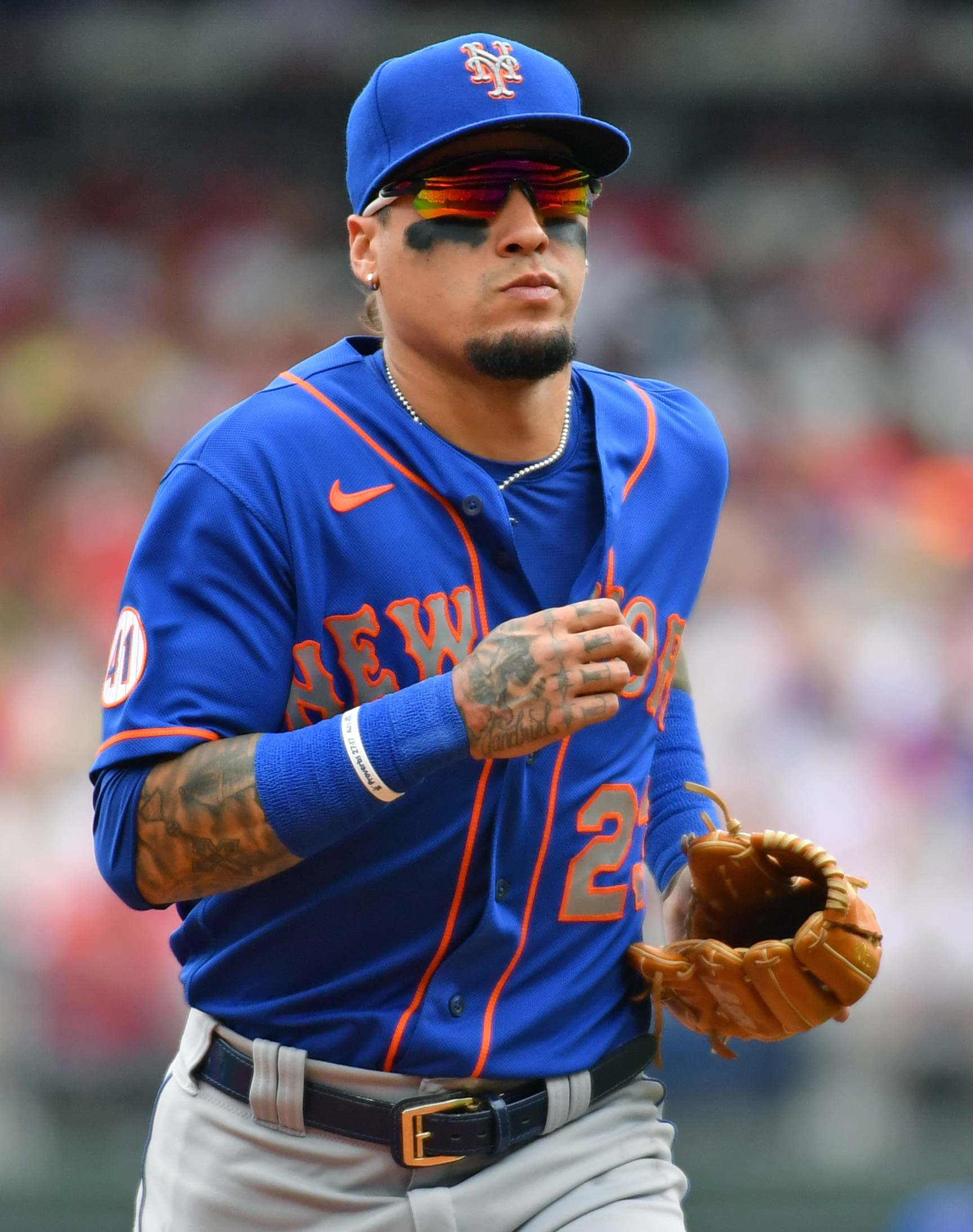
Shortstop has been a glaring need for the Tigers since the onset of free agency, with general manager Al Avila plainly stating his intentions to improve at the position not long after the season’s conclusion. While many speculated that Carlos Correa, who knows Detroit skipper AJ Hinch quite well from the pair’s time in Houston, would be the likeliest candidate to step into that role, Avila & Co. have preached a more measured approach since the offseason commenced. The Tigers already inked lefty Eduardo Rodriguez to a five-year, $77MM contract early in free agency, and adding Baez to the fold would effectively satisfy multiple needs at what figures to be a fair bit less than the cost of Correa on his own.
Detroit shortstops were quite nearly the worst in Major League Baseball from an offensive standpoint in 2021, hitting a combined .201/.275/.321. The resulting 62 wRC+ (i.e. 38 percent worse than league-average production) was the second-lowest mark in the sport, leading only a tanking Pirates club in overall offensive output at the position.
The Tigers have already moved on from their leader in shortstop innings over the past few seasons, bidding adieu to Niko Goodrum after passing him through waivers unclaimed and watching him elect free agency. Baez would represent an across-the-board improvement over Goodrum, providing lights-out, frequently highlight-reel defense in addition to considerable power and baserunning skills for his position.
The 2020 campaign was a season to forget for Baez, but the end result of a roller-coaster 2021 season was a .265/.319/.494 batting line with 31 homers and 18 steals (in 23 tries) for the two-time All-Star and 2018 NL MVP runner-up. Generally speaking, Baez (who’ll turn 29 tomorrow) is a power-hitting but free-swinging shortstop whose penchant for putting the ball over the fence is at least somewhat mitigated by an anemic walk rate that typically lands him near the bottom of the league in on-base percentage. This year’s .319 OBP was actually the second-highest single-season career mark for Baez, who has drawn a free pass in just 4.8% of his 3255 MLB plate appearances.
That said, it’s worth pointing out that there were some positive strides shown by Baez following a trade from the Cubs to the Mets at the July 30 deadline. After whiffing in a whopping 36.3% of his plate appearances in Chicago, Baez cut that figure to a more tolerable (albeit still too lofty) 28.5% in Queens. He also walked at a 7% clip with the Mets — a mark that’s a good bit shy of the 8.8% league average but also well north of 4.7% mark he carried throughout his years with the Cubs. After a rocky run with the Cubs in 2021, Baez finished the season on a heater and posted a composite .299/.371/.515 batting line as a Met.
Inconsistent as Baez may be at the plate, it’s hard to argue with the bottom-line results at the end of the day. Even including 2020’s woeful season, Baez is a .270/.311/.508 hitter (113 wRC+) with 102 home runs over his past 1988 plate appearances, dating back to 2018. He’s one of baseball’s premier defenders — regardless of position.
Since Opening Day 2018, Baez ranks third among all Major League players with 52 Outs Above Average, per Statcast, and his 44 Defensive Runs Saved place him ninth among 4053 defenders who’ve taken the field. While the now-former incumbent Goodrum was a solid defender in hiss own right, Baez is a game-changer with the glove who’ll serve as a pronounced improvement to the Detroit defense.
The Mets were reportedly interested in retaining Baez, who is close friends with New York shortstop Francisco Lindor, but it now seems he’ll instead head to the Motor City and serve as one of the faces of a team looking to emerge from a rebuilding cocoon and announce its return to contention in the American League Central.
Detroit has spent most of the past five years in a prolonged rebuilding effort but has managed to stockpile an enviable farm system that now leaves the team on the precipice of turning the corner. Young starters Casey Mize, Tarik Skubal and Matt Manning will be expected to team with Rodriguez in leading the starting staff, while 2020 No. 1 overall pick Spencer Torkelson and 2019 No. 5 overall pick Riley Greene are both viewed as top-10 leaguewide prospects and potential lineup anchors.
That blossoming young core makes it easy for Detroit, a team that has previously trotted out Opening Day payrolls north of $200MM, to spend heavily in free agency this winter. Miguel Cabrera is signed through the 2023 season, but the only player on the books beyond that point is the aforementioned Rodriguez. Roster Resource’s Jason Martinez projects a $104MM payroll without Baez next season, and that’s before the likely non-tender of Matthew Boyd and his $7.3MM projected salary (courtesy of MLBTR contributor Matt Swartz).
With that in mind, even if this is the last marquee move of the offseason for the Tigers — and, to be clear, there’s no indication that’s the case — the additions of Baez and Rodriguez clearly set the stage for a return to aggressive adding in Detroit. The Tigers will have one more high-end draft pick in 2022, but the goal for the team is clearly to shift into win-now mode, and the additions of both Baez and Rodriguez are notable steps in that direction. Baez has averaged a hefty 4.6 wins above replacement (per Baseball-Reference) per season over the past four years, even including that ugly 2020 campaign, and the Tigers will count on him for more of the same as a linchpin both in the lineup and on defense as they turn the page from a rebuild the fans are all too ready to leave in the rear-view mirror.
Jon Morosi of MLB.com first reported the Tigers and Baez were nearing agreement on a six-year contract. Mark Feinsand of MLB.com first reported the $140MM guarantee. Evan Petzold of the Detroit Free-Press reported the two sides had reached an agreement and that Baez’s deal included an opt-out provision. Ken Rosenthal of the Athletic first reported the opt-out was after 2023 and was first with the limited no-trade protection. Jon Heyman of the MLB Network reported the specific salary breakdown.
Photo courtesy of Imagn/USA Today Sports.